HPE Discover 2026 is the first conference since the Juniper acquisition closed, and the company wasted no time showing what a combined Aruba + Juniper portfolio actually looks like when it’s treated as a single strategy instead of two product lines stitched together.
Antonio Neri has been hinting at this direction for a while. At Discover 2023, he said HPE was “a networking company at its core.” This year, he backed that up with a roadmap that puts networking (not compute) at the center of HPE’s AI and hybrid‑cloud strategy.
Consistent with recent moves, HPE leveraged the conference to reinforce its ongoing repositioning in the market.
Networking as the Foundation of the Agentic Enterprise
Though not the first time to hear this message, HPE’s headline takeaway was that enterprise AI’s future is inseparable from the network layer.
The company introduced a wave of innovations across edge, campus, data center, and AI factories designed to create what HPE calls the Self‑Driving Network: a fully autonomous, AI‑native operational layer that can reason, remediate, and optimize without human intervention.
The key moves:
- HPE Mist now supports HPE Networking CX switches, bringing Juniper’s AIOps engine into the Aruba access layer.
- HPE Marvis — the self‑driving framework — is now embedded into Aruba Central, extending AI‑driven actions across the entire portfolio.
- New AI data center features use agentic reasoning to accelerate root‑cause analysis and remediation.
This is the first visible proof of the “cross‑pollination” strategy HPE has been promising since the acquisition.
Juniper QFX Becomes Core to HPE’s AI Data Center Strategy
The biggest signal of all: Juniper’s QFX line is now officially part of HPE’s AI data center stack.
HPE introduced:
- HPE Juniper QFX5140 — inference‑optimized switching for edge AI and smaller clusters
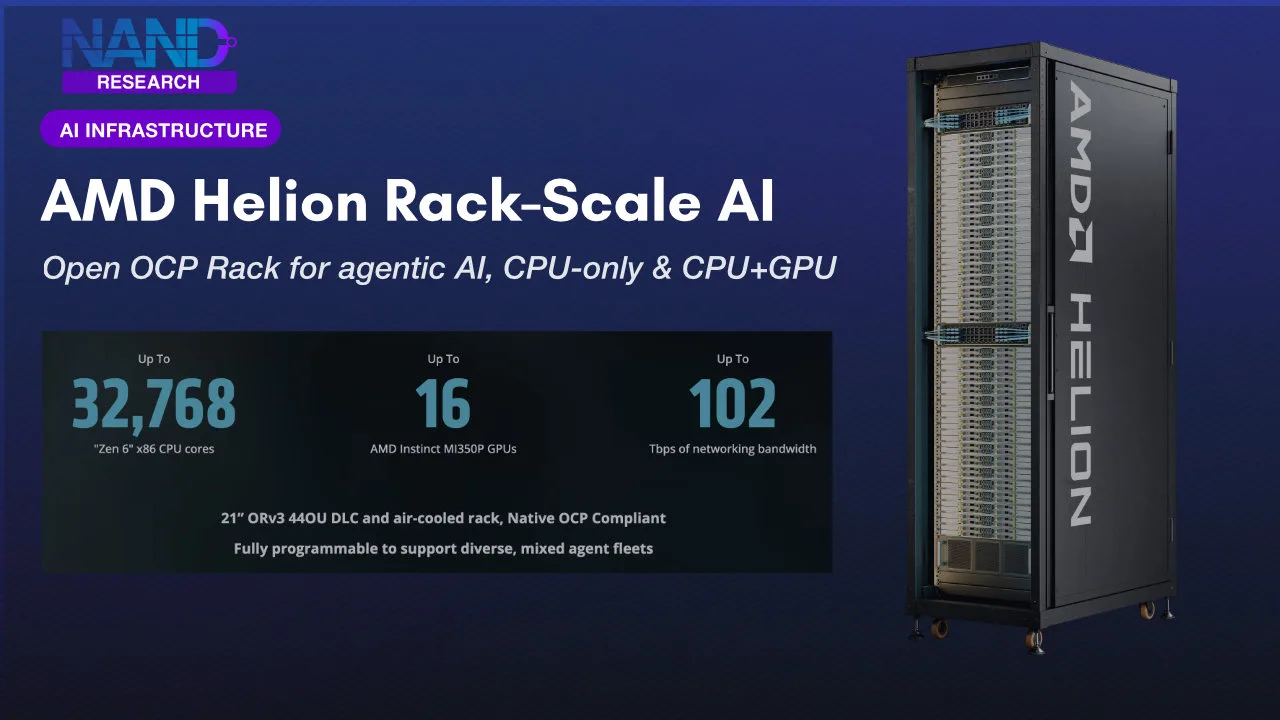
- HPE Juniper QFX5252 tray for AMD Helios: a scale‑up switching module for rack‑scale AI systems
Both are now managed through HPE Apstra Networking Data Center Director, not Mist alone.
This is HPE saying: “We’re no longer just selling servers into AI factories, we’re selling the network fabric too.”
It also positions HPE directly against Cisco’s Silicon One and Arista’s 7800/8800 platforms in the AI spine race.
Agentic AIOps Everywhere
HPE is extending its agentic AI model across the entire networking portfolio:
- Predictive maintenance for optics and system failures
- Autonomous RCA using millions of TAC cases + graph reasoning
- Shared AI insights across networking, compute, and hybrid cloud
This is the most aggressive AIOps roadmap HPE has ever shown, and arguably the most complete in the industry.
Unified SASE With Zero Trust Built In
HPE also announced a new AI‑native SASE platform built on EdgeConnect and cloud‑delivered security:
- Unified SD‑WAN + SSE console
- Embedded zero‑trust connectors
- Sovereign SASE option using Private Edge
- Natural‑language troubleshooting via SASE Copilot
This is HPE’s answer to Cisco Hypershield and Palo Alto Prisma, but with a stronger edge‑to‑cloud story.
Cross‑Domain Integration: Networking + Compute + Hybrid Cloud
HPE is collapsing operational silos across the stack:
- Mist Data Center Assurance now integrates with Compute Ops Management
- Mist Data Center Assurance is now part of GreenLake
- OpsRamp + Morpheus continue to unify observability and automation
This is the closest HPE has come to delivering a true single‑pane‑of‑glass experience across domains.
What This Means for the Market
HPE is no longer positioning networking as the edge on‑ramp to GreenLake.
Networking is the strategy.
The company now has:
- A unified AIOps engine (Mist + Marvis)
- A full AI data center fabric (QFX + Data Center Director)
- A converged SASE platform
- Cross‑domain automation across compute, cloud, and network
HPE has given us our first look at the combined HPE + Juniper portfolio as a single, intentional architecture rather than two catalogs under one logo.
The Bottom Line
HPE Discover 2026 wasn’t about speeds and feeds. It was about identity.
HPE is now a networking company with a compute business. Not the other way around. And the company is betting that self‑driving, AI‑native networks will become the control plane for the entire enterprise stack.
The HPE customer take away: If you’re building AI factories, modernizing data centers, or collapsing edge‑to‑cloud operations, HPE wants to be the automation layer that makes it all work.
And for the first time since the Juniper acquisition, the pieces actually look like they fit.