
$115 billion all-stock deal puts lasers, optical modules, and circuit switches under the same roof as Marvell’s DSPs, switches, and custom silicon
Marvell announced a definitive agreement to acquire Lumentum in an all-stock transaction with an implied enterprise value of about $115 billion. Lumentum shareholders will receive 4.5 Marvell shares for each Lumentum share, implying roughly $1,132 per share and a 23.9% premium to the October 28 closing price, the last trading day before deal speculation began.
Marvell shareholders will own about 67% of the combined company and Lumentum shareholders about 33%. The companies expect to close in the first half of calendar 2028, pending shareholder and regulatory approvals.
The purchase dwarfs Marvell’s roughly $10 billion Inphi acquisition in 2021 and ranks among the largest technology transactions on record.
Marvell designs the DSPs, switches, and custom accelerators on either end of an optical link, and it has purchased the lasers within that link from suppliers, including Lumentum. The deal brings the laser supply, the optical modules, and Lumentum’s optical circuit switches into Marvell.
Lumentum is the scarce piece. Its CEO has reportedly said the company cannot meet roughly 70% of anticipated demand for certain products through 2027. Nvidia invested $2 billion in the company in March to secure capacity.
Marvell claims the combination addresses a $550 billion market spanning scale-across, scale-out, scale-up, and scale-in connectivity and expects more than $1 billion in annual run-rate cost synergies, primarily in cost of goods sold.
Transaction Details
The agreement uses a two-step merger structure that leaves Lumentum as a wholly owned Marvell subsidiary. The table below summarizes the terms the companies disclosed in their filings:
| Item | Detail |
| Structure | Two-step merger, with Lumentum becoming a wholly owned subsidiary of Marvell |
| Consideration | All stock at a fixed exchange ratio of 4.5 Marvell shares per Lumentum share |
| Implied value | About $1,132 per Lumentum share, a $115 billion enterprise value, and about $102.5 billion of equity value |
| Premium | About 23.9% to the October 28, 2026 unaffected closing prices |
| Ownership | About 67% Marvell holders and 33% Lumentum holders on a fully diluted basis |
| Preferred stock | Lumentum Series A convertible preferred converts at the exchange ratio, or holders elect Marvell Series B convertible preferred with equivalent terms |
| Governance | Matt Murphy remains chairman and CEO. Three Lumentum directors, including CEO Michael Hurlston, join Marvell’s seven-member board. Both boards approved the deal unanimously |
| Termination fees | $5.8 billion payable by Marvell and $2.9 billion payable by Lumentum in specified circumstances, plus a $3.2 billion regulatory termination fee payable by Marvell |
| Synergies and accretion | More than $1 billion of run-rate cost synergies, primarily in cost of goods sold. Marvell expects non-GAAP EPS accretion in the first year after closing |
| Expected close | First half of calendar 2028, pending both shareholder votes and regulatory approvals |
Both companies updated their near-term results alongside the announcement. Marvell reported preliminary fiscal third-quarter revenue in line with its August outlook of $3.15 billion and narrowed its range to plus or minus 2%, down from plus or minus 5%. Lumentum separately reported fiscal first-quarter revenue of $1.26 billion, slightly above consensus.
The companies’ investor presentation provides a pro forma view, based on each company’s most recent quarter and annualized, before any synergies.
| Metric | Marvell | Lumentum | Combined |
| Annualized revenue | $12.6 billion | $5.1 billion | $17.7 billion |
| Non-GAAP gross margin | 58% | 53% | 57% |
| Non-GAAP operating margin | 37% | 42% | 39% |
Figures come from the companies’ joint investor presentation filed November 2, 2026. They annualize each company’s most recent quarter and exclude synergies.
Two points stand out:
- Combined gross margin of 57% sits below Marvell’s standalone 58%, so the companies’ claim of gross margin accretion depends on the cost synergies landing.
- Lumentum holders receive 33% of the combined company while contributing about 29% of annualized revenue and roughly 31% of annualized operating income by NAND Research’s calculation, which puts the ownership split near parity with contribution.
Who is Lumentum?
Lumentum is a San Jose-based photonics manufacturer that became an independent public company in August 2015, when JDS Uniphase split its optical communications and commercial lasers businesses away from its test and measurement operations.
Its core strength is indium phosphide laser design and high-volume manufacturing, and it has extended that base through acquisitions:
- Oclaro ($1.8 billion, 2018) added indium phosphide and coherent photonics depth.
- NeoPhotonics (about $918 million, 2022) added coherent and tunable components.
- Cloud Light (about $750 million, 2023) added data center transceiver assembly.
Lumentum sells into cloud and AI data centers, telecom networks, and industrial markets, with its AI data center product lines driving the current growth:
- Laser chips: Lumentum reported record electro-absorption modulated laser (EML) volume in fiscal Q4, led by 100G per lane products, with 200G per lane parts accounting for more than 25% of EML revenue. It also sells continuous-wave and ultra-high-power lasers for co-packaged optics.
- Cloud transceivers: Most shipments remain 800G, and 1.6T modules entered production in fiscal Q4. The company expects 1.6T adoption to intensify through calendar 2027.
- Optical circuit switches: OCS shipments doubled sequentially in fiscal Q4, and management expects fiscal Q1 2027 to be the first quarter with more than $100 million in OCS revenue. Lumentum is a reported supplier of the OCS used in Google’s TPU clusters, and management says the line could become a multibillion-dollar annual business.
- Near-packaged and co-packaged optics: Lumentum received its first external laser source module order, with delivery in the second half of calendar 2027, and announced a second major NPO and CPO win, backed by purchase commitments exceeding $5 billion.
- Telecom and industrial: Components and subsystems for data center interconnect and long-haul networks, plus industrial lasers.
Financial momentum is steep. Fiscal 2026 revenue, for the year ended in June, rose 83.2% to $3.014 billion, and fiscal fourth-quarter revenue of $1.006 billion more than doubled year over year.
Systems, which includes modules and OCS, accounted for 35.5% of fourth-quarter revenue, with Components producing the remainder.
Non-GAAP operating margin reached 29.8% for the full year, and Lumentum guided the fiscal first quarter to a non-GAAP operating margin of 39.5% to 40.5%. Non-GAAP gross margin crossed 50% for the first time in the fourth quarter, and cash and short-term investments totaled about $2.7 billion at year-end.
Nvidia signed a multiyear, nonexclusive agreement with Lumentum on March 2, 2026, that includes a multibillion-dollar purchase commitment, future capacity access rights, and a $2 billion Nvidia investment to support a new U.S. fab. Nvidia also made an equivalent $2 billion investment in Coherent.
Reports place Google at 15% to 20% of Lumentum revenue, and Amazon, Meta, Ciena, and Marvell appear among its largest customers.
Strategic Rationale
Marvell’s case rests on the breadth of connectivity, supply control, and extreme co-design across electrical and optical components.
NAND Research sees five drivers behind the transaction:
- Control of a constrained input: Lasers set the output ceiling for optical modules, and few suppliers can produce them at scale. Marvell’s DSP volumes depend on module makers receiving lasers, so ownership of Lumentum’s fabs and capacity reservations turn a supplier dependency into a managed resource. Marvell’s presentation highlights multibillion-dollar capacity investments and a hybrid internal and contract manufacturing model for assembly and test.
- A path into scale-up and scale-in optics: Marvell closed its $3.25 billion Celestial AI acquisition in February 2026 and expects Photonic Fabric revenue to begin in the second half of fiscal 2028, reaching a $1 billion annualized run rate by the fourth quarter of fiscal 2029. Photonic Fabric requires light sources, and Lumentum’s ultra-high-power lasers and external laser source modules provide them.
- A larger content footprint per AI cluster: Combined annualized revenue of $17.7 billion and a claimed $550 billion addressable market put Marvell in a larger share of the bill of materials for each rack and each site.
- Margin structure: Lumentum’s 53% gross margin and 42% operating margin on annualized revenue are close to Marvell’s, and the companies expect more than $1 billion in run-rate cost synergies. By NAND Research’s calculation, full realization is worth five to six points of margin on $17.7 billion of annualized revenue.
- Competitive response to Broadcom: Broadcom builds its own lasers, DSPs, switches, and custom accelerators, and it reported $16.7 billion in AI semiconductor revenue for the quarter ended August 2, up 221%. Marvell owned no laser fabs. The deal makes Marvell a vertically integrated electrical and optical supplier, able to compete with Broadcom, Coherent, and the Chinese module makers that dominate global module shipments.
The rationale holds up on supply control and roadmap alignment. Pricing is the weaker link. NAND Research calculates the $115 billion enterprise value at roughly 22 times Lumentum’s annualized fiscal first-quarter revenue, for a component business in a cyclical industry whose revenue more than doubled over the past year.
| Analyst Take Marvell is paying a full price for control of the scarcest component in AI optical networking. The strategic fit is strong, and the premium is the part of this deal that investors will keep debating through closing. |
Impact Analysis
The transaction moves Marvell from a connectivity silicon vendor to a vendor of silicon and light. Lumentum’s growth, margins, and capacity support Marvell’s case that it can compete across the full AI network fabric, from the laser to the switch to the XPU.
The deal arrives amid strong momentum, as Marvell raised its fiscal 2028 revenue forecast to $20 billion from $15 billion in October.
The deal carries several risks for Marvell:
- Valuation and dilution: Both stocks have risen sharply in 2026, and the fixed exchange ratio ties Lumentum holders’ value to Marvell’s share price until closing. Marvell funds the deal almost entirely with equity because it held about $3.9 billion in cash at the end of its last quarter.
- Cycle exposure: Optical components have historically alternated between heavy buying and inventory digestion. Lumentum spent $167 million on capital expenditures in fiscal Q4 and added $59 million in inventory sequentially, indicating the capacity build under way.
- Technology timing: Lumentum’s growth case beyond 2027 depends on CPO, NPO, and OCS adoption, and copper remains in contention within racks.
- Regulatory and integration burden: The $3.2 billion regulatory fee highlights the exposure. NAND Research expects reviews in multiple jurisdictions, with China the most consequential given the module supply chain that depends on both companies.
Practitioner Impact
Hyperscalers, module makers, and network architects absorb the near-term effects. The companies operate as separate businesses until closing, and Lumentum has informed customers that existing agreements, purchase orders, and contacts remain unchanged.
The larger effects arrive in sourcing strategy.
Practitioners should plan for four changes.
- Module makers face a single owner for two critical inputs: companies that buy Marvell DSPs and Lumentum lasers, including large Chinese module suppliers, will see both inputs controlled by a single vendor.
- Hyperscalers on both sides of the deal face leverage and concentration risk: Google reportedly buys custom silicon support from Marvell, which accounts for a large share of Lumentum revenue, and holds the right to buy up to $12.2 billion of Marvell shares at $206.58 through fiscal 2033. Bundled pricing and co-design are available, as is exposure to a single supplier.
- Customers that compete with Marvell’s custom silicon will seek protection: Nvidia, the most prominent example, buys Lumentum lasers under a multiyear agreement and can be expected to press for contractual terms on allocation and roadmap confidentiality before closing.
- The CPO and NPO timelines remain unproven: Lumentum says its lead CPO customer is on track and that demand has increased. Broadcom CEO Hock Tan said in March that custom chip customers would continue using copper inside racks through 2028, which delays the volume scale-up optics need.
Competitive Impact
Broadcom remains Marvell’s primary rival in AI connectivity, and the merger changes who the rest of the field must compete against. Coherent, Credo, Nvidia, and now Qualcomm each hold a piece of the optical stack.
Qualcomm and the AWS optics deal
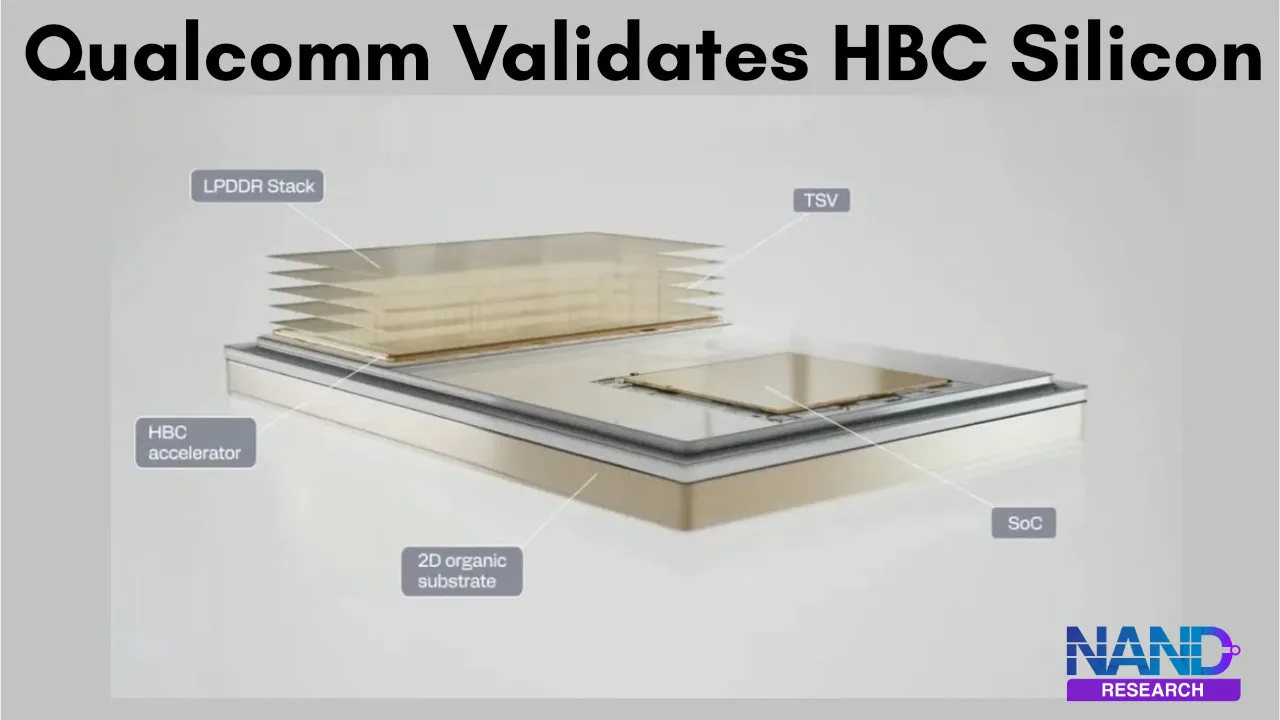
Qualcomm entered the optical connectivity market on September 8, 2026, when it and AWS announced a multi-generation agreement covering custom AI inference silicon and optical connectivity up to 1.6T for AWS data centers. The optics half draws on SerDes and optical DSP technology from Alphawave Semi, which Qualcomm acquired in a transaction that closed in December 2025.
Qualcomm issued AWS a warrant for up to 25 million shares at $161.26, valued at roughly $4 billion. Of those, 3.75 million shares vest immediately, and the remaining 21.25 million vest as AWS’s purchases of Qualcomm chips, optics, and manufacturing services reach $60 billion before the warrant expires on September 3, 2036.
Qualcomm expects revenue to begin in its fiscal first quarter of 2027, and its CFO said a second hyperscaler is evaluating a similar scope.
The deal matters to Marvell for three reasons. AWS is a core Marvell customer. Qualcomm also competes in the DSP and SerDes layers, which are the franchise that produces Marvell’s optical revenue today and the layer Lumentum does not touch.
Finally, Qualcomm does not manufacture lasers, so any 1.6T module built around Qualcomm’s DSP still requires lasers from Lumentum, Coherent, or another source.
Once Lumentum is owned by Marvell, Qualcomm-aligned module builders buy a critical input from a direct competitor of their DSP supplier, and NAND Research expects that channel conflict to push them toward Coherent.
Rest of Market
The other relevant competitors each respond differently to the combination:
- Broadcom: Builds its own lasers, DSPs, switch silicon, and CPO platforms, and holds the largest AI semiconductor revenue base in the group.
- Coherent: Becomes the largest independent laser and transceiver supplier. It reported $2.05 billion in revenue for the quarter ended June 30, up 34%, and holds an Nvidia agreement and a $2 billion investment equivalent to Lumentum’s.
- Nvidia: Acts as a customer, investor, and competitor. It buys Lumentum lasers under its March agreement while building its own CPO switches.
- Credo: Sells active electrical cables that benefit from copper remaining inside racks, and added silicon photonics PICs through its DustPhotonics acquisition completed in May 2026.
The table compares the principal alternatives with the combined Marvell and Lumentum offering:
| Alternative | Model or Approach | Where It Is Stronger | Where It Trails |
| Marvell and Lumentum | DSPs, switches, custom XPUs, Celestial AI interconnect, plus lasers, 1.6T modules, and OCS | Merchant vendor spanning DSP, switch, laser, and OCS, with pre-validated optical engines | Integration unproven, closing in 2028, conflict with customers that compete with Marvell |
| Broadcom | Vertically integrated lasers, DSPs, switch silicon, custom XPUs, and CPO | Scale, with $16.7 billion of quarterly AI semiconductor revenue, and CPO leadership | Customers seeking a merchant second source for silicon and optics |
| Coherent | Independent laser and transceiver supplier with an Nvidia investment | Neutral supplier to any DSP vendor, with vertical manufacturing | Smaller revenue base and no DSP, switch, or custom silicon |
| Qualcomm | AWS custom inference silicon plus 1.6T optics from Alphawave DSP and SerDes IP | Anchored by an AWS warrant tied to $60 billion of purchases, and a new DSP alternative | No lasers, no disclosed volumes, optics unproven at scale |
| Nvidia | In-house CPO switches plus laser agreements with Lumentum and Coherent | Controls system architecture and a large share of demand | Relies on outside laser suppliers, one of which now belongs to Marvell |
| Credo | Copper AECs plus silicon photonics PICs from DustPhotonics | Gains if copper persists through 2028 | Limited laser and switch exposure and smaller scale |
Differentiation is strongest where the combined company controls laser supply and pairs it with the DSP and switch silicon that run over it, a combination only Broadcom matches today.
It is weakest in execution timing and neutrality. The closing sits more than a year out. Customers that compete with Marvell will seek protections. Coherent gains the independent label, and Qualcomm now gives AWS a 1.6T DSP alternative that did not exist a year ago.
Final Thoughts
Marvell has made the largest bet in its history on the thesis that AI networks will move to optics faster than copper holds its ground, and that the company controlling lasers will set the pace. The deal brings together assets that already work together, including laser supply, DSPs, Celestial AI, OCS, and Lumentum, and Lumentum brings growth and margins that match Marvell’s. Management has a coherent plan and unusually specific supply data to back it.
The open questions are substantial. Marvell must issue a third of itself to Lumentum holders at full price, maintain the trust of Lumentum customers who compete with it, satisfy regulators in several jurisdictions, and deliver more than $1 billion in cost synergies that the companies have not itemized.
The CPO and scale-up optics timeline, which underpins much of Lumentum’s growth case beyond 2027, conflicts with Broadcom’s statement that copper will remain in racks through 2028.
Qualcomm’s AWS optics win shows that competitors will contest the DSP layer while the merger works through its approvals.
Ultimately, Marvell has acquired control of the scarcest input in AI optical networking, and every customer will now factor that control into its supply negotiations through closing and beyond.