Data Center Power: The Transition to 800 VDC

For the past two decades, power architecture has evolved incrementally around a familiar model: utility AC enters the facility, passes through switchgear, transformers, UPS systems, power distribution units, and rack power shelves, and is ultimately converted to low-voltage DC for CPUs, GPUs, memory, networking, and storage.
That model worked for conventional enterprise and cloud computing. It was good enough when racks consumed 10kW, 20kW, or even 50kW, but it becomes far more difficult as AI infrastructure pushes rack densities toward hundreds of kilowatts and, in some designs, beyond 1MW.
Research Note: HPE’s New Full-Stack Enterprise AI Infrastructure Offerings
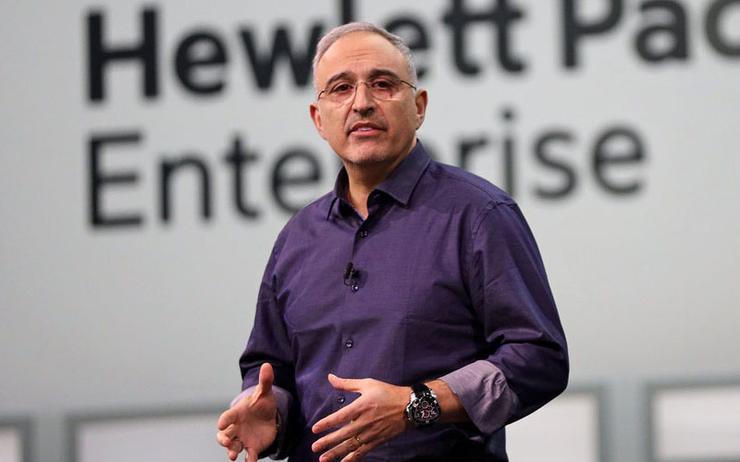
At the recent NVIDIA GTC 2025, Hewlett Packard Enterprise (HPE) and NVIDIA jointly introduced NVIDIA AI Computing by HPE, full-stack AI infrastructure offerings targeting enterprise deployment of generative, agentic, and physical AI workloads.
The solutions span private cloud AI platforms, observability and management software, reference blueprints, AI development environments, and new AI-optimized servers featuring NVIDIA’s Blackwell architecture.
Liquid Cooling is Front & Center at GTC 2025

One thing was clear at the just-wrapped NVIDIA GTC event: the race to cool the next generation of HPC and AI systems is intensifying.
Let’s take a quick look at some of our favorite announcements.
Research Note: Supermicro’s New Datacenter Scale Liquid Cooling
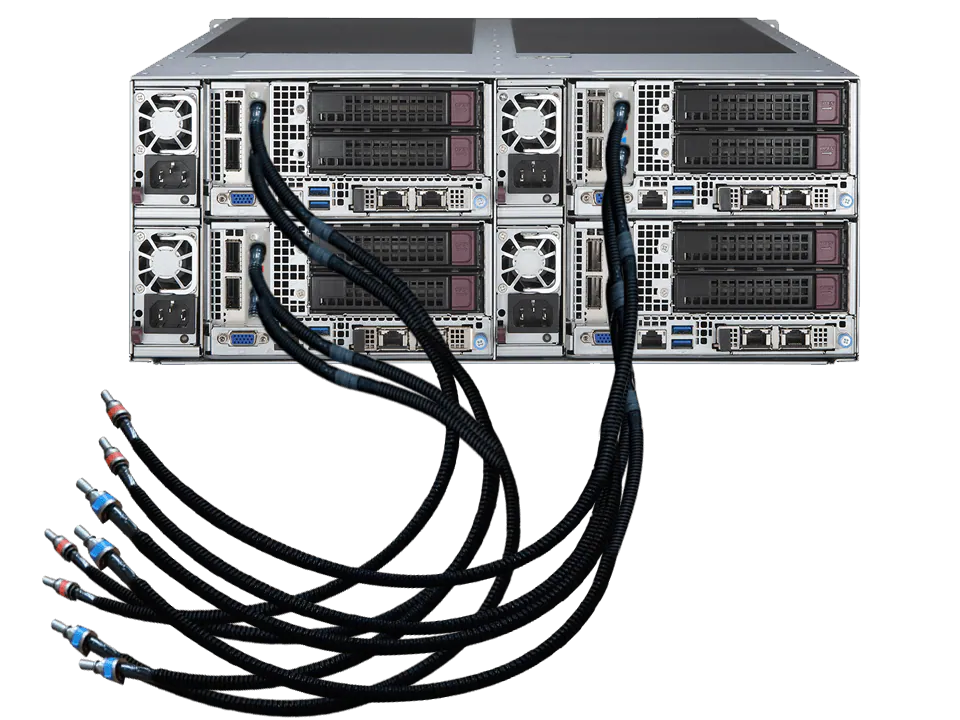
Supermicro recently announced a comprehensive, end-to-end liquid cooling solution for data centers. The solution encompasses critical hardware components such as Coolant Distribution Units (CDUs), cold plates, Coolant Distribution Manifolds (CDMs), cooling towers, and integrated management software.
Research Note: Lenovo ThinkSystem V4 & 6th Gen Neptune
Lenovo recently announced significant updates to its enterprise infrastructure portfolio, introducing the new ThinkSystem V4 servers and the latest generation of its Neptune liquid-cooling technology, designed to address the growing demands of HPC and AI workloads.