Everpure (formerly Pure Storage) introduced two software products at its recent Pure Accelerate customer event in Las Vegas: Everpure Data Intelligence and Everpure Data Stream (along with a set of Enterprise Data Cloud platform updates).
Data Stream automates the transformation of raw, unstructured data into a format AI models can consume, while Data Intelligence simplifies the discovery and classification of that data across an enterprise’s data estate.
Together, they extend the Enterprise Data Cloud architecture the company introduced at Pure Accelerate 2025 and build on its earlier this year acquisition of 1Touch, the data-intelligence and orchestration company.
The announcements address a specific operational bottleneck. Enterprises moving AI workloads from pilot to production routinely discover that GPU clusters sit idle because the data feeding those clusters is poorly structured, ungoverned, or too slow to retrieve.
Technical Details
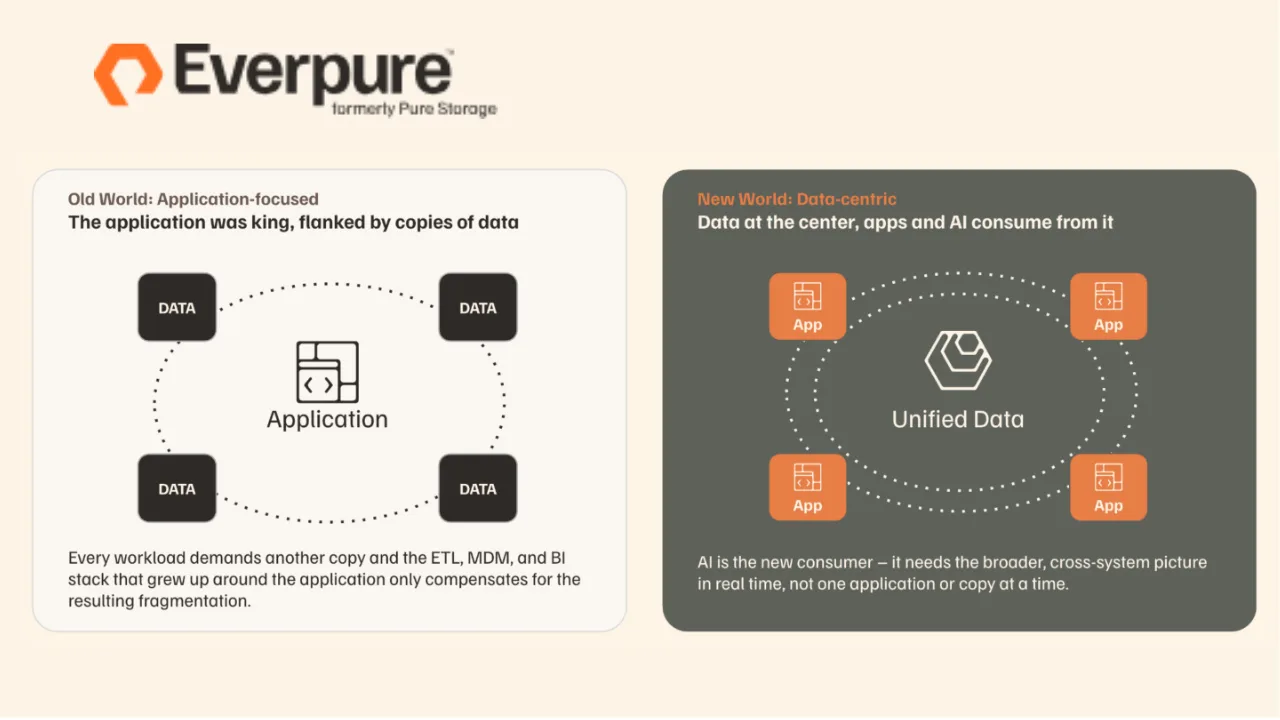
The announcements cover two new software products and a set of platform-level updates to Pure’s Enterprise Data Cloud (EDC). Everpure views both products as extensions of its Unified Data Plane, the shared foundation designed to eliminate performance silos across its installed base.
Everpure Data Stream
Data Stream is a GPU-accelerated data pipeline that automates the end-to-end path from raw data ingestion to model inference, replacing the manual scripting and data-movement work that data engineering teams have historically built themselves.
Mechanically, Data Stream ingests unstructured data, including documents, logs, media, and other raw formats, and runs it through a GPU-accelerated transformation stage that vectorizes and organizes the data into the structure AI agents and applications expect for querying. This dramatically shortens data preparation timelines.
The pipeline enforces stream-level access controls as data moves through it, so permissions and governance policies travel with the data rather than being applied only at rest, keeping proprietary information within corporate boundaries even as it flows toward GPU clusters and inference endpoints.
Three architectural elements underpin the Data Stream pipeline:
- FlashBlade provides the storage layer, and the non-disruptive Evergreen architecture allows customers to start on FlashBlade//S and scale to FlashBlade//EXA without a migration event as data volumes grow toward exabyte scale.
- Portworx provides deployment and lifecycle management for the AI pipeline workloads themselves across edge, core data center, and cloud environments.
- NVIDIA’s reference architecture, including BlueField-enabled storage controllers and the broader AI Data Platform stack, provides the GPU acceleration that performs data transformation in-line, rather than offloading it to a separate preprocessing cluster.
Everpure Data Intelligence
Data Intelligence is the productized evolution of Kontxtual, the data discovery and classification platform Everpure acquired from 1Touch earlier this year.
Rather than a passive catalog, the platform actively crawls an organization’s data estate, including SaaS applications, cloud databases, on-premises object and file stores, and mainframe systems, to build a continuously updated index of what data exists, where it lives, and how individual data elements relate to one another.
The core output of that crawl is a data relationship graph: a semantic map that links data elements by usage patterns, access history, business context, and dependencies, rather than by static file locations alone.
This is differentiated from traditional DSPM solutions, which typically inventory only cloud environments, because it uses inference-based classification (meaning the system infers what a given piece of data means and how it is actually used across business processes, rather than relying solely on predefined rules or tags).
That graph and its underlying metadata layer are exposed to downstream systems via standard APIs and MCP, enabling AI agents and applications to query Everpure’s data context directly rather than processing raw, unstructured information.
In addition to discovery and classification, Data Intelligence implements attribute-based access controls and enforces policies aligned with governance, security, and data residency requirements.
In practice, this means the system can automatically trigger redaction, encryption, or access-restriction workflows when it classifies a data element as sensitive, and can generate compliance reports aligned with frameworks such as GDPR, CPRA, and HIPAA.
Because this layer operates in concert with the Everpure Platform, the same classification and policy data that govern AI access to a dataset also inform how that data is stored, replicated, and protected at the infrastructure layer.
Enterprise Data Cloud Platform Updates
Everpure paired the two product launches with several updates to its underlying EDC platform:
- Evergreen//One Overdrive: A temporary, cloud-like performance boost for on-premises storage that absorbs traffic spikes up to 25% above baseline without requiring a permanent subscription upgrade.
- Intelligent Control Plane: Natural-language copilot workflows, automatic workload rebalancing, and cyber anomaly detection are intended to shift customers from reactive storage management to a self-optimized system.
- Enhanced Cyber Anomaly Detection: Telemetry monitoring across the environment to identify coordinated suspicious login patterns and behavioral drift that individual arrays might miss when considered in isolation.
- Fusion Compliance and Agentic Triage: Automated detection of hardware and software configuration drift, paired with agentic AI that suggests root causes for remediation.
- Native virtual machine support on Microsoft Azure: Extends the Everpure Platform into the public cloud.
- The EDC Success Blueprint: A methodology and readiness assessment designed to guide customers through a ten-pillar transition from manual storage management to an automated enterprise data cloud.
Analysis
Data Intelligence and Data Stream reinforce the strategic direction Everpure set through its February rebrand and the 1Touch acquisition. The company is deliberately repositioning away from a storage vendor identity toward a data management and AI infrastructure identity, and these two products are the clearest software evidence of that shift to date.
Practitioner Impact
For IT and storage teams managing AI infrastructure, Data Stream and Data Intelligence target two distinct operational pain points:
- Data Stream addresses the pipeline automation problem that keeps GPU clusters underutilized, a cost issue that compounds quickly given current GPU pricing.
- Data Intelligence addresses the more foundational problem of not knowing what data an organization holds, where it resides, or whether it is fit for use in an AI pipeline.
Here are some high-level impacts to AI and IT practitioners:
- Adoption requires no new hardware purchase for Data Intelligence, since it operates as a software layer on existing Everpure infrastructure.
- Both products reduce the manual scripting and orchestration work that has typically fallen to data engineering teams building bespoke ingestion pipelines.
Competitive Landscape
Data Intelligence and Data Stream do not exist in isolation. Every major enterprise storage vendor has spent 2026 making the same argument, that the competitive battleground has shifted from storage capacity and performance to data readiness, governance, and AI pipeline automation.
Despite similar language and high-level goals, each vendor takes a different approach:
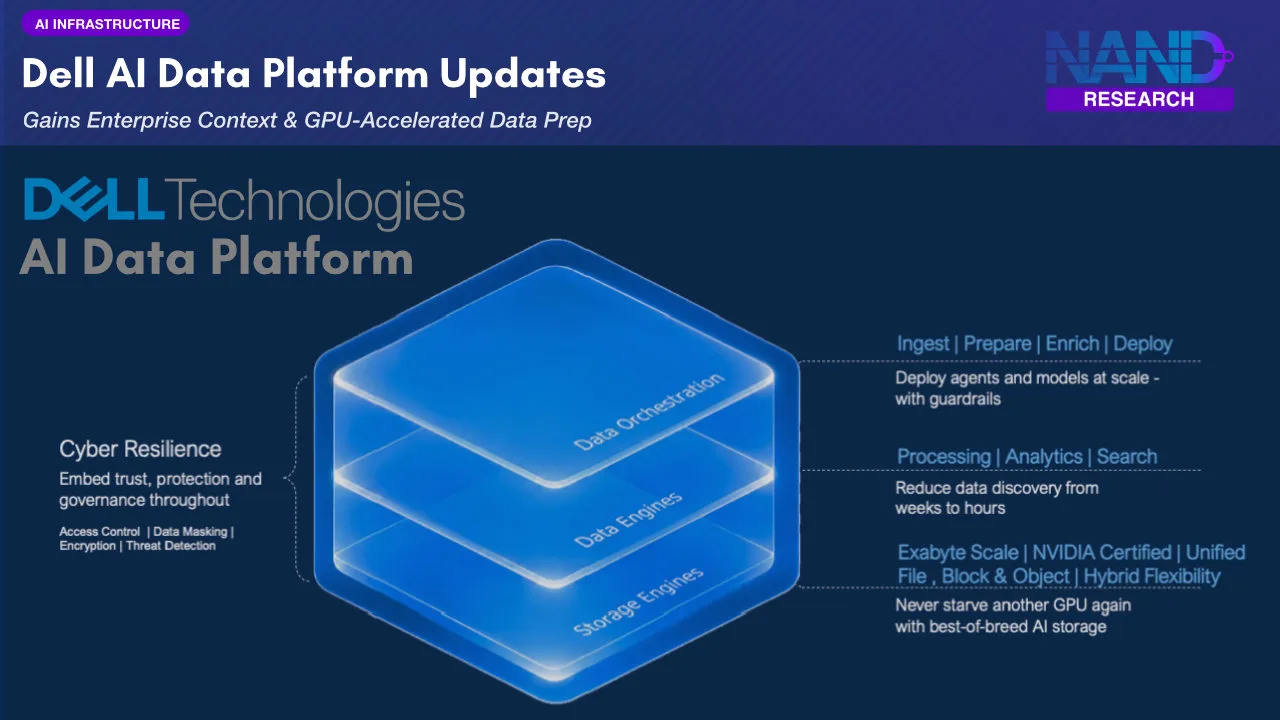
- Dell anchors its data story to a specific compute ecosystem and an aggressive AI Factory deployment count.
- HPE folds data into a broader hybrid cloud and networking narrative that, post-Juniper, competes for the same keynote real estate.
- VAST Data built its architecture for AI workloads from the ground up and already operates at hyperscale reference accounts.
- NetApp offers a software overlay that leverages existing storage infrastructure.
| Competitor | Competitive Position | Everpure Differentiation |
| Dell Technologies | AI Data Platform with NVIDIA bundles PowerScale, ObjectScale, and the new Lightning File System into the Dell AI Factory, with GPU-accelerated data engines (cuDF, cuVS) embedded directly in the data path. | Everpure sells data primacy independent of a specific compute stack; Dell sells data infrastructure as a subordinate layer of an NVIDIA-anchored factory build. |
| HPE | Unified data layer spanning Alletra Storage MP, Ezmeral Data Fabric, and GreenLake Intelligence, increasingly subordinated to a networking-first AI Grid narrative built around the Juniper acquisition. | Everpure treats data intelligence as the architectural center; HPE treats it as one of several pillars beneath a broader hybrid cloud and AI-native networking story. |
| VAST Data | VAST AI OS unifies DataStore, DataBase, and DataEngine under a single Disaggregated Shared-Everything architecture, with native vector acceleration, a Polaris global control plane, and deep CUDA-X integration. | Everpure’s Data Stream targets the same ingestion-to-inference automation problem VAST’s DataEngine already addresses, but starts from an established FlashBlade hardware base rather than a software-first architecture. |
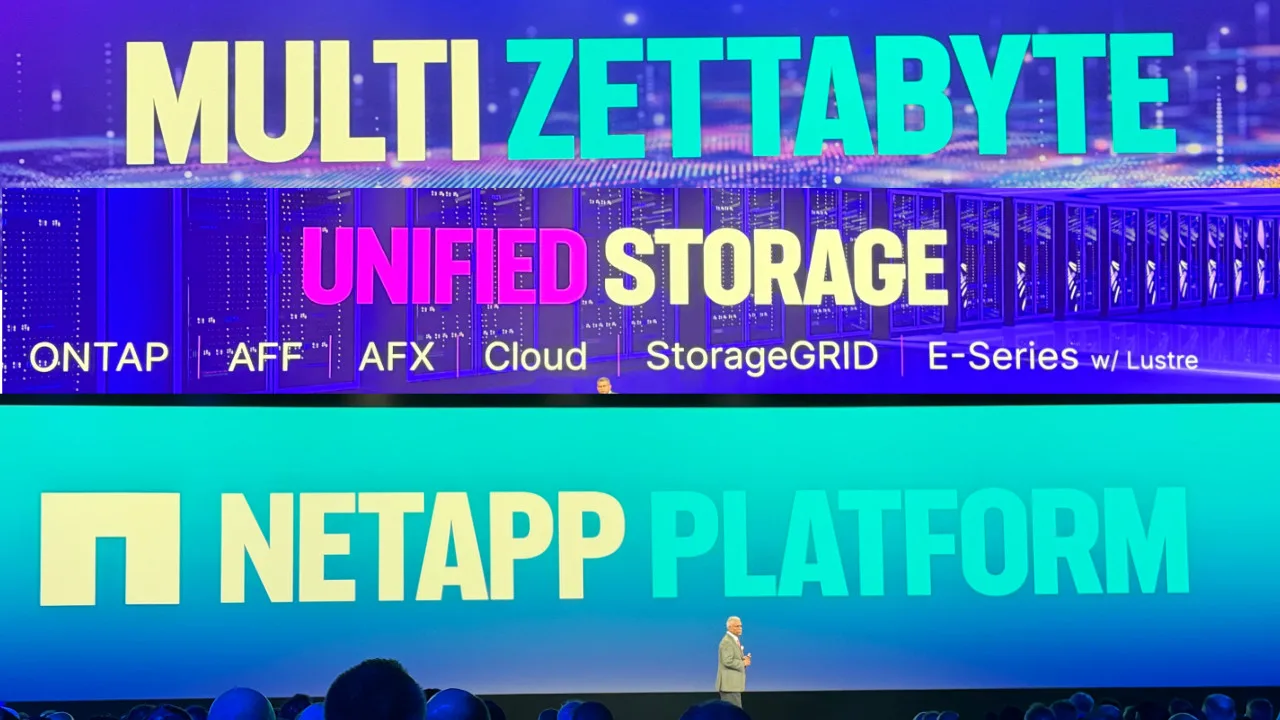
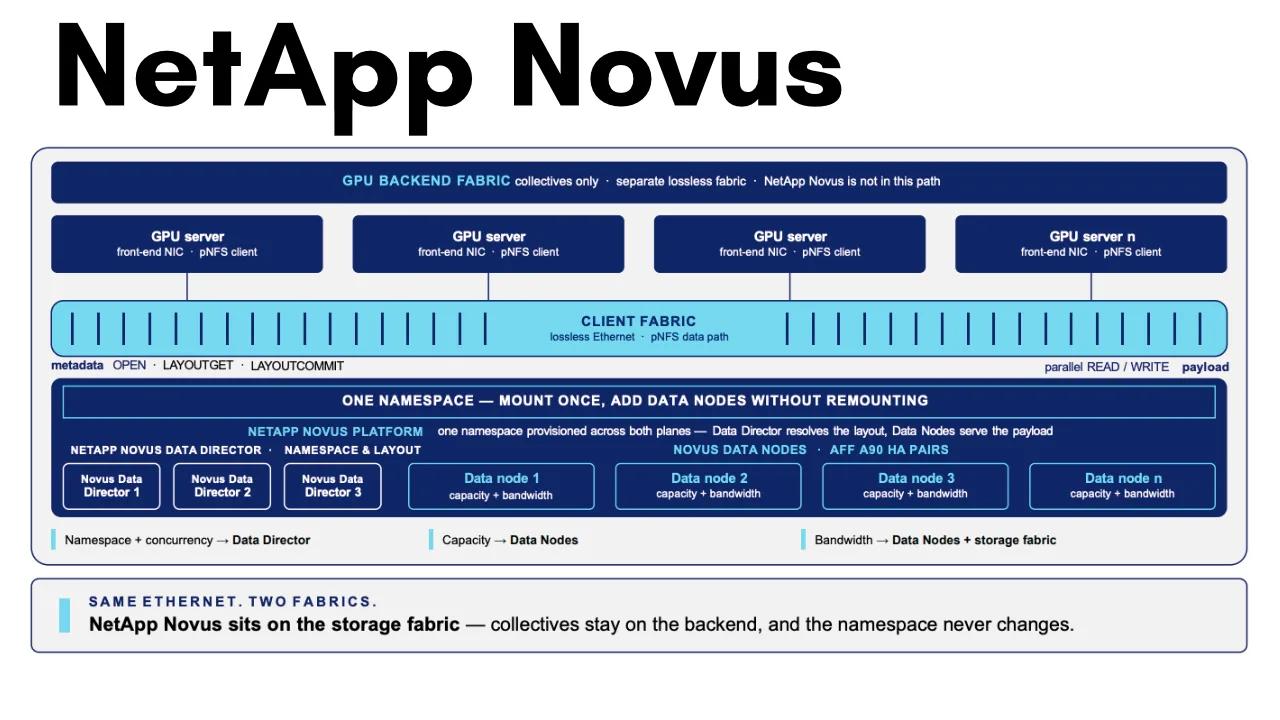
| NetApp | AI Data Engine (AIDE), co-engineered with NVIDIA, builds an intelligent metadata index across on-premises, cloud, and edge estates without requiring a new storage purchase. | Everpure pairs Data Intelligence with a hardware push (FlashBlade//EXA, Evergreen//One Overdrive); NetApp emphasizes a software overlay that works across existing infrastructure. |
Final Thoughts
Everpure’s Data Intelligence and Data Stream bring real capabilities to the data-primacy argument it began making with its February rebrand. The 1Touch-derived classification capability is substantive, and the ingestion-to-inference automation in Data Stream addresses the challenges facing enterprises as they move AI workloads into production.
The broader significance sits in what these announcements confirm about the state of the enterprise storage market rather than in any single feature. Storage as a standalone category is giving way to data infrastructure as the place where vendors compete, and Everpure, Dell, HPE, VAST Data, and NetApp are now running parallel experiments in how to win that layer, through hardware-bundled platforms, software overlays, AI-native architecture, or networking-centric narratives.
Overall, Everpure is maturing into a capable data platform for enterprise AI. Rather than treating data discovery, governance, storage, and AI pipelines as separate products, the company is increasingly integrating them into a single control plane spanning the identification, protection, movement, and consumption of data.
That systems-level approach should resonate with enterprises that have learned that scaling AI is less about deploying more GPUs and more about ensuring those GPUs are continuously supplied with trusted, governed, and readily consumable data.
The competitive race is tough, and Dell, HPE, NetApp, and VAST Data each bring meaningful strengths to the market. However, Everpure has established a differentiated position by making data intelligence a core capability of its platform rather than an add-on management layer.
If the company can execute this software roadmap while continuing to leverage its large installed base of FlashArray and FlashBlade systems, it will be well-positioned to expand its role beyond enterprise storage and become a strategic provider of AI-ready data infrastructure.