IBM and Arm announced a strategic partnership to support the Arm architecture on IBM’s enterprise computing platforms, IBM Z and LinuxONE. The collaboration aims to address two key enterprise needs: greater workload flexibility and infrastructure capable of handling AI- and data-heavy applications at a mission-critical level.
The announcement followed just a week after Arm made its own historic move, unveiling its Arm AGI CPU, the company’s first-ever production silicon in its 35-year history. Until now, Arm has operated solely as an IP licensor, supplying chip designs to the world’s largest semiconductor firms.
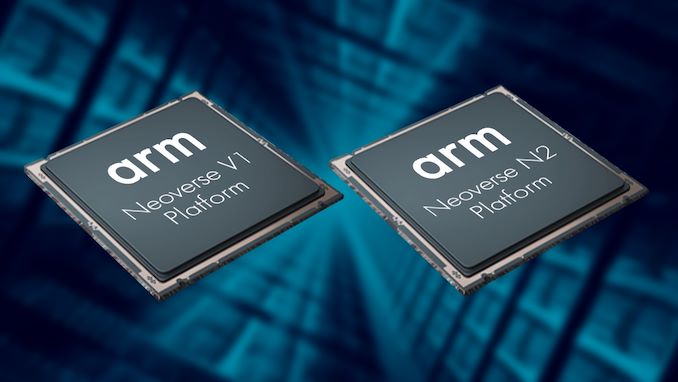
Arm has become (surprisingly) the primary CPU architecture for the AI era. It’s used by every major hyperscaler, with AWS Graviton, Google Axion, Microsoft Azure Cobalt, and NVIDIA’s Vera CPU all based on Arm designs. Perhaps most importantly, NVIDIA’s GPU platforms are closely integrated with Arm-based CPU architectures for host-side processing.
IBM’s partnership with Arm expands into enterprise mainframe and LinuxONE environments, broadening Arm’s presence in one of the few remaining large compute markets where it has been limited.
Details
The three focus areas of the collaboration between Arm and IBM are:
- Virtualization expansion: The two companies are exploring ways to enable Arm-based software environments to run on IBM’s enterprise computing platforms through expanded virtualization technologies. This is to improve software compatibility and enable developers to bring Arm-native applications to IBM Z and LinuxONE environments without porting effort.
- Enterprise workload enablement: IBM and Arm are collaborating to allow enterprise systems to natively recognize and run Arm applications while meeting requirements for high availability, security, and data sovereignty. This effort also focuses on addressing the performance and efficiency needs of AI and data-intensive applications in these environments.
- Long-term ecosystem growth: The collaboration focuses on developing shared technology layers across platforms to expand compatibility within the software ecosystem and provide enterprises with greater flexibility in deploying applications. In its announcement, IBM describes this as a way for organizations to adopt new architectures without losing their existing investments.
It’s critical to note that the relationship is focused on software compatibility, not processor design. There’s no indication that the companies are working on co-designed silicon.
Analysis
The IBM-Arm collaboration is an early-stage architectural commitment. The three technical work streams, virtualization expansion, workload enablement, and ecosystem growth, outline a credible long-term roadmap for bringing Arm-native software into IBM’s enterprise computing environments.
IBM’s emphasis that these represent goals and objectives underscores the forward-looking nature of the announcement. Enterprises should not expect near-term deliverables; they should interpret this as IBM signaling where IBM Z and LinuxONE are heading, while also finding more comfort in building software for Arm-based systems.
For enterprise IT practitioners managing IBM Z or LinuxONE infrastructure, this collaboration tackles a long-standing portability issue. As modern software development increasingly targets Arm-native execution environments, especially for cloud-native and AI workloads, organizations operating on IBM mainframe environments face greater difficulty deploying those applications without recompilation or reengineering. If IBM and Arm succeed in the virtualization work stream, that difficulty decreases significantly.
IBM’s narrative about the collaboration centers on infrastructure flexibility and client readiness. IBM presents itself as a company that predicts enterprise needs before market changes occur, and this partnership aligns with that approach.
By establishing an Arm integration path now, IBM places itself ahead of the surge of Arm-native enterprise software that is already gaining momentum in cloud environments and will increasingly move into hybrid and on-premises deployments.
The announcement clearly aligns with the future of enterprise computing architecture, where Arm serves as the core compute foundation for AI infrastructure. Every major hyperscaler depends on it. NVIDIA’s GPU strategy relies on it. The AGI CPU, announced just days before this partnership, further increases Arm’s presence in the data center. IBM’s decision to follow that path rather than oppose it reflects a practical understanding of where enterprise software ecosystems are consolidating.
For IBM, this collaboration is a necessary move to prevent IBM Z and LinuxONE from becoming progressively more isolated as the broader enterprise software ecosystem standardizes on Arm-native development. For Arm, IBM represents access to the mission-critical enterprise market segment where reliability, security, and regulatory compliance requirements have historically favored IBM’s proprietary architecture over open ecosystems.