
The global memory market has shifted from a structural supply constraint to an acute shortage.
What began as an AI-driven reallocation of manufacturing capacity toward HBM has compounded through consecutive quarters of record-breaking price increases, affecting enterprise IT budgets, consumer device pricing, and cloud infrastructure spending in equal measure:
- Prices accelerated further through Q1 2026, with conventional DRAM contract prices rising 90-95% quarter-over-quarter, surpassing even the most pessimistic January forecasts.
- Q2 2026 projections show continued increases at a somewhat moderated pace.
- There is no credible near-term relief scenario.
- New fab capacity is not expected to reach meaningful production volume before late 2027 or 2028.
DRAM
The memory chip industry continues to face its most severe supply shortage in nearly 15 years, with price hikes sweeping the entire supply chain.
Conventional DRAM contract prices are projected to rise 58–63% quarter-over-quarter in Q2 2026, following a Q1 in which contracts climbed by a record 90–95% QoQ. That means the rate of increase is decelerating somewhat (but from an extraordinary base).
DDR4 has become particularly distorted. DDR5 chip prices rose from $6.84 in September 2025 to $27.20 in December, while DDR4 spot prices soared past DDR5 in some configurations, inverting the traditional value hierarchy and reflecting the growing scarcity of legacy memory.
Segment Breakdown
Server DRAM is the priority allocation target. North American CSPs are accelerating AI inference deployments, driving demand for AI and general-purpose servers, with high-capacity RDIMMs becoming the primary procurement target.
Suppliers are negotiating long-term agreements with key customers to support future capacity expansion, while near-term supply remains tight.
PC DRAM is caught in the crossfire. Although overall system demand in the PC DRAM market has been revised downward, suppliers have simultaneously reduced shipments to PC OEMs and module makers, forcing OEMs with lower allocation fulfillment rates to procure at higher prices from suppliers or module vendors.
Mobile DRAM faces a dual squeeze, within which weak smartphone demand is offset by rigid AI feature requirements in flagship devices, and supply remains structurally constrained due to upstream capacity reallocations.
Supply Chain Dynamics
Long-term agreements have become the defining procurement mechanism. Cloud service providers are securing the bulk of available supply through long-term agreements, and meaningful capacity expansion is not expected until late 2027 at the earliest.
Buyers without multi-quarter contracts face spot market exposure at extreme premiums.
Geopolitical Overlay
US export controls on HBM to China have prompted Chinese retaliation targeting critical minerals, while tariffs and US-China trade frictions have disrupted supply chains and increased costs.
China’s share in global DRAM production remains below 10% due to technological gaps.
The net effect is a fragmented market with growing compliance complexity for multinational procurement teams.
NAND Flash
NAND flash has crossed a threshold in Q2 2026 that stands out even against the backdrop of extraordinary DRAM increases.
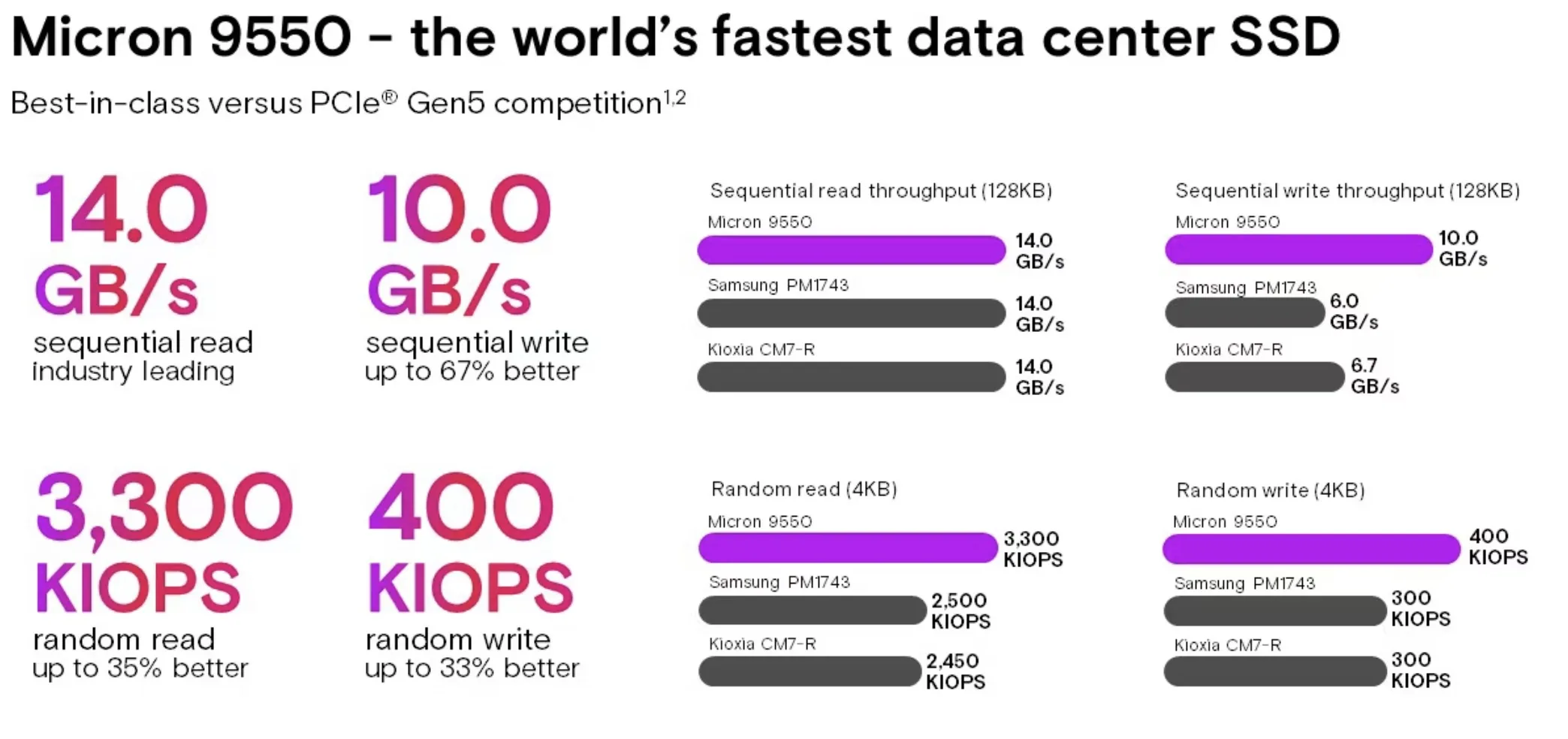
Overall, NAND flash contract prices are expected to rise 70–75% QoQ in Q2 2026, outpacing DRAM for the first time in the current cycle. This is driven by surging enterprise SSD demand, which shows no sign of slowing as large-scale generative AI deployments continue to absorb the lion’s share of production capacity.
Supplier Concentration
The NAND market offers buyers limited competitive recourse. Samsung, Micron, and SK Hynix control a combined 62.9% of the NAND flash market, while Kioxia, SanDisk, and the Chinese newcomer YMTC make up the remaining 37%.
China’s YMTC remains constrained by US export controls and cannot access the advanced tooling needed to close the technology gap with the Korean and American leaders at the leading edge.
Supply: Structurally Sold Out
The supply picture is not a shortage in the traditional cyclical sense, but rather allocation exhaustion.
Samsung, SK Hynix, Kioxia, and Micron jointly scaled back NAND flash production in the second half of 2025. SK Hynix cut NAND output by about 10%, while Micron kept production at its main Fab 7 plant in Singapore in the low 300,000-unit range.
This deliberate supply discipline, layered atop AI-driven demand, has eliminated any buffer in the market.
QLC as a Relief Valve
Suppliers are pushing QLC (quad-level cell) NAND as a higher-density path to address enterprise appetite.
- SK Hynix plans to begin shipping 321-layer QLC NAND products in the second half of 2026 and to significantly expand its market share.
- Samsung is accelerating investment in QLC NAND, with its 286-layer V9 product set as its flagship. It is ramping production at Phase 1 of Plant 4 at its Pyeongtaek campus and on select lines at its Xi’an fab in China.
However, these ramps benefit enterprise customers first, while consumer and client buyers remain at the back of the queue.
Demand Mechanics: CSP Lock-Up & LTA Dynamics
Open-ended purchase commitments from major cloud providers absorb available supply regardless of price, leaving enterprise buyers competing for residual allocation. This dynamic favors vendors with established supplier relationships and scale advantages.
Cloud service providers are willing to pay more and commit to multi-quarter purchase agreements to secure allocations, with a pronounced shortage expected throughout 2026 and new fab capacity unlikely to come online in volume before late 2027 or 2028.
Summary of Price Movements
| Component | Q1 2026 q/q | Q2 q/q forecast |
| DRAM (conventional) | +90-95% | +58-63% |
| PC DRAM | +100%+ | Rising, supply starved |
| Server DRAM | +90% | +Elevated; LTA-driven |
| NAND Flash (overall) | +50-60% | +70-75% |
| Enterprise SSDs | +53-58% | Shortage-driven; no relief |
| Client SSD | +40% | Sharp segment increase |
Key Takeaways:
DRAM: The rate of increase is decelerating (Q2’s 58–63% follows Q1’s record 90–95%), but that moderation comes off a dramatically higher base. Cumulatively, buyers who didn’t lock in supply are facing cost structures repriced by 200–400% relative to 2024 levels.
NAND: Q2 is actually accelerating relative to Q1, with NAND outpacing DRAM price growth for the first time in the current cycle. This is an allocation-exhausted market. Every major supplier is effectively sold out for 2026.
Supply Chain Dynamics
The shortage stems from a structural reallocation of manufacturing capacity, not a temporary supply disruption. The dynamics have intensified through early 2026 and exhibit characteristics that distinguish this cycle from historical memory-market corrections.
HBM Capacity Prioritization
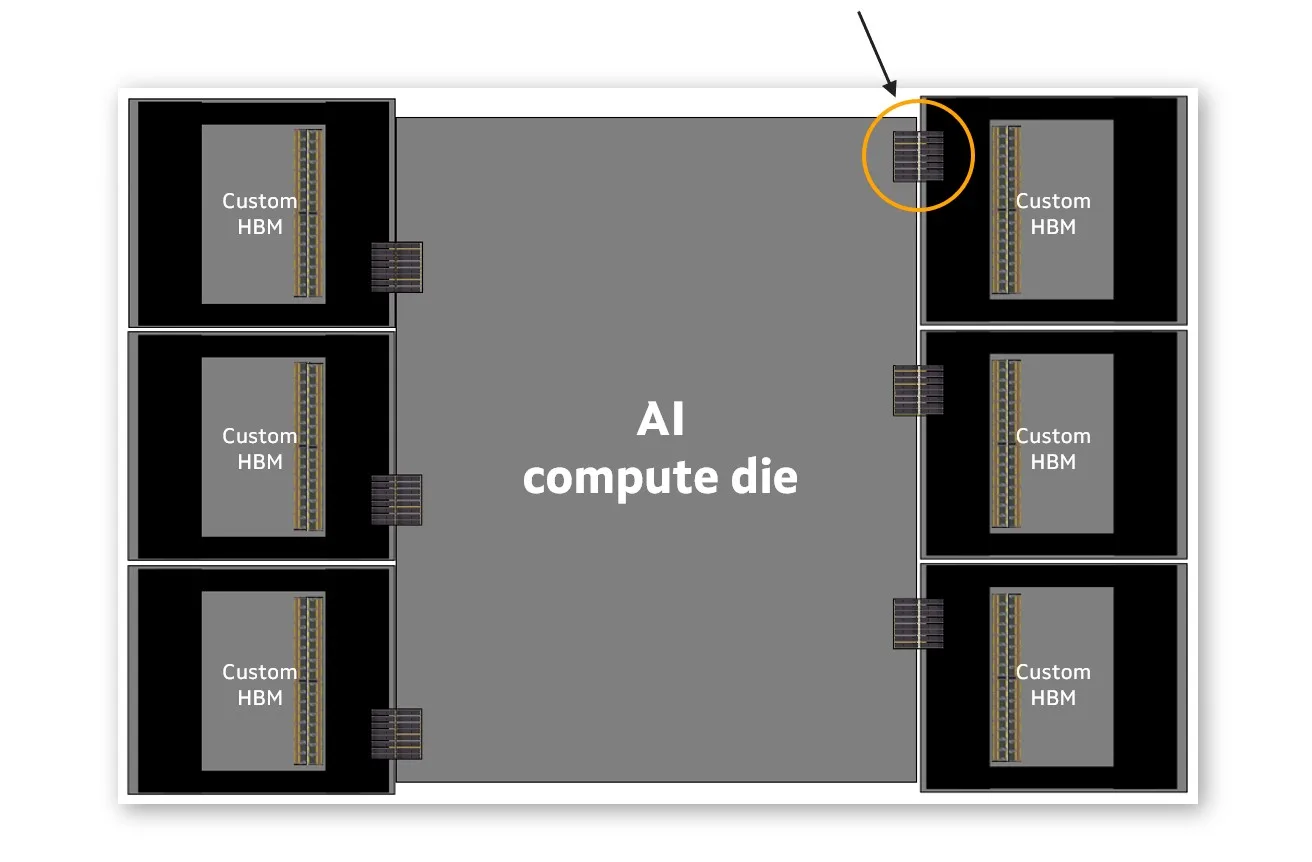
Memory manufacturers SK Hynix, Samsung, and Micron have shifted wafer production toward HBM for AI accelerators:
- Micron has noted a 3-to-1 conversion ratio between HBM and DDR5 wafer capacity (every HBM production ramp directly compresses the general-purpose memory supply). The constraint is structural, with advanced packaging requirements and cleanroom resource consumption for HBM production significantly higher than for conventional DRAM.
- SK Hynix secured demand for its entire 2026 HBM production in October 2025.
Goldman Sachs now quantifies the supply-demand imbalance as the most severe in 15 years, with a global DRAM deficit of 4.9% in 2026, NAND at 4.2%, and HBM at 5.1% (all the largest deficits since 2011).
Hyperscaler Procurement and Spending
The scale of cloud provider AI infrastructure investment has become a primary driver of memory market dynamics. The five largest hyperscalers (Amazon, Microsoft, Google, Meta, and Oracle) are projected to spend a combined $755 billion on capital expenditures in 2026 (Goldman Sachs consensus), an 83% year-over-year increase.
Memory spending within that total has expanded dramatically, with spending on various types of memory accounting for about 30% of hyperscaler capital expenditure in 2026, up from 8% in 2024:
- Microsoft indicated higher component prices, including memory, will add $25 billion to its full-year capital spending commitment, bringing its total to approximately $190 billion.
- Meta raised its 2026 capex guidance by $10 billion, citing component costs, with memory chips the primary driver.
- Long-term purchase agreements between cloud providers and memory manufacturers continue to absorb available supply ahead of other buyers.
- North American cloud providers are accelerating AI inference deployments, with high-capacity RDIMMs the primary procurement target.
- Enterprise customers without multi-year contracts face extended lead times and sharply reduced negotiating leverage.
Supplier Behavior and Capital Discipline
A critical distinction between the current cycle and previous memory market crises is supplier behavior. Samsung and SK Hynix, which together control approximately 70% of global DRAM production, have signaled to investors they do not plan to pursue aggressive capacity expansion.
The calculus is that maintaining disciplined output maximizes profitability at current price levels, whereas overexpansion would recreate the conditions of prior boom-bust cycles.
Advanced node migration to 1b, 1c, and 1d DRAM and 200-plus-layer 3D NAND has increased capital intensity per wafer, slowing and making capacity expansion more expensive than in prior technology generations.
Suppliers have rational incentives not to overinvest, as doing so would erode margins. Goldman Sachs projects total hyperscaler AI capex of $7.6 trillion between 2026 and 2031, a demand signal with no historical precedent, reinforcing supplier caution about overbuilding.
Lead Times and Procurement Windows
- Lead times for larger DRAM orders have extended beyond 40 weeks, with some configurations approaching six months.
- Quote validity windows have contracted to hours in some cases, reflecting the emergence of effectively real-time pricing.
- Organizations face pipeline risks as server deployments slip from H1 2026 into 2027.
- New fabrication facilities require 12-18 months to bring online, with cleanroom-to-production timelines increasingly extending to 3 years or more for advanced nodes.
- Meaningful capacity additions are not expected to relieve pressure before late 2027 at the earliest.
- The 2028 timeline is increasingly the base case for significant supply normalization.
Analyst’s Take
The May 2026 memory market reflects a structural shift that has deepened materially since our March analysis. The three factors identified then have all intensified.
Demand for AI infrastructure creates sustained, high-margin competition for manufacturing capacity that shows no sign of abating. Memory producers have rational incentives to prioritize HBM production over conventional DRAM, and this prioritization persists as long as AI infrastructure buildouts continue. Every quarter that passes without new capacity locks in higher prices for the next planning cycle.
Hyperscaler procurement behavior has intensified beyond what was anticipated in early 2026. The $755 billion in 2026 hyperscaler capital expenditure (with memory consuming approximately 30% of that total) is a structural demand floor that did not exist in prior memory cycles.
Open-ended, multi-year purchase commitments from the five largest cloud providers absorb available supply at the supplier level before it reaches open-market allocation.
Enterprise buyers are competing for residual output from producers that, by design, prioritize their highest-value customers.
New capacity additions will not relieve pressure before late 2027 at the earliest, and the 2028 timeline is increasingly the base case. The 12-to-18-month fab construction estimate cited in our March analysis has proven overly optimistic, as advanced-node migration has lengthened effective construction timelines and increased capital requirements per wafer.
The suppliers with the capital to build have rational incentives not to build aggressively.
Practical implications for enterprise buyers:
- Memory-dependent infrastructure purchases now carry cost premiums exceeding 100 percent versus 2024 pricing for many DRAM configurations, far above the 30-60% premium projected at the start of 2026
- Lead times exceeding 40 weeks make Q2 and Q3 procurement decisions binding constraints on deployment timelines extending into 2027 and beyond
- Architectural choices that reduce flash dependency (hybrid storage configurations, tiered data placement, and compute-near-storage designs) provide partial but meaningful insulation against ongoing price volatility
- DDR4 buyers should treat the product as a specialty component and pursue multi-year contracts: by 2027, production will be concentrated at Nanya and Winbond, with pricing reflecting scarcity rather than cost
- Consumption-based procurement models that shift allocation risk to vendors with established supplier relationships provide structural protection that spot-market approaches cannot replicate
The concentration risk in the memory supply chain has proven more consequential than anticipated. Three manufacturers control the majority of global DRAM and NAND production.
When all three simultaneously reallocate capacity toward a single high-margin product category and exercise coordinated capital discipline to avoid oversupply, downstream industries have limited recourse on any timeline relevant to current planning cycles.
Enterprise buyers should factor in supply chain resilience when selecting vendors for all memory-intensive infrastructure decisions. The market conditions that prevailed in 2024 are not returning on any timeline visible from current data.