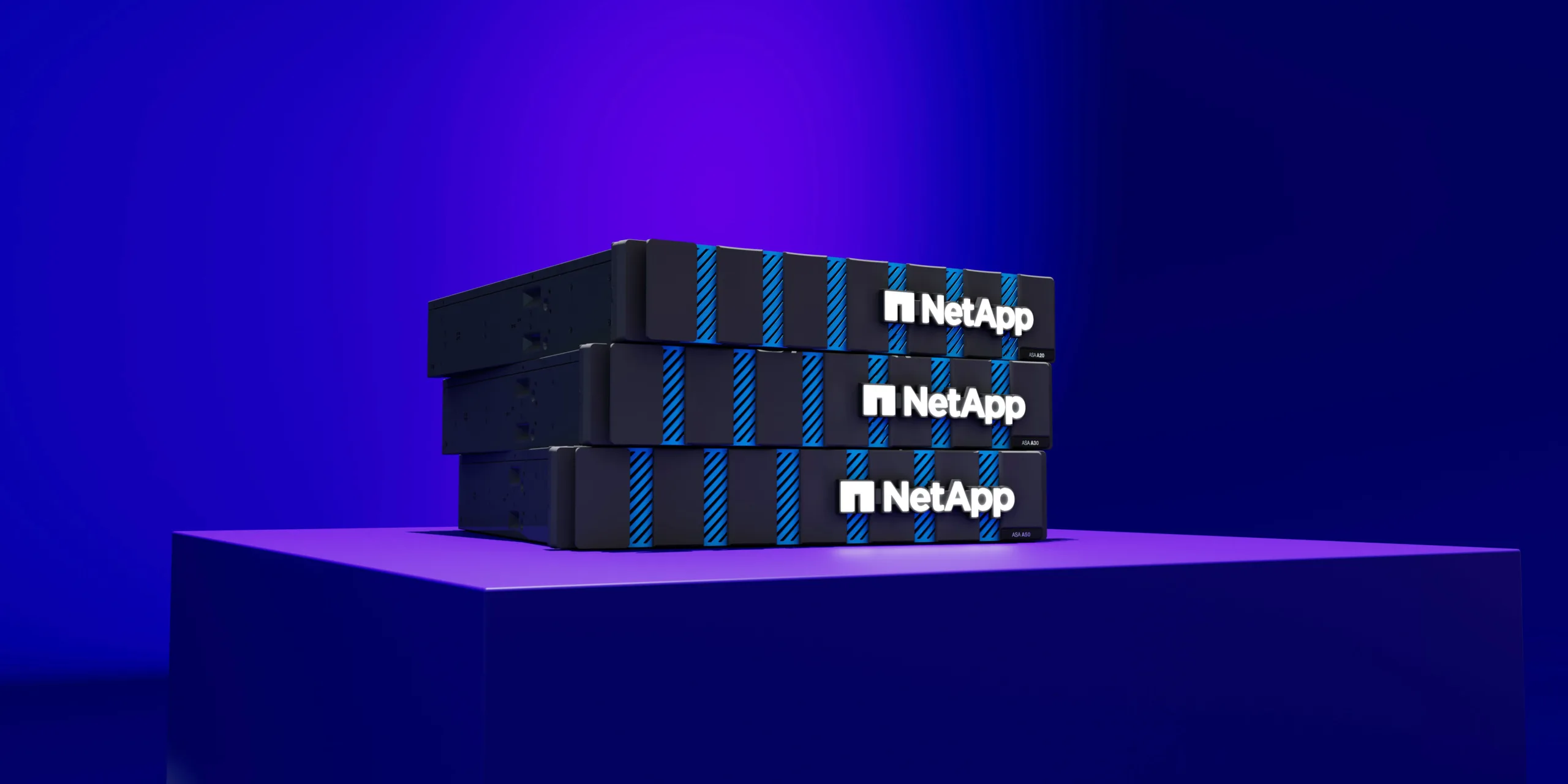
NetApp announced the acquisition of DataPelago, a Sunnyvale, California-based startup that builds a data processing engine called Nucleus (formerly marketed as the Universal Data Processing Engine). DataPelago will operate as a wholly owned subsidiary of NetApp. NetApp did not disclose the financial terms.
The acquisition addresses a bottleneck in enterprise AI deployment. Enterprises have invested in GPU infrastructure and LLMs, yet the data those systems rely on is scattered across storage systems and must typically be copied to separate compute clusters before it can be processed for AI or analytics workloads.
DataPelago’s technology delivers accelerated compute directly at the storage layer, using both CPUs and GPUs, so data does not need to move before it can be queried, transformed, or prepared for AI. NetApp describes this as “zero-copy activation” of enterprise data.
The deal extends NetApp’s Intelligent Data Infrastructure strategy, which already includes ONTAP, the AI Data Engine, and AFX, and follows recent partnership announcements with Cisco, Google Cloud, Red Hat, and SK Telecom.
It also places NetApp in a compute-acceleration race already underway between VAST Data and Dell, both of which are partnering with NVIDIA.
Who Is DataPelago?
DataPelago was founded in 2021 by CEO Rajan Goyal and chief product officer Anand Iyer. Goyal previously served as CTO at Fungible, a data-processing startup acquired by Microsoft in 2022. His background includes hardware and software co-design work at Cavium. DataPelago had raised more than $75 million in venture funding across three rounds.
The company’s core product, originally known as the Universal Data Processing Engine and now marketed as Nucleus, is built on three layers:
- DataVM: a virtual machine with a domain-specific instruction set for data operators, providing a common abstraction across CPU, GPU, FPGA, and custom silicon.
- DataOS: an operating-system layer that maps data operations to heterogeneous accelerated hardware and manages that mapping dynamically.
- DataApp: a pluggable integration layer that connects the engine to query engines such as Apache Spark and Trino. The engine leverages open-source projects, including Gluten, Velox, and Substrait.
DataPelago runs on standard accelerated compute instances from AWS, Azure, and Google Cloud, as well as on GPU-focused cloud providers such as CoreWeave, Crusoe, and Lambda.
DataPelago has drawn a distinction between its engine and the underlying storage engine. A storage engine manages where data physically resides, while DataPelago’s technology sits above that layer, focusing on processing queries and data operations and leaving data placement to the underlying storage system.
Technical Details
Nucleus accelerates GenAI and lakehouse analytics workloads by automatically mapping data operations to the most suitable hardware, whether CPU, GPU, FPGA, or another accelerator. It dynamically adapts the acceleration to optimize performance.
NetApp and DataPelago claim the technology reduces infrastructure costs by up to “80 percent” and delivers performance up to “10 times faster” than conventional approaches that move data to external compute clusters for processing.
The technology involved spans several areas relevant to enterprise data teams:
- Query and workload support: Nucleus integrates with Spark and Trino today, and DataPelago has outlined a broader vision for networked query engines that enable massively parallel execution across CPUs, GPUs, and FPGAs.
- Integration model: the engine integrates with existing data stores, lakehouse platforms, SQL and Python workflows, Airflow orchestration, and BI tools such as Tableau and Power BI, without requiring data migration.
- Deployment: Nucleus runs on standard accelerated compute instances across major hyperscalers and GPU cloud providers, rather than requiring proprietary hardware.
- Storage alignment: NetApp will ultimately align Nucleus with its storage layer, primarily ONTAP and AFX.
Analysis
The acquisition continues NetApp’s shift from a storage vendor to what it calls an Intelligent Data Infrastructure company, a repositioning underway through products such as ONTAP, AFX, and the AI Data Engine. Bringing compute acceleration in-house is a welcome addition to its portfolio, giving the company more direct control over the increasingly critical AI data plane.
Practitioner Impact
For data engineering and AI infrastructure teams already using NetApp storage, the appeal of Nucleus is clear: less data movement means fewer ETL pipelines to maintain, lower egress and duplication costs, and faster time to a queryable dataset for AI training, fine-tuning, or retrieval-augmented generation.
Teams already using Spark or Trino with NetApp-managed data stand to benefit first, since those are the integrations DataPelago has already built.
Competitive Landscape
The announcement places NetApp in familiar territory, extending its direct competition with VAST Data and Dell Technologies, both of which have already shipped GPU-accelerated data processing capabilities based on NVIDIA technology, ahead of NetApp’s acquisition.
| Dimension | NetApp + DataPelago | VAST Data | Dell Technologies (AI Data Platform w/ NVIDIA) |
| Core Capability | Zero-copy activation: run compute where data already sits, don’t move it | Unify storage, database, and compute into one accelerated OS | Orchestrate data across open formats/engines for AI pipelines |
| Acceleration Engine | Nucleus engine: heterogeneous CPU/GPU processing at the storage layer, engine-agnostic | Sirius query engine (NVIDIA cuDF-based) + CNode-X servers built with NVIDIA | NVIDIA cuDF (structured data/Spark) + cuVS (vector indexing) bolted onto PowerScale/Lightning/ObjectScale |
| Key products & tech | DataPelago Nucleus, ONTAP, AI Data Engine, AFX | VAST AI Operating System, VAST DataBase, Sirius, CNode-X | Dell AI Data Platform, PowerScale, Lightning File System, ObjectScale, NVIDIA CMX |
| Performance claims | Up to 80% lower infra cost, up to 10x faster processing | Up to 44% query-time reduction, up to 80% query-cost reduction (Sirius) | 3x faster SQL/ETL, 12x faster vector indexing |
| Data movement model | True zero-copy: no staging to separate AI compute cluster | Unified namespace; storage-optimized + GPU-accelerated in one platform | Multi-engine (Trino, Elasticsearch, Spark) reading from open-format storage; engine-dependent movement |
| Governance/discovery | Inherited from NetApp Classification/AI Data Engine, not DataPelago’s core job | Limited: primarily a performance/database play | Emerging via Elasticsearch integration; not a core strength |
| Anchor partner | NVIDIA (implied), plus Cisco/Google Cloud/Red Hat/SK Telecom ecosystem | NVIDIA (deep co-engineering — CNode-X, cuDF) | NVIDIA (GTC 2026 flagship partnership) |
| Maturity/availability | Just announced (Jul 2026); integration roadmap undefined | Shipping — Sirius benchmarks public, CNode-X in market since VAST Forward Feb 2026 | GPU-accelerated processing/indexing slated 2H CY26 |
| Most direct threat to DataPelago | — | Highest: same mechanism (GPU accel at data layer), same NVIDIA dependency, already shipping + validated benchmarks |
VAST Data
VAST Data introduced an end-to-end accelerated AI data stack with NVIDIA at VAST Forward in February 2026, built around the VAST AI Operating System, VAST DataBase, and a new query engine called Sirius that is based on NVIDIA cuDF.
VAST has published early benchmarks claiming up to a 44 percent reduction in query time and up to an 80 percent reduction in query cost, alongside its co-engineered CNode-X server line.
Because VAST’s approach, like DataPelago’s, pushes GPU-accelerated compute directly to the data layer rather than requiring a separate compute cluster, it is the closest architectural match to NetApp’s acquisition.
Dell Technologies
Dell Technologies has taken a similar path with its Dell AI Data Platform, built with NVIDIA and expanded at GTC 2026. Dell’s platform layers NVIDIA cuDF for structured data processing and cuVS for vector indexing onto its existing PowerScale, Lightning, and ObjectScale storage engines, claiming up to 3 times faster SQL queries and ETL and up to 12 times faster vector indexing. Dell’s GPU-accelerated processing and indexing capabilities are not yet generally available and are scheduled for the second half of calendar 2026, putting Dell roughly in step with, or slightly behind, NetApp’s own integration timeline.
Final Thoughts
NetApp’s acquisition of DataPelago is a logical move for a company that has spent the past several years repositioning itself around data intelligence rather than raw storage capacity. Bringing an accelerated compute engine in-house gives NetApp a more direct way to make enterprise data usable for AI without duplicating it across a separate compute layer.
The open questions are execution and timing. NetApp has not disclosed an integration roadmap, a set of supported ONTAP platforms, or independently verified performance data, while VAST Data and Dell Technologies have already shipped comparable NVIDIA-based acceleration capabilities with public benchmarks.
The acquisition makes clear where NetApp intends to compete, but it does not yet demonstrate that NetApp can compete there as quickly as the two companies already ahead of it. It’s an acquisition that makes sense.
Overall, for customers evaluating storage vendors on their AI data readiness, the near-term takeaway is that this acquisition is a signal of intent, not yet a deployable capability. Buyers with an immediate need for GPU-accelerated data processing at the storage layer will find more mature, benchmarked options from VAST Data today and from Dell Technologies later this year, while NetApp customers should expect Nucleus’s arrival inside the ONTAP ecosystem to unfold on a longer timeline.