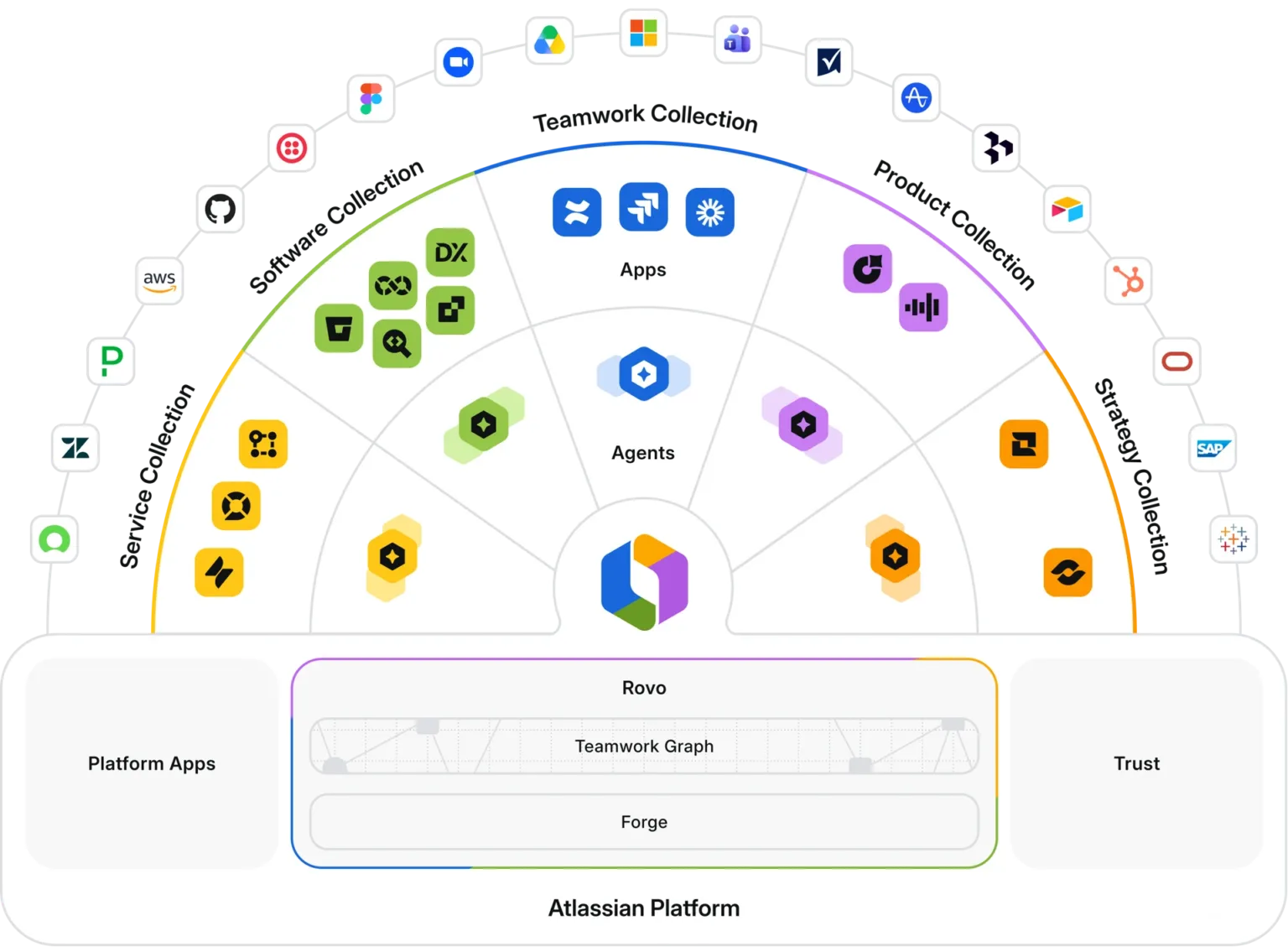
Atlassian introduced the Agentic Multiplayer Protocol (AMP) at its Team ’26 Europe conference in Amsterdam. AMP is Atlassian’s framework for AI agents to participate in shared work alongside people across Jira, Confluence, Loom, Bitbucket, and the rest of the Atlassian cloud platform.
AMP gives each agent an identity and a visible presence, scopes the agent’s access, grounds it in the customer’s Teamwork Graph, and records its actions for human review.
Atlassian paired AMP with a rebuilt Atlassian MCP Server, new code, structured-data context in the Teamwork Graph, agent sessions in Jira, a long-running Rovo Work mode, and an Artifacts app for AI-generated output.
AMP addresses a growing problem in the agentic enterprise, where Agent work increasingly occurs within individual developer environments and private chat windows, leaving no shared record of who or what did the work, on whose authority, and with what context.
Atlassian’s answer is to make its platform the place where it attributes, governs, and feeds that work back into a shared body of organizational knowledge, regardless of which vendor built the agent.
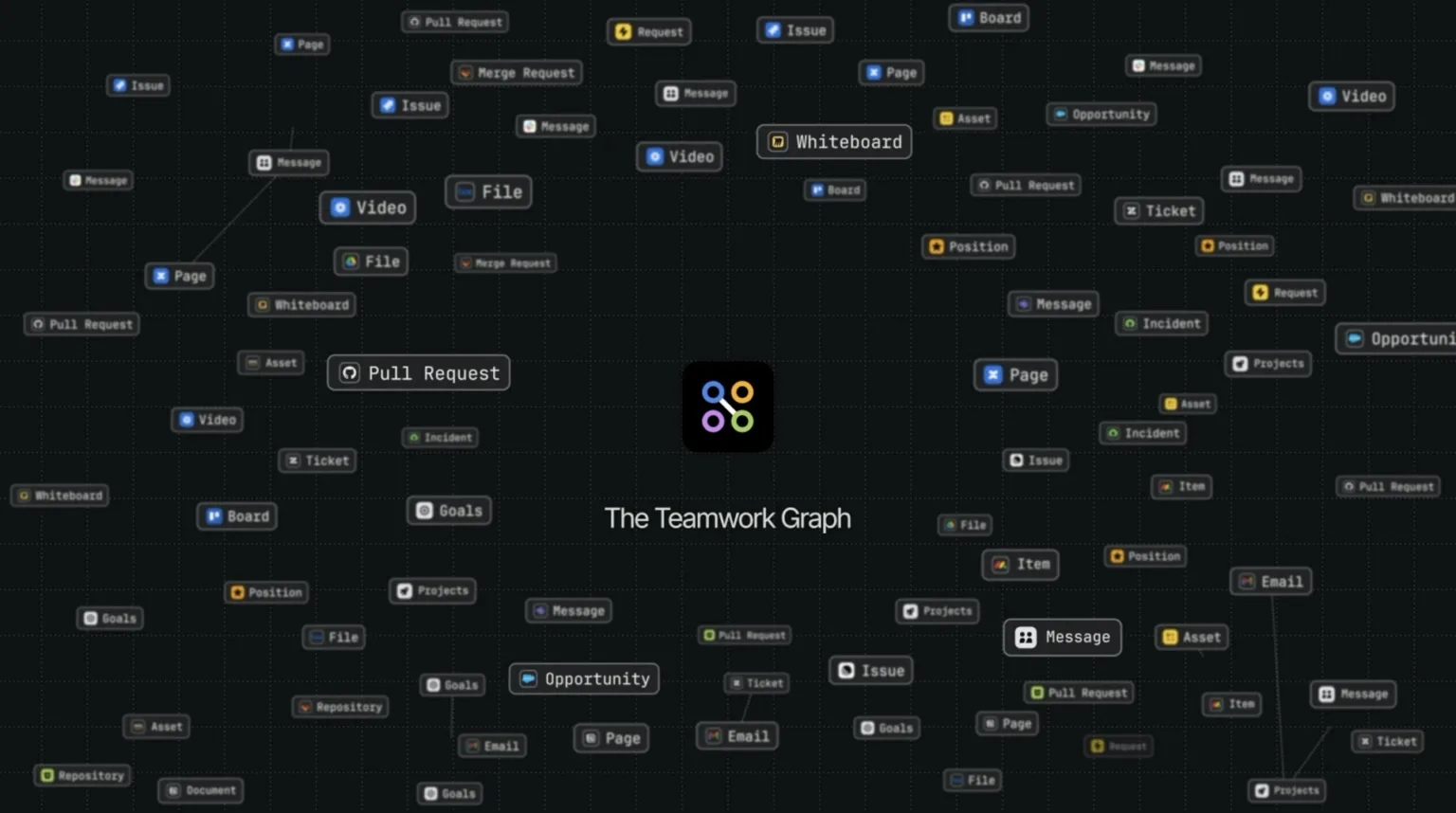
The significance lies in what Atlassian already owns. Two decades of Jira work items, Confluence pages, service tickets, and code history provide Atlassian with a structured map of how enterprises plan, decide, and deliver work. The company says the Teamwork Graph now holds more than 250 billion connections.
As OpenAI, Anthropic, and Google models become interchangeable engines within Rovo and within the agents customers bring from elsewhere, that graph becomes Atlassian’s most valuable and defensible asset.
AMP is the operating model that puts it to work.
What’s Driving the Need for AMP?
Enterprise adoption of AI agents has advanced faster over the past year than governance and coordination practices have. Development teams now run several coding agents in parallel, business teams build their own agents in no-code tools, and long-running agents execute multi-step tasks with minimal human intervention between request and result.
Atlassian reports that 77% of its pull requests last month were entirely agent-generated, a figure that shows how quickly agent output can outpace human review capacity.
Several pressures converge to create demand for a framework such as AMP:
- Agent sprawl across vendors: A typical engineering organization now uses agents from several providers, including Claude Code, Cursor, OpenAI Codex, GitHub Copilot, and Atlassian’s own Rovo agents. Each tool maintains its own session history, and little of that activity reaches a shared system of record.
- Invisible work: Atlassian Head of Product Engineering Taroon Mandhana told the keynote audience that too much agent work remains buried within individual developer environments. Work a team cannot see cannot be reviewed, reused, or audited.
- Non-human identity gaps: Most Jira and Confluence sites already contain automation rules, API tokens, integrations, and Marketplace apps with broad permissions and unclear ownership. Agents that act under a person’s credentials inherit every flaw in that person’s access, and audit logs cannot distinguish the person from the agent.
- The context deficit: Frontier models reason well, yet they know nothing about a specific company’s priorities, past decisions, or dependencies. An agent working without that context produces plausible output that misses the business reality and consumes more tokens along the way.
- Regulatory and audit pressure: The EU AI Act, ISO 42001, and sector-specific rules push enterprises to demonstrate who approved AI-generated work and which data AI systems accessed. Attribution and audit trails become requirements for regulated buyers.
- Cost accountability: As vendors, including Atlassian, shift AI pricing toward consumption-based credits. Finance teams need visibility into which agents consume which resources and whether the output justifies the spend.
Taken together, these pressures describe a coordination problem that better models alone cannot solve. Enterprises need a common set of rules for identity, permissions, context, and review that applies to every agent, regardless of origin.
AMP targets that gap.
Announcement Details
AMP is a collection of user experiences, platform services, and interaction patterns applied across the Atlassian cloud platform. Despite the name, Atlassian has not published AMP as an open specification that other vendors can independently implement, as Anthropic’s MCP does.
Atlassian describes AMP in three layers and states that the framework is live across its platform today (although several supporting components are still rolling out). The three layers define how agents behave within shared work.
- Real-time and asynchronous collaboration: Agents participate on the same surfaces people use, including “@mentions” in Confluence, Jira comment threads, and Loom video briefs. New interface patterns show agent progress, completed actions, and the points where an agent needs human input.
- Identity and shared presence: Every agent has an owner and a distinct profile. Agents appear in real-time presence bars and cursors on pages and whiteboards, and version history separates edits by people from edits by agents.
- Context and governance: Agents draw context from the Teamwork Graph and operate under scoped permissions, either running as the invoking user or via dedicated service accounts, with an audit trail that records each action.
The Teamwork Graph as the Context Foundation
The Teamwork Graph underpins every AMP capability. It maps relationships among people, work items, documents, communications, code, and assets. Atlassian reports that the graph has grown from roughly 150 billion objects and relationships six months ago to more than 250 billion today.
This week, the company extended it in four directions:
- Code context (generally available): The graph now indexes source code down to functions, symbols, and classes across Bitbucket and GitHub, in both cloud and Data Center deployments, with GitLab support promised for next month. The new Rovo Code Search app lets engineers search codebases using natural language without cloning repositories, and coding agents use the same index.
- Data context: Structured data becomes a graph context type, with live metadata from more than 20 sources, including Databricks, Snowflake, Tableau, and BigQuery. A new Atlassian Insights app curates those sources, offering catalog, glossary, and lineage features.
- Connectors: The connector library includes more than 80 sources, with new additions including Zoom, Gong, Microsoft Entra ID, and Google Identity, along with more than 65 improvements to existing connectors.
- Agents and sessions as graph objects: Agents now appear in the graph alongside people. Atlassian indexes and distills agent sessions into reusable session memory, so the next person or agent working in an area starts with what earlier sessions learned.
Agent Execution and Visibility
Atlassian also introduced capabilities that pull agent activity into existing Atlassian workflows:
- Atlassian MCP Server, rebuilt: The tool count has grown from dozens to more than 200, spanning nearly every Atlassian app, plus Forge and Marketplace apps, with access governed by Atlassian Guard. Atlassian claims up to 25% lower token consumption for Jira and Confluence tasks and reports more than 15 million MCP tool calls per day.
- Agent sessions in Jira: Local and cloud agent runs from Rovo, Claude, Cursor, or Codex automatically link to Jira work items. Boards show all running agents, flag those waiting on a human, and allow untracked sessions to be dragged onto a board to create a populated work item.
- Rovo Work: A new Rovo Chat mode handles multi-step tasks that run from minutes to hours within an admin-governed cloud sandbox. Rovo Work proposes a plan for approval, executes it across Jira, Confluence, and connected tools, and inherits the permissions of the person who launched it.
- Artifacts app: AI-generated plans, prototypes, and HTML views from any AI tool receive permanent, permissioned URLs that embed in Confluence, Jira, and Slack and are indexed back into the graph.
- Loom Record for Agent and interactive PR reviews: Users narrate a screen recording, which Loom converts into a structured agent prompt. Interactive PR reviews generate short video walkthroughs of pull requests that link to the decisions behind the change. Atlassian lists that capability as coming soon.
Governance, Compliance, and Cost
Atlassian’s new and updated governance components include:
- Agent accounts and non-human identity inventory: Every agent, app, and service account receives a managed identity, with a central switch to revoke access.
- Guard Premium: Adds data discovery and classification, full-site historical scanning, real-time scanning of content and attachments, and guardrails across Rovo Chat and connected tools.
- EU AI inference: Restricts LLM processing to EU-hosted frontier models from OpenAI, Anthropic, and Google, with rollout starting now. Atlassian also cites alignment with the EU AI Act and ISO 42001 for Rovo.
- Agent effectiveness and spend: DX Agent Effectiveness scores agent sessions and includes a model fit score that flags work a cheaper model could have handled. AI Capital Management, in open beta for Strategy Collection customers, reports AI spend by model provider, department, and initiative.
Model Partnerships with OpenAI and Anthropic
AMP arrives alongside deeper relationships with both leading frontier model providers. On October 6, Atlassian and OpenAI announced an expanded partnership, building on a collaboration that began in 2023. Under this partnership, GPT-6 family models will power agents across Rovo and the Atlassian platform.
The agreement adds MCP connectors that link ChatGPT and Codex to Atlassian data, and Jira users will soon be able to assign work items directly to Codex cloud agents.
Atlassian is also expanding its internal use of ChatGPT Enterprise and Codex, while OpenAI continues to run critical workflows in Jira.
Atlassian’s Anthropic integration runs in parallel. Claude Agent for Jira, released in June, lets teams assign Jira work items to a Claude coding agent, which returns a pull request. Atlassian also offers Atlassian Skills for Claude, deeplinks from Jira into Claude Code, Claude model selection within Rovo Agents, and Claude models in Rovo Dev.
CEO Mike Cannon-Brookes highlighted the multi-model stance on stage, inviting customers to bring Cursor, ChatGPT, Claude, or any other agent harness to the platform.
Analysis
AMP names and formalizes a strategy Atlassian has developed over the past year:
- At Team ’26 in Anaheim in May, Atlassian opened the Teamwork Graph to external agents via MCP and a command-line interface.
- In July, it made Claude, Cursor, and GitHub Copilot assignable within Jira.
AMP extends that trajectory, casting the Atlassian platform as the governed system of record for work performed by people and by agents from any vendor.
Atlassian’s strongest asset in this strategy is the structure of the data it already holds:
- Jira records what an organization planned, who owns it, how priorities shifted, and what shipped.
- Confluence captures the reasoning behind decisions, along with specifications and runbooks.
- Jira Service Management logs incidents and resolutions.
- Bitbucket holds code history.
- Loom captures the conversations in between.
The relationships among those objects form a working model of how a business operates, accumulated over more than 20 years and spanning a customer base that, by Atlassian’s count, includes 85% of the Fortune 500.
Model providers improve their models every few months, and no one can replicate that institutional history.
Atlassian makes the point directly, describing models as intelligence a company can rent and the Teamwork Graph as the company-specific knowledge those models lack.
This carries clear strengths and identifiable risks:
- Neutrality as a selling point: Atlassian partners with OpenAI, Anthropic, and Google simultaneously and supports competing coding agents on the same platform. Enterprises wary of committing to a single model provider gain a coordination layer that withstands model churn.
- Consumption economics: Usage-based Rovo pricing and AI Capital Management tie Atlassian’s revenue to agent activity, including activity by agents Atlassian did not build.
- Graph gravity: Each agent session, artifact, and connector indexed in the graph raises the cost of leaving the platform. This strengthens retention and gives buyers reason to scrutinize data portability.
- The protocol label: Calling AMP a protocol invites comparison with MCP and A2A, both open specifications. Until Atlassian publishes an implementable specification, AMP functions as a set of Atlassian platform features, and buyers should evaluate it on those terms.
Practitioner Impact
AMP affects three groups differently:
- Engineering teams derive the most immediate value from Code Search, agent sessions on Jira boards, and the rebuilt MCP server.
- Business users encounter agents as visible collaborators on pages and in comment threads.
- Atlassian administrators experience the most significant change because AMP turns the content and permissions they already manage into the context that every agent consumes.
Practitioners evaluating AMP should weigh several considerations:
- Attribution simplifies auditing: Version history that separates human and agent contributions gives compliance teams a verifiable record of who approved agent output.
- Permissions become context: Rovo surfaces only what a user can already see, turning over-broad grants and stale spaces into retrieval paths for every agent. Permission hygiene and content cleanup become prerequisites for deriving value from AMP, and code context adds repository permission models that Atlassian administrators may not own.
- Compounding context cuts both ways. Session memory and indexed artifacts enrich the graph over time, while outdated runbooks and conflicting documentation accumulate alongside good content. Content governance becomes an AI quality issue.
- Rovo Work serves as its launcher: Until agent accounts ship, long-running tasks run under the initiating user’s identity, so organizations should treat each Rovo Work task as that user’s responsibility.
- Cost exposure is unclear: Rovo credits transition to consumption billing on December 3, and Atlassian has not explained how hours-long Rovo Work tasks consume credits or whether administrators can cap individual tasks.
- Coverage varies: Nearly every AMP capability requires Rovo; availability varies by plan and region; and regulated U.S. customers should confirm HIPAA and FedRAMP support for agent features before planning deployments.
Competitive Landscape
AMP competes for a role that several large platform vendors want, namely the control point where enterprise agents receive context, identity, and oversight. Each competitor approaches the problem using the data it already owns:
- Microsoft builds on the Microsoft Graph of email, meetings, and files.
- ServiceNow builds on workflow and configuration data.
- Salesforce builds on customer data.
- GitHub builds on code.
Atlassian builds on structured records of planned and completed work, and that difference determines where each vendor wins.
The model providers add a second competitive dimension. OpenAI and Anthropic power Rovo and integrate deeply with Jira. Both also sell enterprise products, including ChatGPT Enterprise, Codex, Claude Enterprise, and Claude Code, that connect to company data and could become the primary interface through which employees direct agents.
Atlassian responds by supplying context to those tools via MCP and capturing their output through agent sessions and Artifacts, so the work returns to the Teamwork Graph wherever it starts.
It’s an approach that turns a disintermediation risk into a source of graph growth, provided customers continue routing agent work back through Jira.
The table below summarizes the primary alternatives buyers will weigh against AMP.
| Alternative | Model / Approach | Compared to Atlassian AMP |
| Microsoft 365 Copilot, Copilot Studio, and Entra Agent ID | Agents grounded in Microsoft Graph data from email, chat, meetings, and files, with agent identities managed in Entra | Broader reach across everyday communication and a dominant enterprise identity platform. Holds a thinner structured view of engineering plans, decisions, and service records than Jira and Confluence provide. |
| ServiceNow AI Agents and AI Control Tower | Workflow-centric agents with centralized AI governance across IT, HR, and customer service | Stronger in ITSM and CIO-level governance of enterprise workflows. Less presence in software development and day-to-day team knowledge work. |
| Salesforce Agentforce with Slack | Customer-data-grounded agents using Slack as the conversational interface | Strong in sales and service functions and in real-time conversation. Limited depth in engineering planning, code, and technical documentation. |
| GitHub Copilot and multi-agent orchestration | Code-native agent management inside repository and pull request workflows | Closer to the code and the developer’s primary tool. Narrower business context around requirements, decisions, and cross-team dependencies. |
| Model provider enterprise platforms (ChatGPT Enterprise and Codex, Claude Enterprise and Claude Code) | Direct agent interfaces that reach enterprise data through connectors and MCP | Frontier capability and rapid iteration. Rely on external systems such as Atlassian for structured work context, attribution, and team-level governance. |
| Work management peers (Asana, monday.com, Notion) | AI agents embedded in lighter-weight work and knowledge tools, including Asana Work Graph | Faster to deploy and simpler to administer. Smaller enterprise footprint and less historical depth in engineering and service data. |
Atlassian’s differentiation is strongest in software development and in organizations where Jira and Confluence already serve as the system of record, because there the Teamwork Graph contains context that no competitor can reproduce quickly.
Its differentiation weakens at the enterprise-wide identity layer, where Microsoft Entra and ServiceNow already govern non-human identities across far more systems than Atlassian touches, and in functions such as sales and HR, where Atlassian holds little data.
Atlassian’s best path is to govern agent work within its domain thoroughly enough that enterprise identity platforms recognize AMP as the authoritative source for agent activity in engineering and teamwork.
Final Thoughts
AMP is a well-reasoned response to a problem enterprises already face. Agents from multiple vendors are doing real work, yet organizations lack a shared record of what those agents did, under whose authority, and in what context.
Atlassian delivers a compelling answer by combining a visible presence, attribution, scoped permissions, and a Teamwork Graph that now extends to code, structured data, and agent sessions. The breadth of the release, along with Atlassian’s willingness to treat OpenAI, Anthropic, Cursor, and GitHub agents as first-class participants, demonstrates clear strategic intent.
The most important takeaway concerns where enterprise AI value accrues. Models improve and commoditize on a monthly cycle, while a company’s record of planning, decision-making, and delivery compounds over decades.
Atlassian holds one of the richest such records in the enterprise, and AMP turns it into a shared context and rulebook for every agent a customer deploys. This gives Atlassian strong potential to become the system of record for agent-driven work, a role that outlasts any single model or agent.