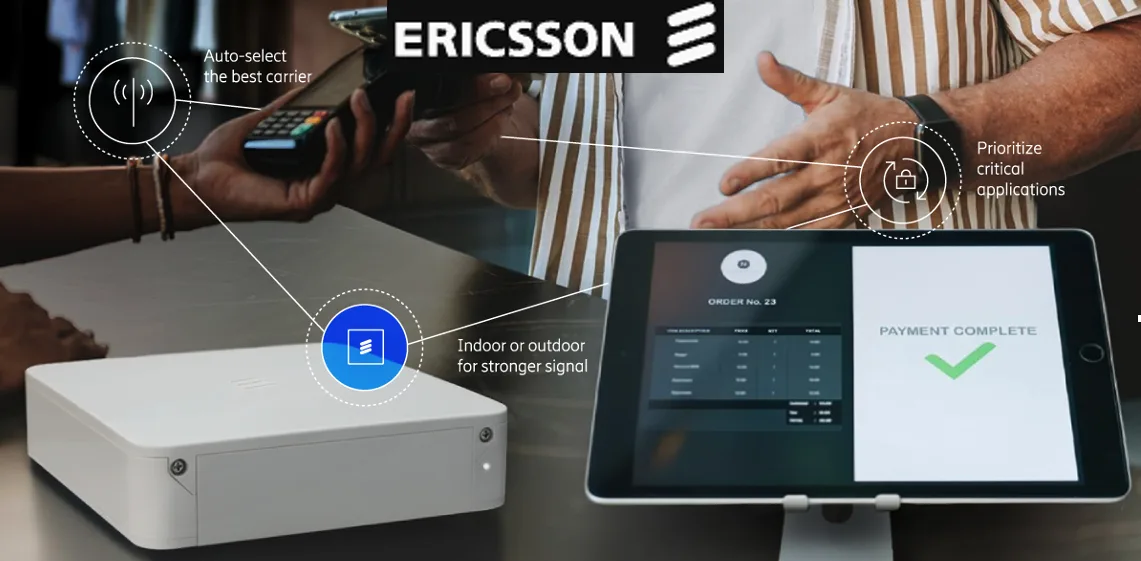
Every so often a product comes along that doesn’t try to make a grand entrance, but just taps you on the shoulder and says, “Hey, the industry moved on while you were still updating that architecture diagram.” That’s basically what Ericsson Cradlepoint’s new W2255 5G Standalone adapter is doing. Ericsson isn’t trying to reinvent the WAN here; they’re simply acknowledging what everyone in the field already knows. Enterprises are running fiber in one spot, 5G in another, and LEO satellites wherever the map turns beige. Multi‑path isn’t a strategy anymore. It’s the default.
The W2255 is built for that world.
What Ericsson Cradlepoint Actually Does
Cisco built its empire on wired routing and SD‑WAN designed for circuits that behaved themselves. Ericsson Cradlepoint went the opposite direction and bet early that wireless would graduate from “backup link” to “primary transport.” That bet aged better than most vendor roadmaps.
Their platform reflects that worldview. Instead of duct‑taping wireless onto a branch router, they designed purpose‑built adapters tied directly into NetCloud. NetCloud is where the man behind the Ericsson curtain lives. It provides an orchestration layer that actually understands RF conditions, SIM lifecycle events, carrier quirks, and satellite handoffs. It’s a system designed for the WAN we have, not the WAN we wish we had.
Why the W2255 Matters Now
Hybrid WANs are well beyond experimentation. The real challenge now isn’t getting connectivity — it’s managing the chaos that comes with it.
The W2255 leans directly into that problem. It supports 5G SA multi‑slice through URSP, which gives you deterministic performance instead of “pray the RF gods are in a good mood.” Its IP67 design option means the same core hardware can live in an office, on a rooftop, or bolted to the side of an industrial asset without needing a different SKU. And because it ties into NetCloud, the device is feeding telemetry and policy decisions that actually account for wireless and satellite volatility.
Traditional SD‑WAN platforms were built for stable, wired circuits. They don’t understand RF drift, SIM events, or satellite handoffs because they were never designed to. NetCloud does, and that’s the real shift. It treats wireless like the first‑class transport that it deserves to be.
The Strategic Shift (Cisco may want to look away)
The W2255 has impressive functionality but it’s more than just an adapter. It’s Ericsson stepping directly into Cisco’s lane and making it clear they’re not content to live at the edge of the branch anymore. Cisco is still the heavyweight in enterprise WAN — no debate there — but the W2255 is a disciplined, wireless‑optimized challenger built for the networks enterprises are actually running today.
If you’re planning a multi‑year WAN refresh, the W2255 forces its way into the RFP conversation. And no, it’s not because it’s the newest product on the market, but because it solves the operational problems that come with modern multi‑path networks. Wireline‑only policies simply don’t cut it anymore, and Ericsson knows it.
Bottom Line
The W2255 marks a turning point. Wireless WAN isn’t a backup link, and it’s definitely not just for retail pop-ups anymore. It’s core transport for mission-critical operations, and Ericsson Cradlepoint clearly gets what that means for day-two operations.
More importantly, it shows Ericsson is tired of living at the edge of the branch. They are stepping directly into Cisco’s lane. Cisco isn’t losing its heavyweight status tomorrow, but the W2255 proves Ericsson has the discipline to challenge them head‑on in a world where wireline‑only architectures are starting to look incredibly outdated.