Google Cloud Next 2026, held last week in Las Vegas, delivered a clear, consistent message: the experimental phase of enterprise AI is over, and the production phase of autonomous agent deployment has begun.
Google made an incredible 260 announcements at the event, with most aligned with the idea that enterprises will increasingly operate through fleets of AI agents rather than human-driven workflows, and that Google Cloud intends to own the full stack required to make that happen.
It’s also clear that Google Cloud is not content to win the infrastructure race alone. The event’s partner and ecosystem narrative was as aggressive as any product announcement on stage. With a $750 million investment fund, a new agent marketplace, and deep integrations across every major enterprise software platform, Google Cloud is building the deployment infrastructure that converts AI capability into enterprise outcomes.
We’re not going to look at all 260 announcements (and we’re saving the infrastructure-related ones for dedicated coverage), but let’s explore some of the most impactful.
Google Expands Its Cloud Capabilities
The announcement set at Next 2026 spanned four primary areas: agent platform, AI infrastructure, data, and security. Each area received substantive new capabilities, and the integrations across areas were explicit and architectural rather than loosely associated.
Gemini Enterprise Agent Platform
The Gemini Enterprise Agent Platform is the primary delivery vehicle for Google Cloud’s agentic strategy. It consolidates Vertex AI capabilities with a new set of enterprise-focused agent management features. Key elements include:
- Agent Studio: A development environment for building single agents and multi-agent workflows, featuring a low-code interface for business users and a comprehensive API for developers.
- Agent-to-Agent Orchestration: A coordination layer that enables agents to delegate subtasks to other agents, manage dependencies, and report outcomes without human intervention between steps.
- Agent Registry: A catalog for discovering, versioning, and governing deployed agents across an organization.
- Agent Identity and Gateway: Security primitives that assign verifiable identities to agents and govern their access to enterprise systems and APIs.
- Agent Observability: Monitoring and logging capabilities tailored to agent workflows, covering latency, success rates, and failure modes across multi-agent chains.
- Long-running Agents: Support for agents that operate over extended time horizons, maintaining state across sessions to handle multi-step business processes.
Google said that its first-party models now process more than 16 billion tokens per minute via direct API usage, up from 10 billion the prior quarter.
New model releases at the event included Gemini 3.1 Pro and Gemini 3.1 Flash.
Agentic Data Cloud
Google is expanding the capabilities of its Agentic Data Cloud with changes centered on closing the gap between data availability and agent accessibility. Key elements include:
- Cross-cloud Lakehouse: An extension of BigQuery that supports data stored across multiple cloud environments, enabling agents to query and act on data without requiring centralized migration.
- Knowledge Catalog: An expanded metadata and discovery layer that Google cited as enabling Virgin Media to activate more than 20,000 previously dark data assets.
The Agentic Data Cloud framing positions Google’s data platform as infrastructure for autonomous systems rather than primarily a tool for human analysts, a substantive repositioning of BigQuery’s go-to-market identity.
Agentic Defense
Google’s cybersecurity announcements were mostly built around its $32 billion Wiz acquisition. The combined offering, branded Agentic Defense, integrates Google Threat Intelligence and Security Operations with Wiz’s cloud and AI security capabilities.
New agentic security components include:
- Dark Web Intelligence: Uses Gemini models trained on Google Threat Intelligence Group expertise. Google states internal tests show 98% accuracy in filtering actionable external threats from millions of daily events, though this figure is vendor-reported and not independently validated.
- Threat Hunting Agent: Proactively searches for novel attack patterns and adversary behaviors using Google’s threat intelligence knowledge base.
- Detection Engineering Agent: Automates the creation of persistent detection rules from threat scenario descriptions.
- Wiz AI Application Protection Platform (AI-APP): Provides protection across multicloud, hybrid, and AI environments from code to cloud to runtime.
Smart Storage: AI-Native Metadata and Agent Connectivity
Google’s Smart Storage capabilities address a structural limitation of object storage: systems have traditionally tracked only basic metadata, such as object name, size, and creation time, leaving content-level understanding to separate downstream pipelines.
Google is inverting this model by moving AI-powered annotation directly into the storage layer. New Smart Storage capabilities include the following:
- Automated Annotations: Cloud Storage can now automatically generate content-level context at write time, including image annotations, without custom annotation pipelines. Downstream systems consume those annotations immediately, without additional processing.
- Object Context: A metadata substrate that adds structured, mutable, IAM-governed context to every object. Customers can define custom tags and classifications, and Google’s annotation pipelines automatically attach labels, extracted entities, and compliance signals.
- Cloud Storage MCP Server: A new server that enables agents to read, write, and analyze Cloud Storage data using the standard Model Context Protocol. This provides a direct integration path between Cloud Storage and agent frameworks, eliminating the need for custom connectors.
The MCP server integration allows agents built on the Gemini Enterprise Agent Platform to access Cloud Storage natively as a grounding source, without a separate retrieval architecture. This closes a gap in the end-to-end agentic data story.
Partner & Ecosystem Engagement
Money talks, and Google Cloud brought considerable volume to Las Vegas, announcing a $750 million partner innovation fund that targets the full breadth of the partner network and is built to remove friction between AI aspiration and production deployment:
- Partner Fund Scope: The fund covers global consulting firms, systems integrators, software partners, and channel partners. Supported activities include AI value assessments, Gemini proofs-of-concept, agentic AI prototyping and deployment, Wiz security assessments, and usage incentives.
- Forward-Deployed Engineers: Google is embedding its engineering teams alongside Accenture , Capgemini , Cognizant , Deloitte , HCLTech , PwC , and TCS to accelerate customer deployments and address complex technical challenges on-site.
- Early Model Access Program: Accenture, Bain & Company , Boston Consulting Group (BCG) , Deloitte, and McKinsey & Company will receive pre-release access to upcoming Google DeepMind models, enabling them to begin building before general availability.
Agent Marketplace: A Platform Play for the Partner Economy
Google Cloud launched the Agent Marketplace as a commercial distribution channel embedded directly in the Gemini Enterprise platform.
At launch, more than 70 pre-built agents from partners including Accenture, Adobe , Atlassian , Deloitte, Lovable , Oracle , Palo Alto Networks , Replit , S&P Global , Salesforce , ServiceNow , and Workday are available.
The Agent Gallery integrates with this marketplace to help enterprise customers find and deploy third-party agents within their existing security and compliance frameworks.
Every Major SI Now Has a Gemini Enterprise Practice
The systems integrator announcements at Next were comprehensive. Google Cloud secured practice launches from virtually every top-tier consultancy, creating competitive pressure that will accelerate customer adoption across regulated and complex industries:
- Accenture launched its Gemini Enterprise Acceleration Program, pairing elite engineers from both companies and deploying them directly with customers.
- Deloitte formed a dedicated Agentic Transformation practice and committed to rolling out Gemini Enterprise to more than 100,000 of its own teams.
- Infosys is equipping more than 100,000 developers with Gemini Enterprise through its Topaz AI platform.
- TCS announced more than 3,000 industry-focused AI agents and an expanded global network of Gemini Experience Centers.
- McKinsey launched the McKinsey Google Transformation Group, combining strategic advisory with Google’s AI stack for enterprise agentic transformation at scale.
- PwC, Capgemini, HCLTech, Cognizant, BCG, KPMG, and Kyndryl each announced dedicated Gemini Enterprise practices, centers of excellence, or expanded delivery capabilities.
Enterprise SaaS Platforms Deepen Gemini Integration
Beyond the SI network, Google Cloud announced a new tier of product-level integrations with the SaaS platforms that run day-to-day enterprise operations. These integrations extend Gemini’s reach into the workflows where enterprise workers spend their time:
- Salesforce announced a new cross-platform agent collaboration, allowing Salesforce and Gemini Enterprise agents to share context and execute end-to-end workflows across both platforms.
- SAP outlined a multi-agent integration between Gemini Enterprise and SAP’s Joule agents, with Gemini Enterprise acting as the central orchestration hub for marketing campaign deployment in SAP CX Solutions.
- ServiceNow announced a comparable agent collaboration deal with joint industry-specific offerings for enterprise IT service management workflows.
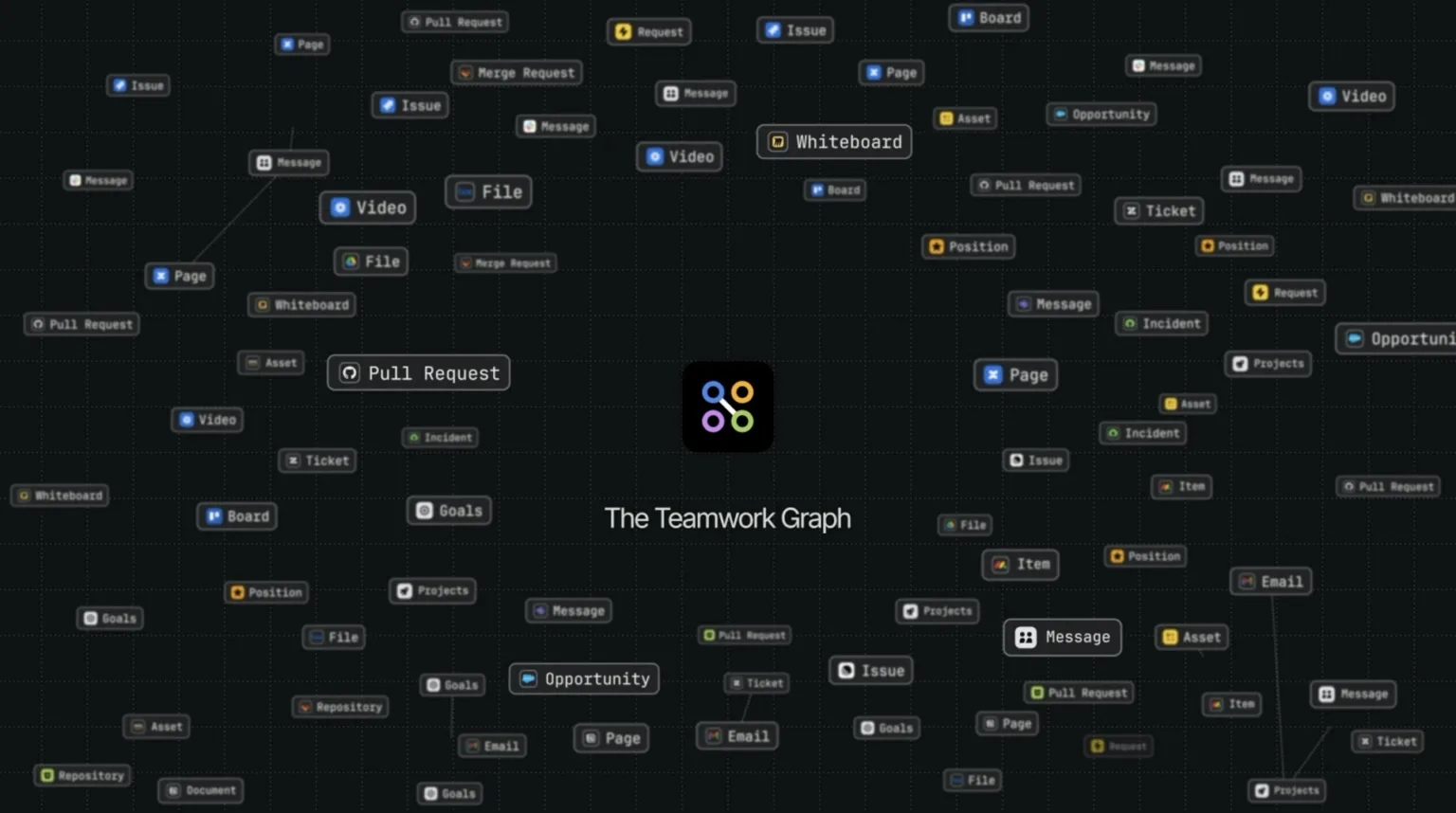
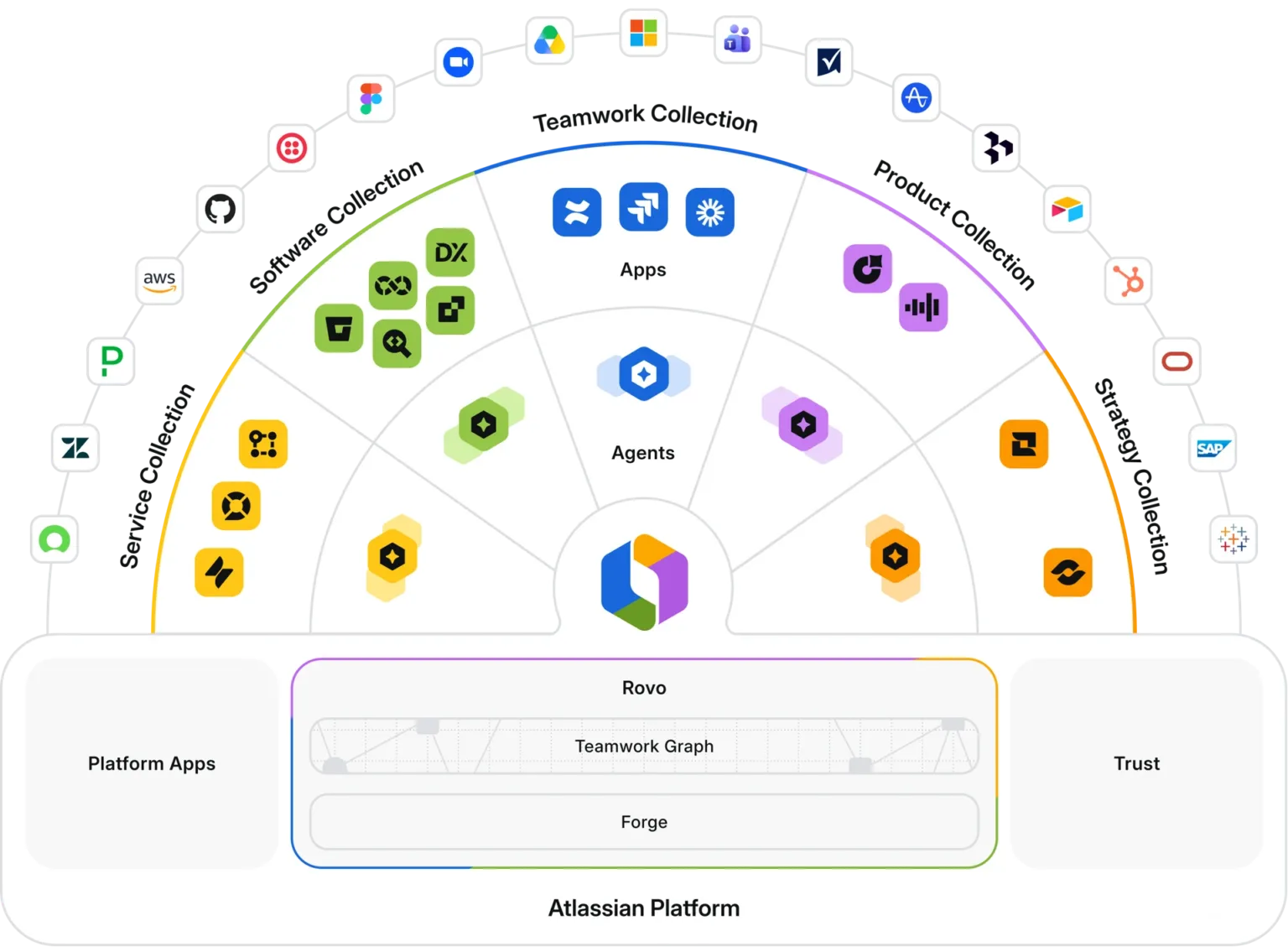
- Atlassian integrated Gemini 3 Flash into Rovo and added multimodal capabilities to Confluence Remix, enabling teams to automatically transform text documentation into diagrams.
- Oracle launched the Oracle AI Database Connector for Gemini Enterprise.
Analyst’s Take
For enterprise IT and security teams, Google Cloud Next 2026 accelerates the timeline on a set of decisions they were already facing. The Gemini Enterprise Agent Platform lowers the barrier to building agents but does not eliminate the organizational and integration work required to deploy them at scale.
Impact on IT Teams
IT organizations evaluating Google Cloud’s agentic capabilities face a differentiated set of considerations based on their current environment:
- Organizations already invested in Google Cloud’s data platform, specifically BigQuery and Vertex AI, will find the Agent Platform’s integrations native and the migration path relatively low friction.
- Enterprises with mixed-cloud or on-premises environments will need to carefully evaluate cross-cloud Lakehouse capabilities. The cross-cloud story is new, and production maturity across all supported environments is not yet established.
- Security teams inheriting Wiz deployments as part of broader Google Cloud adoption gain more integrated detection and response capabilities, but the operational consolidation of Google Security Operations and Wiz tooling will take time to complete across all customer environments.
- The $750 million partner investment shows that Google recognizes that achieving customer success with agentic AI requires significant professional services engagement. Enterprises should expect to work with system integrators for complex deployments.
- Skills availability is a real constraint. Building and governing multi-agent workflows requires expertise that the market has not yet produced at scale, and while the low-code tooling in Agent Studio is useful, it does not eliminate the need for experienced architects in complex deployments.
Final Thoughts
Overall, Google Cloud Next 2026 delivered the most architecturally complete vision of enterprise agentic AI among cloud providers. It’s one that sees Google Cloud shifting from treating AI as a feature on its platform to building a platform that provides the infrastructure for AI-native enterprise operations.
Enterprises that have committed to Google Cloud’s data infrastructure now have a compelling reason to extend that commitment to the agent layer.
Those evaluating alternatives will see that Google Cloud has raised the competitive bar, putting competitors like AWS and Microsoft Azure under significant pressure to respond.