If you’ve been tracking the enterprise infrastructure space for the past few years, you’ve undoubtably encountered VAST Data (they’re pretty hard to miss!). And if you’re like most IT practitioners I talk to, you’ve probably filed them in the “high-performance storage vendor” folder in your brain.
That was a reasonable categorization in 2019. But in 2026, it’s increasingly incomplete, and clinging to it may cause you to miss what’s actually happening.
The storage label isn’t wrong, exactly. VAST entered the market with a storage product and has continued to perform well in that space. They earned a Leader position in the 2024 Gartner Magic Quadrant for File and Object Storage Platforms with a 4.9 out of 5 rating on Gartner Peer Insights. That’s not nothing.
But reducing VAST to “storage” at this point is like calling Amazon a bookstore or describing NVIDIA as a graphics card company. While technically defensible, its dangerously misleading.
The Architecture Was Always the Point
Here’s what I think most observers missed in the early days: VAST wasn’t building a better storage system, but rather a new distributed systems architecture that manifested first as storage.
Its DASE (Disaggregated and Shared Everything) architecture was designed from the beginning to break the trade-offs that had calcified in the enterprise infrastructure market over decades. Things like performance versus capacity, simplicity versus scale, and cost versus speed.
Storage was the logical starting point because that’s where data lives, and any broader platform ambitions must begin with data gravity. But the founders—Renen Hallak, Shachar Fienblit, and Jeff Denworth, all with deep experience from XtremIO, Kaminario, and CTERA—were clearly thinking bigger. They just had to build their way there.
The recent announcements around its VAST AI Operating System reveal what that bigger vision looks like. And it’s not storage.
What VAST Is Actually Building
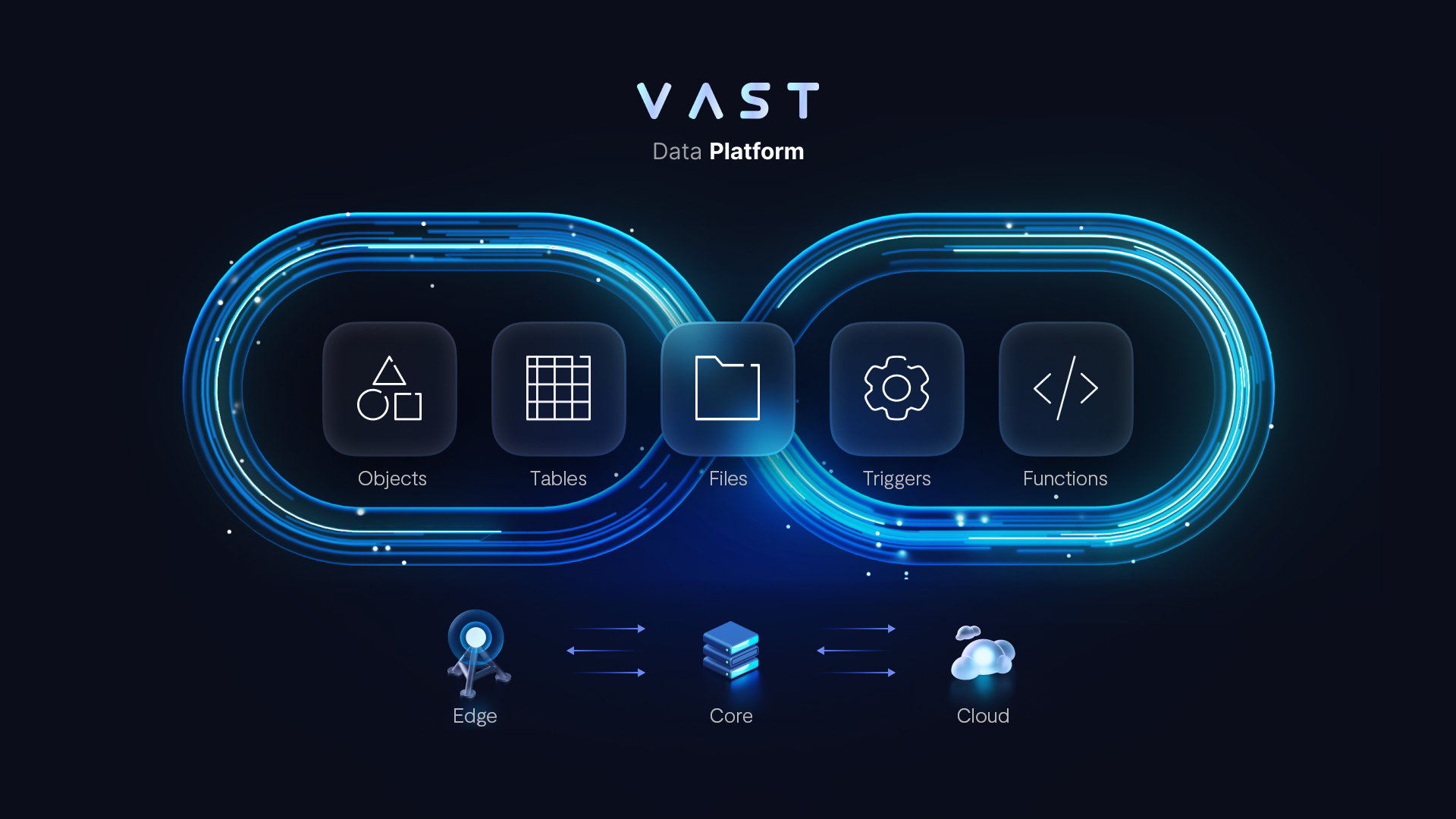
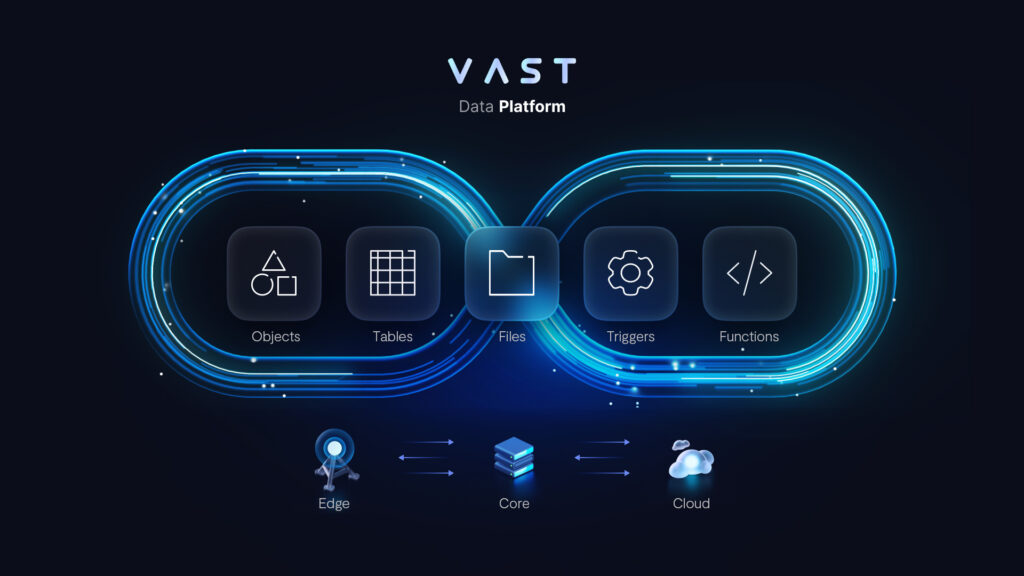
The VAST AI OS is a unified software infrastructure that consolidates storage, database, compute runtime, and agentic execution into a single platform. That’s a significant architectural departure from the conventional wisdom that says these should be separate, best-of-breed systems stitched together with integration code and prayers.
The component stack includes:
- DataStore: the traditional storage piece that handles unstructured data. This is where VAST built its reputation, eliminating the tiering complexity that made traditional architectures expensive and operationally painful.
- DataBase: database functionality including structured data, data warehouse, and data lake capabilities, plus native vector storage at trillion-vector scale. This is integrated into platform.
- DataEngine: a serverless execution and orchestration layer that moves compute close to data using event triggers and functions. This is where things start getting interesting from an operational perspective.
- DataSpace: a global namespace that lets every location store, retrieve, and process data regardless of where it physically lives, whether on-premises, cloud, or edge.
- InsightEngine: automates RAG workflows, handling ingest, chunking, embedding, and vector storage in real time.
- AgentEngine: provides deployment and orchestration for AI agents, complete with governance and auditability.
This goes way beyond storage, seeing VAST deliver a fundamentally different category of infrastructure.
Why This Matters Now
The timing of VAST’s evolution isn’t coincidental. Enterprise and neocloud AI deployments expose exactly the architectural fragmentation that VAST’s unified approach explicitly eliminates.
Consider what a typical enterprise RAG implementation looks like today. There’s an object store, an ETL pipeline, a vector database, an orchestration layer, maybe a separate analytics system, and a lot of glue code. Each of these systems has its own operational model, security perimeter, and failure modes. And data moves between them constantly, creating latency, governance gaps, and opportunities for things to break.
VAST’s argument is that this fragmentation isn’t just operationally expensive and complex, but that it’s architecturally wrong. VAST’s InsightEngine, for example, processes data the moment it lands, using event-driven triggers to perform embedding and vector storage without moving data to external systems. That goes far beyond being an incremental improvement. VAST built a different model.
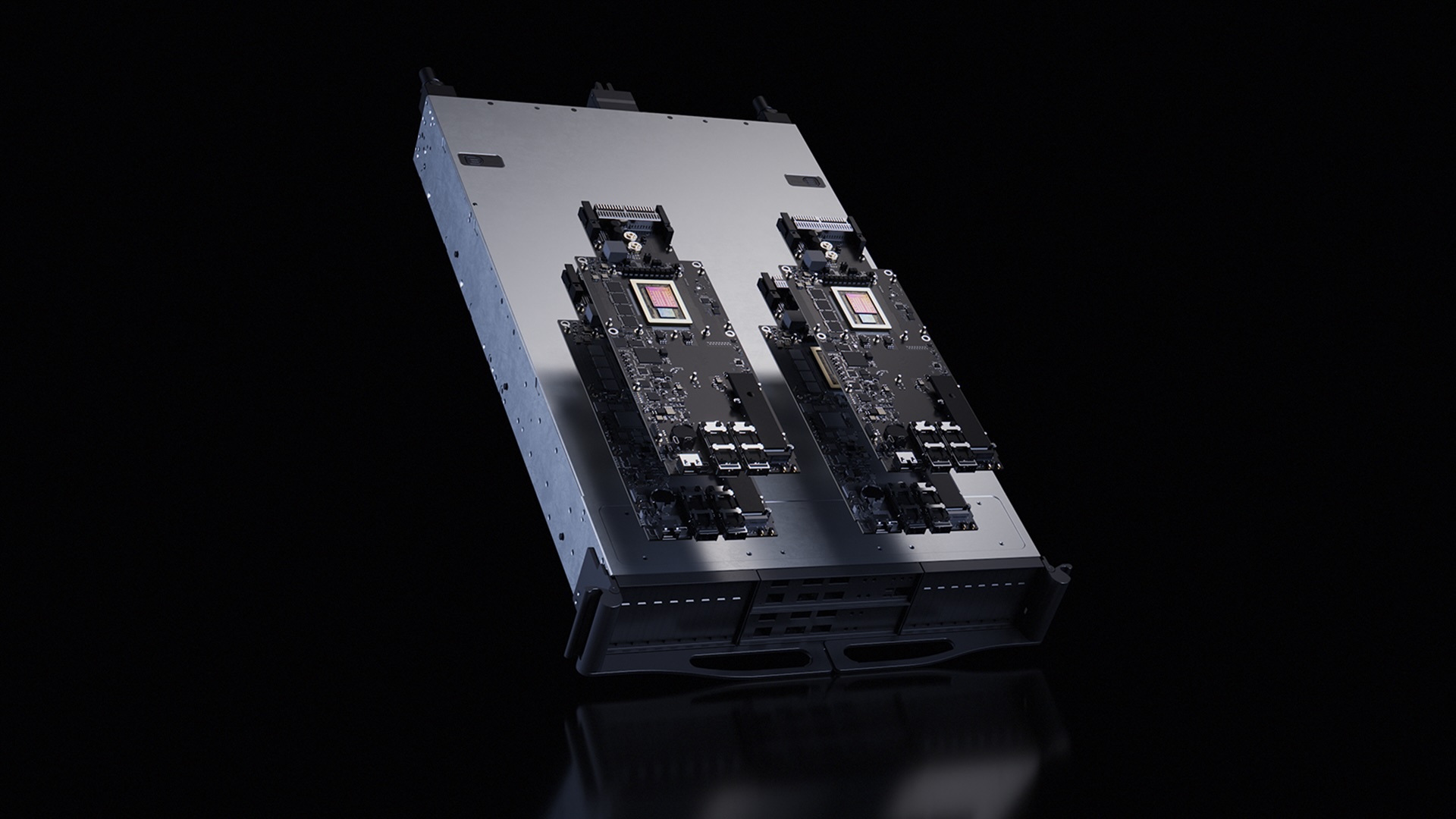
The recent announcements at VAST’s first user conference, VAST Forward, make this even more explicit. VAST now offers a CUDA-accelerated version of its AI operating system designed to run directly on NVIDIA-powered servers. That means storage, databases, analytics, and AI inference can run on a single integrated platform.
That’s not what storage companies usually do.
The Industry Is Moving, But Not All in the Same Direction
VAST isn’t alone in recognizing that “storage” is too narrow a frame for the AI era. The entire storage industry is pivoting toward data services, and the major players are all making their moves.
- NetApp has rebranded around its Intelligent Data Platform positioning, emphasizing data management, observability, and AI-readiness across hybrid environments:
- Dell is expanding its data services portfolio and deepening integrations with the AI ecosystem.
- Everpure (Pure Storage) continues to expand Portworx and its data services layer while maintaining its leadership in storage performance.
All of them understand that customers building AI infrastructure need more than capacity and throughput. And they’re all building or integrating the data services that make AI workloads practical.
Is Buying VAST a Risk?
Here’s where it gets interesting. The traditional enterprise storage vendors each take fundamentally different architectural approaches from VAST. NetApp, Dell, HPE, and Pure are all building open, modular ecosystems. They’re building integrations and control planes to seamlessly connect their platforms to the tools customers already use, partnering broadly, and letting buyers assemble best-of-breed stacks.
Here’s an example: the AI industry has standardized on Apache Iceberg for table formats. The traditional storage vendors recognize that and are all working to integrate with Iceberg. Similarly, if customers want Databricks or Snowflake for analytics, these platforms play nicely alongside them.
VAST is doing something different. Their approach is more analogous to the hyper-converged infrastructure model, delivering a tightly integrated, opinionated stack where VAST controls the full experience.
Yes, VAST offers Iceberg compatibility, but the underlying database engine is VAST written. The compute layer is VAST’s DataEngine. The vector store is native to the platform. The agent orchestration runs on VAST infrastructure. If you’re not using the VAST-provided elements, it’s just another storage purchase competing on more traditional criteria.
This architectural divergence raises legitimate questions that IT buyers should consider carefully.
Can any single vendor be best-of-breed across storage, database, compute runtime, vector search, and agent orchestration?
That’s a lot of categories to win simultaneously. The traditional enterprise software industry is littered with platforms that tried to do everything and ended up doing nothing particularly well.
NetApp’s counter-argument would be to let us handle the data layer brilliantly, and plug in purpose-built tools from Databricks, Pinecone, or whomever else leads in their respective category.
That’s not an unreasonable position.
Does best-of-breed even matter right now?
This is the more provocative question, and it’s where VAST’s bet gets interesting. The AI infrastructure market is moving fast, arguably faster than enterprises can absorb.
Many organizations struggle with deployment. They don’t need the theoretically perfect architecture; they need something that works, that they can operationalize, and that delivers value before the next budget cycle.
A turnkey, integrated stack like VAST’s has real advantages in this environment. Fewer integration points mean fewer failure modes. Unified governance means simpler compliance. Single-vendor support means clearer accountability when things break.
The time-to-value argument is genuine. If VAST can get you from raw data to a functioning RAG workflow or training pipeline in weeks instead of months, that matters. It might matter more than bespoke architecture that would perform better once fully optimized, or be more open.
The Value of an Open Ecosystem
That said, the open ecosystem approach has its own compelling logic. Enterprises rarely operate in greenfield environments. They have existing data platforms, existing analytics investments, and existing vendor relationships. A modular approach lets them preserve those investments while adding AI capabilities incrementally.
It also provides optionality. If a better vector database emerges next year, you can swap it in without rearchitecting your entire stack.
Both approaches will find their markets. VAST’s integrated model likely wins in scenarios where speed matters more than customization. These are environments such as new AI cloud and hyperscaler deployments, GPU-dense environments, and organizations without significant legacy commitments. This is also, not coincidentally, where VAST finds most of its success today.
The open ecosystem model wins where enterprises have significant existing investments, require specific best-of-breed capabilities, or prioritize vendor optionality over operational simplicity. This is where companies like NetApp, Everpure, HPE, and IBM have an edge.
The key question for IT buyers is which approach matches their specific situation, timeline, and risk tolerance.
Enterprise Integration
There’s another dimension to this evaluation that tends to get lost in the AI hype cycle: most enterprises aren’t building AI infrastructure in a vacuum. AI capabilities are being added to environments that already have decades of investment in storage, operational processes, and institutional knowledge.
This is where the traditional storage vendors have a structural advantage that’s easy to underestimate.
If you’re running NetApp, Dell, HPE, or Everpure today for your enterprise workloads, there’s genuine value in extending that same platform to support AI workloads. You get:
- A unified control plane across AI and non-AI data.
- Consistent operational procedures for your storage team.
- Integrated monitoring, alerting, and AIOps capabilities that span your entire data estate.
- You get a single vendor relationship, a single support contract, and a single point of contact when something breaks.
These aren’t trivial benefits. Operational consistency matters enormously in enterprise environments. The storage team that knows how to manage your HPE infrastructure can extend that knowledge to AI workloads without learning an entirely new platform. The monitoring dashboards, the runbooks, and the capacity planning processes all carry forward. There’s also institutional muscle memory that translates directly to faster incident response and lower operational risk.
VAST, by contrast, represents a parallel infrastructure. Even if it turns out to be technically superior for your particular AI workloads, it’s still another platform to learn, another set of operational procedures to develop, and another vendor relationship to manage.
That can be a significant impact for organizations with mature storage operations.
This calculus matters more in some environments than others. For on-premises deployments, where operational integration is paramount, and you’re managing physical infrastructure with existing teams, the unified platform argument is strongest.
If you’re already a NetApp shop, extending ONTAP to support AI workloads keeps everything under one roof. If you’re in a Dell environment, PowerScale and PowerStore provide a consistent operational model.
The bottom-line is that any AI-specific advantages of VAST must be weighed against the operational simplicity of staying within your existing ecosystem.
The math shifts for greenfield AI deployments, dedicated GPU clusters, or cloud-adjacent infrastructure where you’re building new operational muscle anyway. It shifts further for GPU cloud providers and AI-native organizations where AI workloads are the primary concern rather than one workload among many.
CoreWeave, after all, doesn’t need to integrate VAST with its legacy HPE environment because it doesn’t have one.
But the question is real for the typical enterprise with existing storage investments, existing operations teams, and existing vendor relationships. The best AI data platform in the world isn’t necessarily the right choice if it creates operational silos, fragments your management plane, and forces your team to context-switch between two different infrastructure paradigms.
This is, frankly, where VAST’s platform ambitions could become either an advantage or a liability. If VAST evolves into a true enterprise data platform capable of serving both AI and traditional workloads, the integration argument weakens. But if VAST remains primarily an AI-focused platform that coexists with traditional storage infrastructure, enterprises will always face that operational fragmentation tax.
The traditional storage vendors understand this dynamic, which is why they’re all racing to add AI capabilities to their existing platforms. They’re betting that operational integration trumps AI-specific optimization for most enterprise buyers.
VAST is betting the opposite. Their bet is that AI workloads are sufficiently different and important to justify purpose-built infrastructure.
Both bets have merit. The question is: which one matches your organization’s priorities?
What Should IT Buyers Do?
If you’re evaluating infrastructure for AI workloads, the practical question is whether VAST’s unified approach makes sense for your environment.
Here’s how I think about it:
If you’re building net-new AI infrastructure
VAST deserves serious consideration as a platform, not just a storage tier. The ability to handle storage, vector search, event-driven compute, and agent orchestration within a single system could significantly reduce architectural complexity.
VAST’s $1.17 billion CoreWeave deal shows that serious GPU cloud operators have reached similar conclusions.
If you’re managing existing AI initiatives
The VAST InsightEngine capabilities are worth evaluating against your current AI workflows. If you’re experiencing latency and governance challenges due to bouncing data between multiple systems, VAST’s integrated approach may address the root causes rather than the symptoms.
If you’re primarily focused on traditional enterprise workloads
VAST’s storage capabilities remain competitive and the platform provides a credible modernization path. The architecture supports AI workloads when you’re ready for them without requiring a rip-and-replace migration.
If you’re just watching the market
Pay attention to VAST’s growth trajectory. The company has been cash-flow positive for four years, recently experienced 5x year-over-year sales growth, and reached $2 billion in cumulative software bookings. Those metrics all show strong market validation for what VAST is doing.
Its rumored funding round at a $25-30 billion valuation shows strong investor confidence in the VAST approach.
Bottom Line: Update Your Mental Model
Here’s the adjustment I’m suggesting: Stop thinking of VAST as a storage company that added AI features. You need to view them as a data infrastructure company that began with storage because that’s where the data lives, it’s foundational to everything else VAST knew it needed to deliver.
Looking at VAST through this lens changes how you evaluate their roadmap, compare them to competitors, and think about their role in your architecture. VAST Data wants to be the unified infrastructure layer spanning both worlds, and it’s backing that vision with some seriously impressive technology.
Whether they can pull it off is an open question. Platform plays are hard, and there are plenty of historical examples of companies that overreached. But the architecture is sound, its execution has been strong, and the market timing is right. AI workloads genuinely do expose the limitations of fragmented infrastructure.
If anyone’s positioned to deliver a unified alternative, VAST has a credible claim.
At a minimum, IT buyers should update their mental model. The storage category is too small for what VAST is really building. Whether that’s a good thing depends on your specific requirements.
But at least you’ll be evaluating the right thing.