
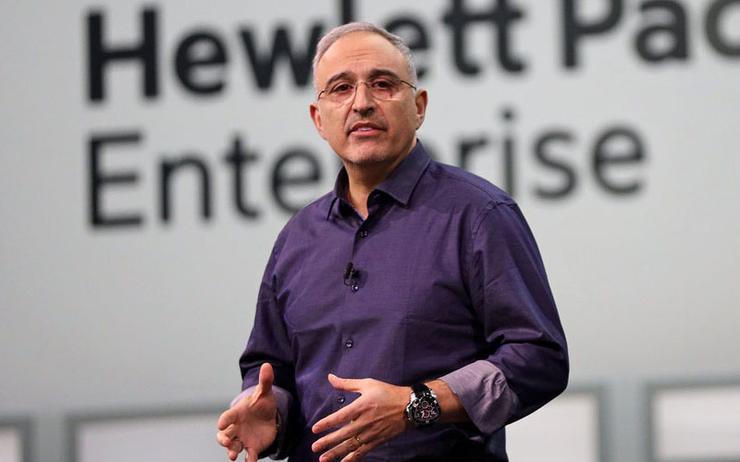
At HPE Discover Barcelona 2025, Hewlett Packard Enterprise centered its announcements on three core pillars of enterprise infrastructure: networking for AI workloads, hybrid cloud and virtualization enhancements, and AI infrastructure systems at scale.
These initiatives build on HPE’s acquisition of Juniper Networks (closed earlier this year), addressing rising enterprise demands for more agile AI workloads, hybrid cloud operations, and infrastructure performance consistency.
AI-Native Networking
HPE emphasized integrated networking capabilities following its acquisition of Juniper Networks. The objective communicated by HPE is to unify separate AIOps platforms from HPE Aruba Networking and HPE Juniper Networking Mist into a cross-platform operational fabric.
HPE describes this as an early step toward self-driving network operations that automate anomaly identification and remediation using AI-driven telemetry.
Technical elements include:
- AIOps capability migration between platforms, where Juniper Marvis and Large Experience Models (LEM) move into Aruba Central, and Aruba profiling features flow to Mist.
- New high-performance networking hardware leveraging Broadcom Tomahawk 6 silicon:
- HPE Juniper Networking QFX5250: switch offering 102.4 Tbps of aggregate bandwidth, targeting data center GPU connectivity.
- HPE Juniper Networking MX301: edge router providing ~1.6 Tbps with 400G interfaces for high-throughput edge and backhaul environments.
AI Rack-Scale Architecture (AMD “Helios”)
HPE announced the AMD “Helios” AI rack-scale architecture for large AI training and inference, involving collaboration with AMD and Broadcom to integrate standards-based Ethernet scale-up networking.
Core technical capabilities and features include:
- 72 AMD Instinct MI455X GPUs per rack, capable of 2.9 AI exaflops (FP4) compute and 260 TB/s of internal network bandwidth for scale-up workloads.
- 31 TB of HBM4 memory and 1.4 PB/s memory bandwidth to support large model sizes and data throughput.
- The solution embeds an Ethernet scale-up switch and software built with Broadcom, leveraging the Ultra Accelerator Link over Ethernet (UALoE) standard to avoid proprietary interconnects.
- Integration with AMD ROCm software stack for workload portability across AI and HPC workloads, and AMD Pensando networking to support scale-out operations as needed.
Hybrid Cloud and Virtualization Enhancements
HPE expanded its GreenLake hybrid cloud portfolio with targeted enhancements aimed at virtualization modernization and AI workload support. There are updates across the GreenLake ecosystem, including Morpheus software, Private Cloud AI configurations, and data protection offerings.
Key elements include:
- HPE Morpheus Software with multi-hypervisor support and cost metrics, including an assertion that some VMs can see up to a purported 90 % reduction in licensing costs.
- GreenLake Marketplace and Cloud Commit tools to improve purchase flexibility and hybrid cloud billing predictability.
- Private Cloud AI updates with STIG-hardened stacks and support for NVIDIA GPUs, plus expanded confidential computing support.
- Data protection enhancements via new HPE StoreOnce systems focused on fast recovery and hybrid workload resilience.
Analysis
HPE’s announcements at HPE Discover Barcelona 2025 reinforce its strategic emphasis on AI-native infrastructure, unified networking, and hybrid cloud operations, leveraging months of integration work following its acquisition of Juniper Networks.
The expanded AI-native networking portfolio and cross-platform AIOps unification signal HPE’s intent to compete more directly with major network incumbents in automated, large-scale environments.
HPE now delivers a consistent operational footprint across HPE Aruba Networking and HPE Juniper Networking Mist, supported by shared AIOps capabilities and new hardware leveraging Broadcom Tomahawk 6 silicon to serve AI workloads at scale.
The AMD “Helios” AI rack-scale architecture with integrated Ethernet-based scale-up networking sees HPE promoting open, standards-based systems for trillion-parameter model training and high-volume inference. Its 260 TB/s of aggregated bandwidth and 2.9 AI exaflops of FP4 performance addresses performance and interoperability demands in cloud service provider and hyperscale scenarios without needing more proprietary interconnects.
On the hybrid cloud front, enhancements to GreenLake offerings and integration with tools like HPE OpsRamp and compute operations management streamline visibility and operations across compute, storage, networking, and cloud. This aligns with broader enterprise trends toward unified observability and control planes across hybrid estates.
Overall, the announcements see HPE delivering a cohesive product strategy addressing the evolving enterprise and service provider requirements for scalable AI infrastructure, unified operations, and hybrid cloud flexibility. It’s a strong set of announcements that will continue HPE’s sustained competitive advantage.
Competitive Outlook & Advice to IT Buyers
These sections are only available to NAND Research clients and IT Advisory Members. Please reach out to [email protected] to learn more.