IBM Think 2026 and Atlassian Team ’26 both took place last week in different cities, for different audiences, and with different product portfolios on stage. IBM gathered infrastructure architects and enterprise IT executives in Boston, while Atlassian convened developer teams, platform practitioners, and collaboration leaders in Anaheim.
Although the two events had no formal connection, they still managed to share a common thesis. The fact that the two companies arrived at it independently, from opposite ends of the enterprise stack, makes it worthy of careful examination. The industry is starting to align on how enterprises will leverage AI.
Let’s look at the key shared themes.
The Model Is Not the Moat
Both IBM and Atlassian opened their events with a version of the same argument: foundation models are becoming interchangeable, and competing on model quality is a losing strategy.
The differentiation that matters lies in what surrounds the model, not in the model itself.
- IBM: CEO Arvind Krishna told attendees that foundation models are in a game of leapfrog and will become interchangeable over time. IBM’s strategic response is to compete at the governance, orchestration, and integration layer, not the model layer. The entire Think 2026 portfolio, from Sovereign Core to watsonx Orchestrate, is built on that premise.
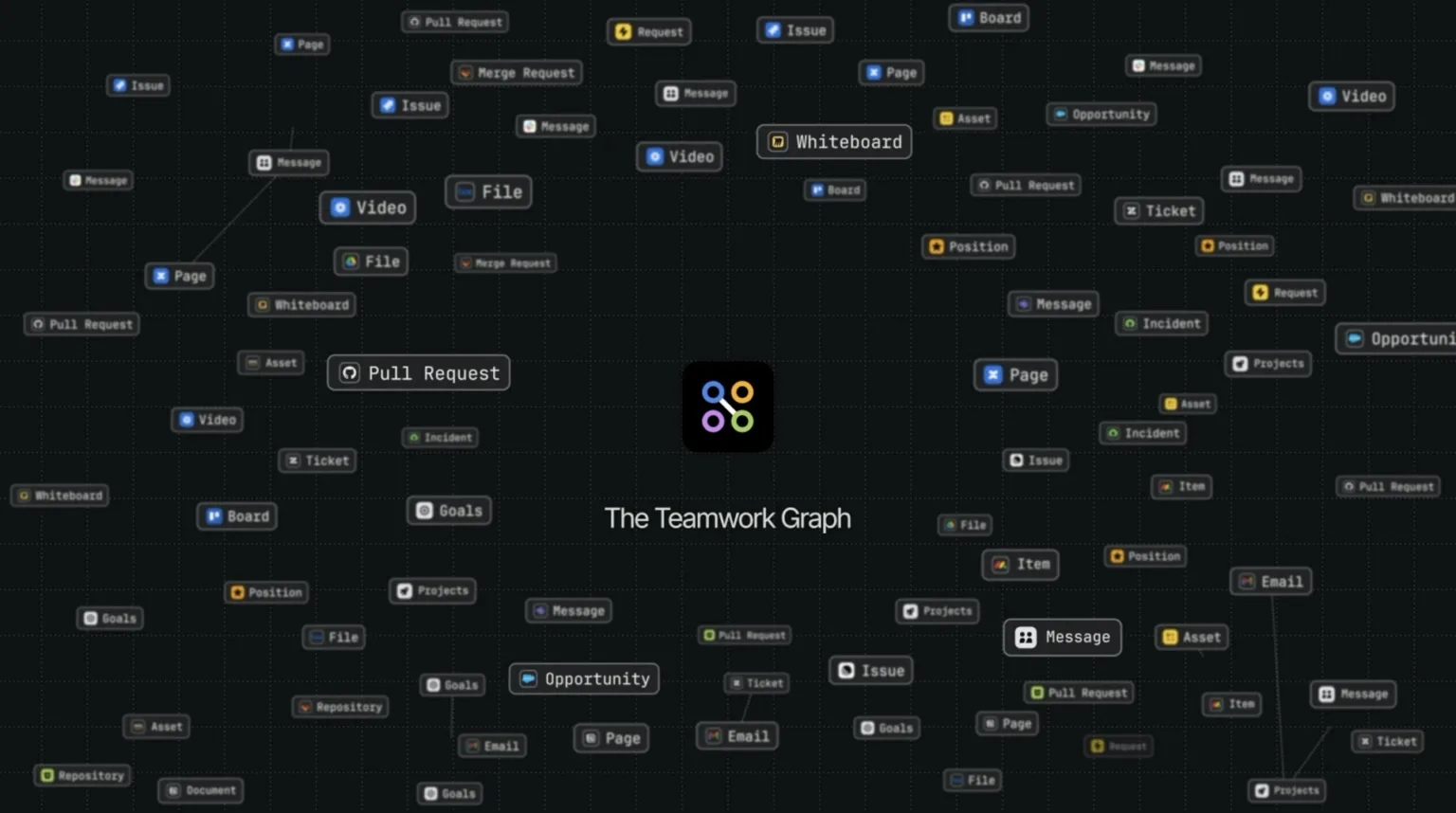
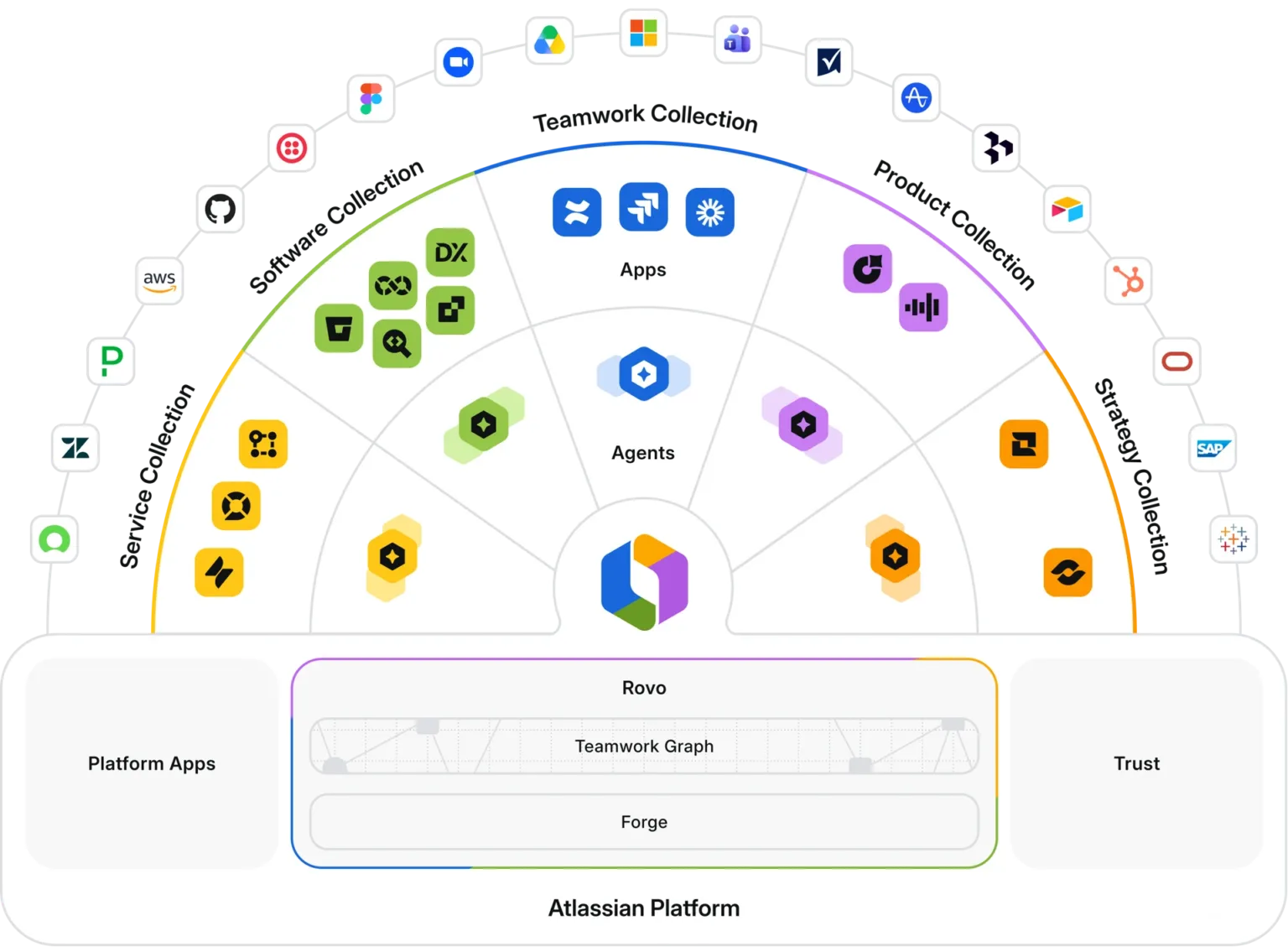
- Atlassian: CEO Mike Cannon-Brookes made the identical call from the collaboration side. Atlassian’s position is that raw intelligence is increasingly a commodity, and the real differentiator is organizational context, specifically the institutional knowledge embedded in how a company’s teams work. The Teamwork Graph, connecting Jira, Confluence, Loom, GitHub, Figma, Workday, and third-party tools, is Atlassian’s answer to the question of what replaces the model as the primary source of AI advantage.
It’s hard to miss the implication: the vendors with durable advantages will be the ones building proprietary context and governance layers that compound in value as more data flows through them.
Agentic AI Stops Being a Preview Feature
Both events, loaded with product releases, declared that the agentic AI transition from experiment to production is complete. The language at both conferences consistently reinforced that pilots are over and agents are in the workflow.
- IBM: At Think 2026, IBM framed its content around the end of the pilot era, releasing the next-generation watsonx Orchestrate as a multi-agent control plane that manages agents built on third-party frameworks.
- Atlassian: Agents in Jira reached general availability at Team ’26. AI agents can now be assigned work items, mentioned in comments, embedded in automation rules, and given ownership of tasks such as updating code or resolving bugs. Atlassian’s first-party Studio agents work alongside third-party agents from Amplitude, Canva, Cursor, Figma, Gamma, and GitHub Copilot in the same Jira workspace.
- Shared design principle: Both companies are designing agent deployments around shared context. IBM’s orchestration layer enforces policies and traceability across agents from any origin. Atlassian’s agents operate with the same contextual visibility as human teammates, pulling directly from live work items and project history rather than from a separate AI interface.
The takeaway for enterprise IT leaders has stopped being a question about whether to deploy agents. It’s now a question of how to govern the agent populations already arriving in production workflows.
Governance Is a Product, Not a Policy
Governance was featured at both events not as a compliance requirement attached to AI deployments but as a core product feature embedded in the AI architecture. Both companies made auditability, access control, and policy enforcement first-class capabilities rather than configuration settings applied after the fact:
- IBM Sovereign Core: Sovereign Core embeds policy enforcement at the infrastructure runtime level, governing AI workloads across hybrid and multi-jurisdictional environments. IBM’s explicit message is that governance cannot be a configuration choice in regulated environments; it must be structural.
- IBM watsonx Orchestrate: The multi-agent control plane maintains complete audit trails of agent decisions and data access for all registered agents, regardless of the framework used to build them. Consistent policy enforcement applies to both third-party and IBM-native agents.
- Atlassian Agents in Jira: Every agent action is logged with a full audit trail, visible alongside human work in the same Jira space. Admins control which agents run, where they run, and what they can access. Atlassian’s framing is that agents and human teammates share the same accountability and visibility requirements.
The convergence on governance architecture is a natural maturation in how the enterprise AI market approaches agent risk. Early deployments treated governance as an oversight layer applied from the outside.
Both IBM and Atlassian are building it into the foundational infrastructure.
Organizational Data Becomes the Strategic Asset
Neither company is building its AI advantage around a proprietary model. Both are building it on proprietary data layers that become more valuable as more of an organization’s data flows through them.
The data strategy at both events was explicit and central:
- IBM & Confluent: IBM’s integration of the Confluent streaming platform into watsonx addresses the core data problem for enterprise AI agents, where most enterprise data architectures were built for batch processing, not the real-time, continuous context that agents require. IBM Data Gate for Confluent feeds IBM Z mainframe data, including DB2, IMS, and VSAM systems, into Kafka-based streaming pipelines without impacting mainframe performance, making decades of transactional data available to AI agents in real time.
- Atlassian & the Teamwork Graph: Atlassian’s Teamwork Graph connects work, people, and tools across the entire Atlassian platform and connected third-party systems. At Team ’26, Atlassian extended the Teamwork Graph to include assets and code, opening its data externally for the first time and enabling the use of Teamwork Graph data outside the Atlassian platform. This unlocks a powerful compounding effect in which, as more tools connect and more content is added, AI outputs become more accurate and more specific to the organization.
Both companies are embedding network effects into their data layers. The more an enterprise uses the platform, the better the AI performs and the harder it is to displace the platform.
AI-Native Requires Structural Redesign
The most consistent message across both events was that incremental AI adoption produces incremental results. Genuine AI advantage requires redesigning how work is structured, not layering AI tools onto existing processes:
- IBM: Krishna’s central assertion was that the enterprises pulling ahead are not deploying more AI but rather redesigning how their businesses operate. IBM’s AI Operating Model, covering agents, data, automation, and hybrid infrastructure, is explicitly a framework for operational redesign rather than incremental tool adoption.
- Atlassian: Team ’26 introduced what Atlassian calls the AI-native organization, in which humans and agents share the same workspace, context, and accountability structures. The product releases at the event, including Rovo Max mode for multi-step, cross-tool task execution and Jira as an orchestration engine for human-agent workflows, are built on the premise that AI must be embedded in the work system (rather than bolted onto it).
The shared warning for enterprise buyers is that, if organizations add AI capabilities to existing workflows without restructuring them, they will not close the gap to competitors who have redesigned their operating models around AI-native architectures.
Final Thoughts: The Stack Has Two Layers
IBM and Atlassian are not competing. IBM solves the infrastructure and governance problem for AI agents running across hybrid, regulated, multi-cloud environments. Atlassian solves the workflow and collaboration problem for human-agent teams inside the software development and work management stack. They are addressing adjacent layers of the same enterprise AI challenge.
The convergence of their strategic narratives, emerging independently from opposite ends of the enterprise software market, signals to technology leaders that the market has reached a consensus on what enterprise AI requires:
- Proprietary Context over commodity models.
- Governance Architecture over governance policies.
- Operational Redesign over incremental adoption.
The vendors who have built around that consensus are now shipping production capabilities. Meanwhile, the enterprises that internalize it will widen the gap with those that have not.
Meanwhile, companies like IBM and Atlassian are moving beyond thought leadership, delivering the enablers that enterprises will use as the foundation of their own AI transformation efforts.