IBM & Red Hat: Project Lightwell, Protecting Open Source Software

IBM and Red Hat announced Project Lightwell, a $5 billion initiative to establish a trusted enterprise clearinghouse for open-source software security. The project deploys more than 20,000 engineers, augmented by AI, to identify, triage, validate, and remediate vulnerabilities across open-source supply chains at a scale that exceeds what most enterprises can achieve independently.
IBM: Anderon Quantum Foundry and the Industrialization of Quantum Hardware
IBM and the U.S. Department of Commerce announced a Letter of Intent to establish Anderon, a standalone company that will operate the United States’ first pure-play quantum chip foundry.
The initiative has a combined commitment of $2 billion, including $1 billion in proposed CHIPS Act R&D incentives from the Department of Commerce and $1 billion in cash from IBM, supplemented by IBM’s intellectual property, fabrication assets, and an existing skilled workforce.
Dell Technologies: AI Data Platform and Storage Portfolio for the Agentic Enterprise
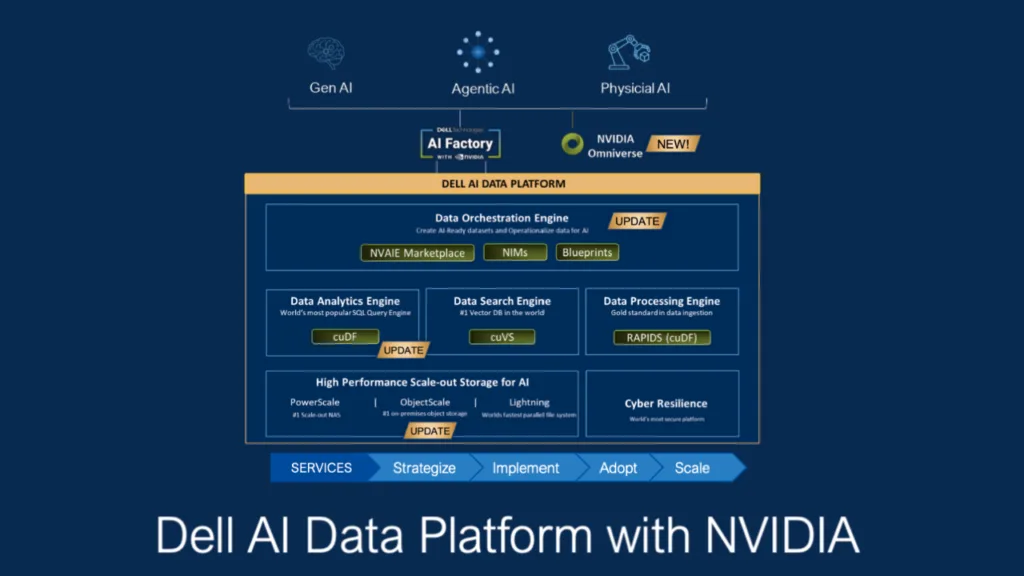
At the recent Dell Technologies World in Las Vegas, Dell announced a broad expansion of its AI Data Platform and storage portfolio, centered on the general availability of the Lightning File System (formerly Project Lightning), the introduction of Exascale Storage as a unified 4-in-1 rack architecture, the refreshed ObjectScale X7700 appliance, and enhancements to the Dell AI Data Platform’s orchestration, analytics, and search layers.
Veeam Redefines AI Trust, Resilience, and Recovery
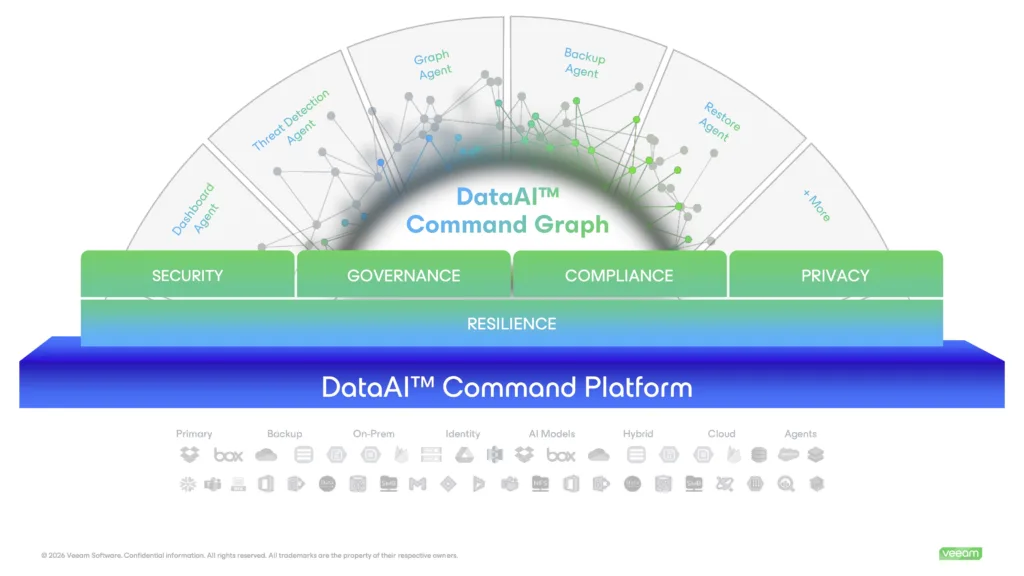
Veeam is betting that the next decade of enterprise AI will be defined by trust infrastructure
Memory & NAND Flash Crisis: May 2026 Update
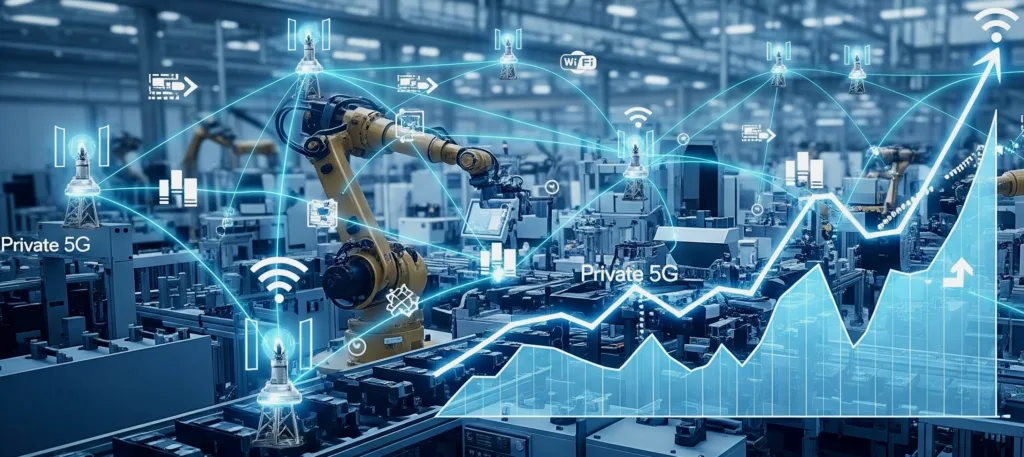
What began as an AI-driven reallocation of manufacturing capacity toward HBM has compounded through consecutive quarters of record-breaking price increases, affecting enterprise IT budgets, consumer device pricing, and cloud infrastructure spending in equal measure.
SailPoint Agentic Fabric Extends Identity Governance to AI Agents & Non-Human Identities

SailPoint recently announced SailPoint Agentic Fabric, a new product layer that extends the identity governance and administration (IGA) model the company has built for human users to AI agents, machine identities, and other non-human identities (NHIs).
Atlassian Team ’26: Context as Infrastructure

At Atlassian’s recent Team’26 conference, the company released a broad set of announcements organized around the thesis that organizational context is the primary source of AI differentiation. The announcements clearly show that Atlassian intends to serve as the infrastructure layer that makes that context actionable
Two Conferences, One Consensus on Enterprise AI
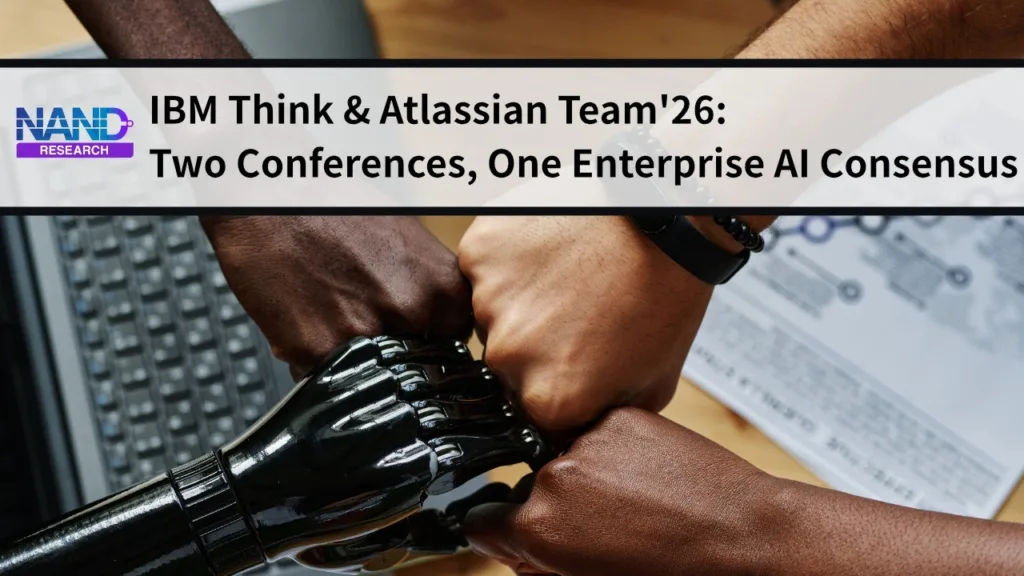
IBM Think 2026 and Atlassian Team ’26 both took place last week in different cities, for different audiences, and with different product portfolios on stage. IBM gathered infrastructure architects and enterprise IT executives in Boston, while Atlassian convened developer teams, platform practitioners, and collaboration leaders in Anaheim.
ServiceNow Knowledge 2026: The Agentic Enterprise Takes Shape
ServiceNow used its recent Knowledge 2026 conference to advance the platform-level argument that enterprise AI will be decided not by model capability alone, but by the infrastructure that governs, orchestrates, and executes AI across the business.
Think 2026: IBM’s AI Operating Model Takes Shape

At its annual Think conference in Boston earlier this month, IBM delivered the most comprehensive expansion to date of its enterprise AI and hybrid cloud portfolio. The announcements center on what IBM calls an AI Operating Model, a four-pillar architecture built around agents, data, automation, and hybrid infrastructure.
NVIDIA MRC Enables Spectrum-X Ethernet for AI-At-Scale, Now at OCP
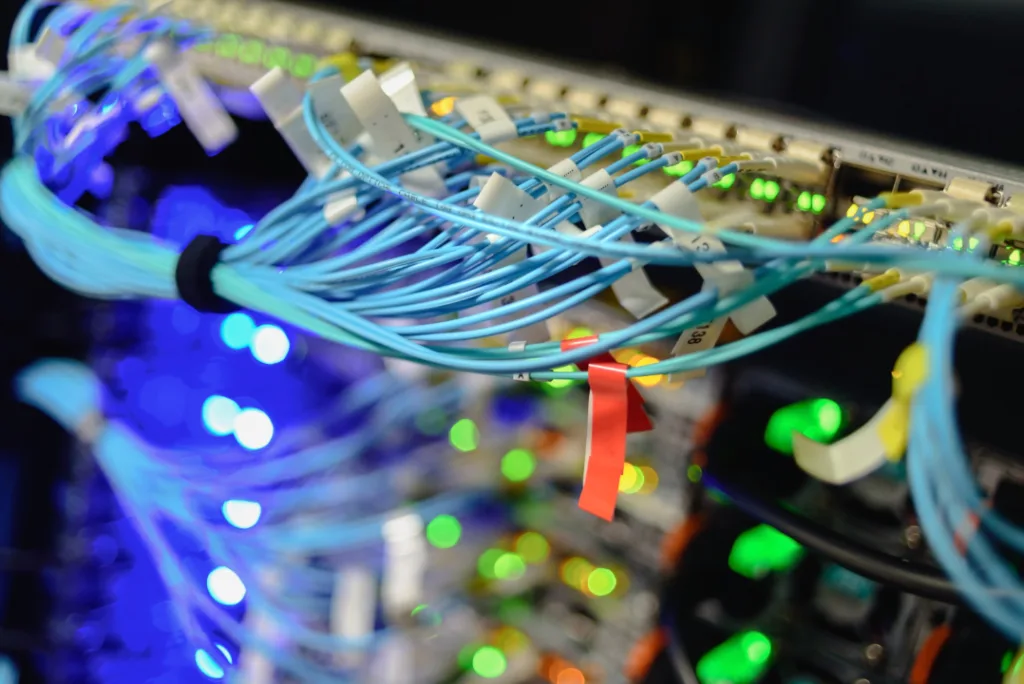
NVIDIA recently announced that Multipath Reliable Connection (MRC), an RDMA transport protocol developed for and in production on Spectrum-X Ethernet hardware, is now available to the broader industry via the OCP.
Research Note: Extreme Networks’ Platform Pivot Accelerates

If the company continues to execute on this direction, it will be competing at the AI-networking architectural level where long‑term winners are defined.
Cisco Acquiring Astrix Security to Extend Zero Trust to the Agentic Workforce
Cisco announced its intent to acquire Astrix Security, a Tel Aviv-based company specializing in Non-Human Identity (NHI) security. The acquisition targets the growing, largely underserved segment of enterprise security focused on governance, visibility, and threat detection for non-human identities, including API keys, service accounts, OAuth tokens, and AI agents.
Data Center Power: The Transition to 800 VDC

For the past two decades, power architecture has evolved incrementally around a familiar model: utility AC enters the facility, passes through switchgear, transformers, UPS systems, power distribution units, and rack power shelves, and is ultimately converted to low-voltage DC for CPUs, GPUs, memory, networking, and storage.
That model worked for conventional enterprise and cloud computing. It was good enough when racks consumed 10kW, 20kW, or even 50kW, but it becomes far more difficult as AI infrastructure pushes rack densities toward hundreds of kilowatts and, in some designs, beyond 1MW.
Palo Alto Networks: Portkey Acquisition Anchors its Agentic Security Stack

Palo Alto Networks recently announced its intent to acquire Portkey, a San Francisco-based AI gateway and control plane company. The deal, expected to close in Palo Alto Networks’ fiscal fourth quarter of 2026, will integrate Portkey’s technology into Prisma AIRS, the company’s agentic AI security platform.
HPE ProLiant: Edge Compute for AI and Mission-Critical Workloads

HPE recently expanded its HPE ProLiant edge portfolio with three new platforms: the HPE ProLiant Compute EL2000 chassis, two new Gen12 servers built for the EL2000 (the EL220 and EL240), and an enhanced version of the HPE ProLiant DL145 Gen11 server, now powered by AMD EPYC 8005 series processors. The announcement also introduced an Environmental Ruggedization Option Kit applicable across the portfolio.