NVIDIA has committed over $4 billion in direct strategic investments across two optical interconnect companies, Lumentum and Coherent, supplemented by multibillion-dollar purchase agreements and equity participation in the optical startup Ayar Labs:
- NVIDIA committed $2 billion each to Lumentum Holdings and Coherent Corp., securing priority access to advanced laser components and optical networking products through multibillion-dollar purchase agreements The company also participated in Ayar Labs’ $500 million Series E round, backing the startup’s development of UCIe optical chiplets and co-packaged optics technology
- All three deals are non-exclusive, allowing NVIDIA to foster supplier competition while locking in manufacturing capacity as both Lumentum and Coherent expand U.S.-based fabrication facilities
- Optical interconnects address a fundamental scaling constraint: copper cables and transceivers account for roughly half of network costs and more than half of power consumption in large AI clusters
- Lumentum claims its optical circuit switch technology reduces network power consumption by 65% in 100,000-accelerator clusters, with latency improvements of 5-10x compared to electrical switching
- The investments extend NVIDIA’s full-stack control across GPUs, networking, software, and now optical components
- Competitors face a widening gap: AMD participated in the Ayar Labs round, but neither AMD nor Intel has disclosed comparable optical supply chain commitments
- For enterprise buyers, the transition to optical-enabled AI infrastructure is now a planning consideration for deployments targeting 2027 and beyond
Executive Summary
Following newly announced investments, NVIDIA has committed over $4 billion in direct strategic investments across two optical interconnect companies, Lumentum and Coherent, supplemented by multibillion-dollar purchase agreements and equity participation in the optical startup Ayar Labs.
These investments directly align with how next-generation AI infrastructure will be built, with optical technologies replacing copper interconnects at critical bottleneck points in data center networks.
Summary of Investments
| Company | Investment | Purchase Commitment | Primary Focus |
| Lumentum Holdings | $2 billion | Multibillion-dollar | Advanced laser components, OCS |
| Coherent Corp. | $2 billion | Multibillion-dollar | Lasers, optical networking, OCS |
| Ayar Labs | Equity (Series E) | Not disclosed | UCIe optical chiplets, CPO |
The non-exclusive nature of all three agreements demonstrates that NVIDIA is building a diversified supply chain for optical components, rather than pursuing vertical integration through acquisition.
These investments show that optical interconnects are no longer optional for scaling AI infrastructure. As AI clusters grow to tens of thousands of accelerators, copper interconnects become untenable due to power consumption, thermal constraints, and bandwidth limitations. The investments secure NVIDIA’s access to the critical technologies.
NVIDIA’s Motivation
The primary driver behind NVIDIA’s optical investments is overcoming the fundamental physics challenges of electrical interconnects at scale. In current AI systems, cables and transceivers can account for half the network’s cost and more than half its power draw. As clusters scale, this problem worsens exponentially.
AI infrastructure is hitting a power wall driven by inefficiencies in interconnects. As bandwidth demands increase, copper becomes the bottleneck, consuming excessive power and limiting AI throughput per watt and per dollar. Co-packaged optics (CPO) overcomes these barriers by enabling thousands of GPUs to operate as a unified system.
The technical reality is straightforward. Every time a signal crosses from one chip to another over copper, power is consumed for driving the signal, termination, equalization, and serialization/deserialization (SerDes). These power costs scale with distance and bandwidth.
Optical interconnects eliminate most of this overhead by converting to photons at the source and back to electrons only at the destination, with the optical transmission itself consuming negligible power regardless of distance within the data center.
NVIDIA’s Expanding Networking Footprint
NVIDIA’s interest in optical technology is not new. Through its 2020 acquisition of Mellanox Technologies for $6.9 billion, NVIDIA inherited the LinkX cable and transceiver business along with the Quantum InfiniBand and Spectrum Ethernet switch product lines. Mellanox itself had acquired optical technology suppliers Kotura and IPtronics in 2013, recognizing early the importance of optics to networking.
However, Mellanox’s optical ambitions were curtailed in 2017 during a dispute with activist investor Starboard Value, which opposed a potential acquisition by Marvell. The optical transceiver development was slashed, and Mellanox shifted to sourcing lasers, photonic integrated circuits (PICs), and other components from external suppliers, including Lumentum and what would become Coherent.
Today, NVIDIA is actively deploying CPO in its Quantum-X InfiniBand and Spectrum-X Ethernet switches (announced in March 2025). CPO integrates optical transceivers directly with switch ASICs, eliminating the power overhead of traditional pluggable transceivers.
The current investments in Lumentum and Coherent are designed to secure laser supply for these CPO modules at scale.
Beyond Switches: Path to Optical Compute Fabrics
While CPO for networking switches is the immediate application, the technical constraints of scaling suggest that co-packaged optics will eventually extend to NVIDIA’s GPU compute engines and NVSwitch fabric. The current NVL72 and GB300 configurations use copper cables for scale-up networking within the rack, but bandwidth requirements will eventually outpace what copper can deliver efficiently.
As multichip sockets become more complex, the ratio of compute area to socket circumference becomes increasingly unfavorable. There simply isn’t enough physical edge space to accommodate the copper traces required for higher bandwidth. Optical I/O, with its higher bandwidth density per unit of edge length, offers a path forward.
Beyond CPO, both Lumentum and Coherent manufacture optical circuit switches (OCS) that could enable fundamentally different network topologies for AI clusters. Lumentum’s R300 OCS uses MEMS mirror technology similar to Google’s “Palomar” devices that form the backbone of TPU clusters from v4 through v7. Coherent’s DLX switch uses liquid crystal technology and is currently in trials with seven customers.
Optical circuit switching eliminates the electrical-optical-electrical conversion overhead of traditional packet switching. While OCS reconfiguration is slow (tens of milliseconds), this is acceptable for the spine layer of AI cluster networks, where topology changes are infrequent.
Investment vs Acquisition
Given the strategic importance of optical technology, vertical integration through acquisition might seem logical. However, several factors make the investment approach more practical:
- The valuations are prohibitive. As of early March 2026, Lumentum’s market capitalization is approximately $50 billion (up roughly 10x over the prior twelve months) despite having only $2.1 billion in trailing twelve-month revenue. Coherent’s market cap is approximately $48.5 billion (up nearly 4x over the same period) on $6.3 billion in revenue. Acquiring either company would require a significant premium above these already elevated valuations.
- Antitrust scrutiny would be intense. Both companies have substantial businesses serving telecommunications carriers and enterprise customers beyond the hyperscale market. Regulatory authorities in the US, EU, and China would likely view vertical integration of critical optical component suppliers as anticompetitive.
- Competitive Lockout. An acquisition of one supplier would alarm the other and potentially drive them toward competitors. By investing in both Lumentum and Coherent (plus participating in Ayar Labs’ funding), NVIDIA maintains relationships with multiple suppliers while fostering competition that should help moderate pricing.
Benefits for NVIDIA
NVIDIA’s optical investments reinforce its position as a full-stack AI infrastructure provider rather than as a solely compute-accelerator vendor. The company’s strategic narrative has evolved from selling GPUs to selling complete AI factory solutions encompassing compute, networking, software, and now optical interconnects.
- Vertical Integration Without Ownership:The investment structure is notable for what it achieves without acquisition. NVIDIA gains priority access to production capacity, influence over R&D roadmaps, and supply chain security while avoiding the regulatory and operational burdens of ownership. The non-exclusive nature preserves supplier relationships with other customers (hyperscalers, telecommunications carriers) while ensuring NVIDIA’s needs are prioritized.
- System-Level Optimization: Control over optical components enables NVIDIA to optimize at the system level in ways that competitors relying on merchant components cannot. Co-design between NVIDIA’s switch ASICs and Lumentum/Coherent laser modules can yield performance and efficiency gains unavailable to those using off-the-shelf transceivers. This mirrors NVIDIA’s advantage in GPU-to-GPU communication through NVLink, where tight hardware-software integration outperforms standard interconnects.
- Ecosystem Lock-In Considerations: From a market/competitiveness perspective, optical integration deepens the NVIDIA ecosystem advantage. Organizations deploying NVIDIA’s optical-enabled infrastructure will find it increasingly difficult to substitute components from other vendors, as the optimization benefits depend on the integrated stack. This is strategically advantageous for NVIDIA but represents a consideration for practitioners evaluating vendor dependency.
Analysis
NVIDIA’s commitment of over $4 billion in direct investments (plus multibillion-dollar purchase agreements and strategic equity participation) to optical interconnect technology through Lumentum, Coherent, and Ayar Labs is a strong bet that the future of AI infrastructure depends on photonics. The physics of electrical interconnects impose hard limits on power efficiency and bandwidth density that become untenable as AI clusters scale beyond current configurations.
This addresses a potential vulnerability in NVIDIA’s supply chain while creating new competitive moats. By securing commitments from multiple optical suppliers, NVIDIA reduces the risk of component shortages constraining its ability to deliver AI systems. The investments also fund U.S.-based manufacturing expansion at both Lumentum and Coherent, reducing geopolitical supply chain risk.
The structure of these investments shows NVIDIA’s sophisticated supply chain strategy. By investing in multiple suppliers with non-exclusive agreements, NVIDIA secures capacity and influence while preserving competition and avoiding the regulatory complications of vertical integration. The parallel investments in both established optical component manufacturers (Lumentum, Coherent) and an innovative startup (Ayar Labs) hedge against technology and execution risk.
Competitors like AMD, Intel, and other AI accelerator vendors will need to secure their own optical supply relationships or risk falling further behind NVIDIA in system-level efficiency. AMD’s participation in the Ayar Labs Series E round shows that it recognizes this. Intel has its own silicon photonics efforts, though production scaling remains an ongoing challenge.
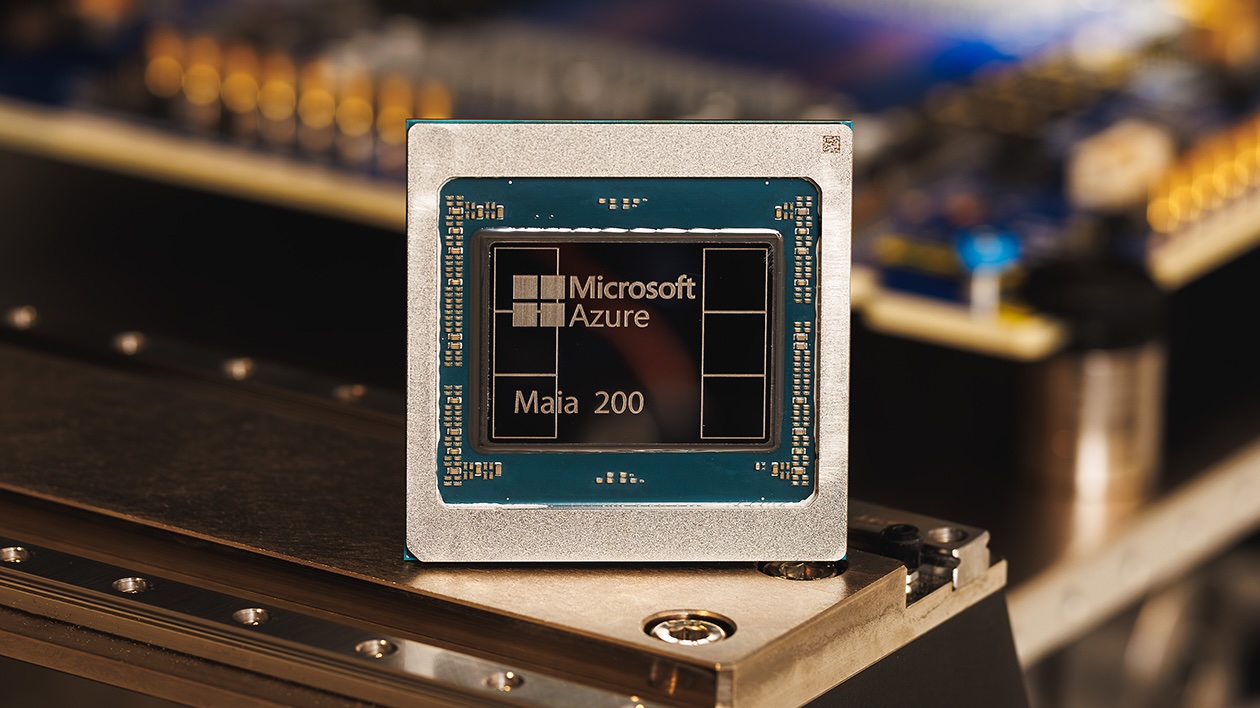
Hyperscale cloud providers operate under a different set of competitive dynamics. Google has deployed OCS in TPU clusters for years and has deep optical expertise. Amazon and Microsoft are developing custom AI accelerators and may pursue their own optical relationships.
For practitioners, these investments signal that optical-enabled AI infrastructure will become mainstream within the next product generation cycle. Organizations planning major AI infrastructure investments should factor optical requirements into facility design, assess the power and cooling implications of optical adoption, and evaluate their exposure to NVIDIA ecosystem dependency.
For investors and market observers, the deals underscore NVIDIA’s evolution from a GPU company to a full-stack AI infrastructure provider. The company’s willingness to commit billions to secure optical supply reflects both confidence in continued demand for AI infrastructure and recognition that optical technology is a potential constraint on future growth.
The competitive implications are significant but not yet fully determined. NVIDIA has established early-mover advantage in securing optical supply relationships, but competitors and hyperscale cloud providers are not standing still. The ultimate market impact will depend on execution across multiple dimensions: optical technology maturation, manufacturing scale-up, and integration with NVIDIA’s GPU and networking roadmaps.
What is clear is that the AI infrastructure market has entered a new phase where optical interconnects are no longer an exotic technology but a core component of competitive system design. NVIDIA’s investments position the company to lead this transition, though the magnitude of the advantage these investments confer will only become apparent as optical-enabled products reach production and deployment over the coming product cycles.