At Cisco Live 2026 in Las Vegas, Cisco unveiled Cisco Cloud Control, a unified management plane designed for human operators and AI agents to jointly run and defend enterprise infrastructure. The platform anchors Cisco’s AgenticOps operating model, unifying networking, security, compute, observability, and collaboration under a single login and a shared data layer.
Alongside it, Cisco expanded Cisco IQ, its AI-driven support and professional services delivery platform, and extended Live Protect, a runtime vulnerability-shielding capability, to additional products in the portfolio.
The announcements show Cisco continuing its rapid pivot from a networking and physical infrastructure vendor to a full-stack AI infrastructure provider spanning custom silicon, networking hardware, security, observability, and an agentic operations layer.
Details
Cisco’s announcements span three connected layers: a unified operations platform, an always-on security capability embedded in the infrastructure, and an AI-driven services and resilience offering. Each is designed to operate within the same governed environment (rather than as standalone tools).
Cisco Cloud Control
Cisco Cloud Control is a single management plane that brings a customer’s entire Cisco estate into a single login and view, with humans and agents operating from the same data layer and the same system of action.
Its core components include:
- Cross-domain telemetry: Data spanning networking, security, observability, and collaboration is consolidated so that humans and agents act on the same information, including uptime, agent behavior, and token consumption.
- Purpose-built models: The platform reasons across problems by combining purpose-built and frontier models, including Cisco’s Deep Network Model.
- Trusted agents: Autonomous agents follow a structured path from detecting trouble to identifying causes, implementing fixes, testing changes before deployment, and confirming recovery, with actions remaining visible and governed.
- Cisco AI Canvas: A collaborative generative workspace where operators and agents investigate and resolve issues using the same live evidence, with context persisting across shifts and escalations.
- Cloud Control Studio: An Agent Builder for creating policy-aware agents with connectors to 50-plus third-party platforms and the open Model Context Protocol, and an App Builder that generates apps from natural-language prompts using built-in OpenAI Codex. Output is published to a Cloud Control Marketplace.
The platform integrates with an external ecosystem that includes AWS, Google Cloud, Microsoft, ServiceNow, PagerDuty, Slack, Linear, and Wiz.
Live Protect
Cisco describes its new Live Protect as “a digital immune system” for its products, shielding supported platforms from newly discovered, prioritized vulnerabilities at runtime without requiring reboots, upgrades, or maintenance windows.
It is now available on Nexus 9000 (N9000) series switches and included with the Nexus One product entitlement.
The capability will expand to campus and branch smart switches, with secure routers to follow later in the year. The accompanying Hybrid Mesh Firewall extends protection across networks and applications, as well as across Cisco and third-party firewalls.
Cisco IQ and Resilient Infrastructure Services
Cisco IQ is the company’s AI-powered delivery vehicle for Support and Professional Services, now fully integrated into Cisco Cloud Control. Cisco reports that Cisco IQ onboarded 1,700 customers within weeks of launch.
The additions announced at Cisco Live include:
- Resilient Infrastructure Services: a three-step approach covering Exposure Assessment, Infrastructure Modernization, and Defense Resiliency, aimed at mitigating frontier-model threats.
- Quantum Ready Assessments: identify the cryptographic assets most exposed to harvest-now-decrypt-later attacks and are planned for global availability in July 2026.
- On-premises deployment: targeted at customers with data sovereignty requirements, plus Peer Benchmarking that uses anonymized data to compare last-day-of-support risk and vulnerability rates with those of similar organizations.
Cisco also committed to quantum-safe communications across most of its core portfolio by December 2026 and stated that newly introduced campus, branch, and data center routers, switches, and firewall series will ship with quantum-safe secure boot.
Analysis
The announcements demonstrate the breadth and depth of Cisco’s rapid evolution into a full-stack AI infrastructure provider. Over the past several years, the company has assembled the layers needed to operate and secure AI infrastructure end-to-end. The announcements at Cisco Live 2026 integrate those layers into a coherent whole.
Cisco positions the network as the foundation of the agentic era and the operations and security stack as the differentiators that set it apart from silicon-only and software-only competitors:
- Cisco’s custom silicon, the Silicon One P200 and the 8223 routing system, gives it credibility in the AI data center backbone and scale-across interconnect, providing a hardware foundation that software-only operations vendors cannot match.
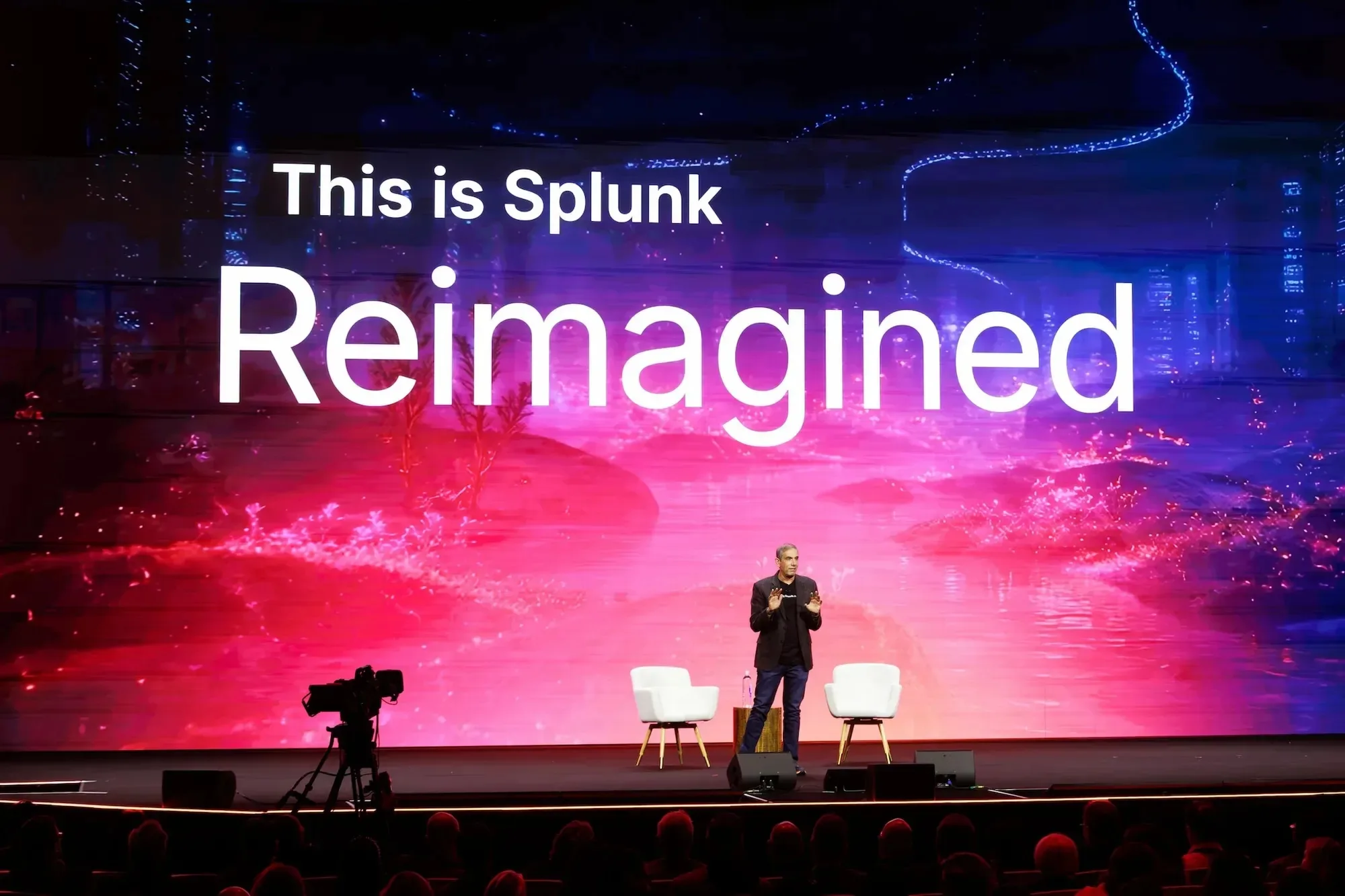
- The Splunk-derived data and observability assets provide the telemetry foundation that makes an agentic operations platform feasible; without that data layer, Cloud Control would be an interface without substance.
For Practitioners
For network and security operations teams, Cisco Cloud Control consolidates tools that traditionally reside in separate consoles and reduces the manual correlation work that slows incident response.
The shared data layer and AI Canvas address a specific pain point: context lost during shift handoffs and escalations. Teams running AI agents can treat those agents as governed production services rather than unmanaged side projects.
Competitive Landscape
Cisco’s full-stack approach distinguishes it from competitors that lead in individual layers but do not span the entire stack. Its genuine differentiation is the combination of merchant-class silicon, broad networking reach across data centers, campuses, branches, and WANs, and an operations-and-security layer grounded in decades of telemetry.
The competitive question is whether enterprises prefer an integrated Cisco stack or to assemble best-of-breed components, including NVIDIA compute, Arista or Juniper switching, and a separate operations layer.
Cisco’s bet is that the operational complexity of agentic AI favors consolidation, and that its telemetry depth and silicon-to-operations reach make the integrated path the lower-risk option.
Final Thoughts
Cisco Live 2026 marks the point at which Cisco’s transition from a networking and physical infrastructure company to a full-stack AI infrastructure provider publicly aligns as a coherent strategy.
Cisco Cloud Control, Cisco IQ, and the expanded Live Protect are not isolated launches; they are the operations and security layers that sit atop Silicon One silicon and Cisco’s networking portfolio, with the Splunk and Isovalent acquisitions providing the data, observability, and in-fabric enforcement that make an agentic operations platform credible.
For enterprises building agentic AI operations, the most important takeaway is that Cisco is now selling the operating model, not just the underlying network. Whether its specific platform wins or not, Cisco has successfully reframed the conversation.
In an agentic enterprise where machines act at software speed, the company that owns both the infrastructure and the governed control plane over it holds a position no point-solution vendor can easily dislodge.