
IBM Quantum Nighthawk r2 Arrives on the IBM Quantum Platform
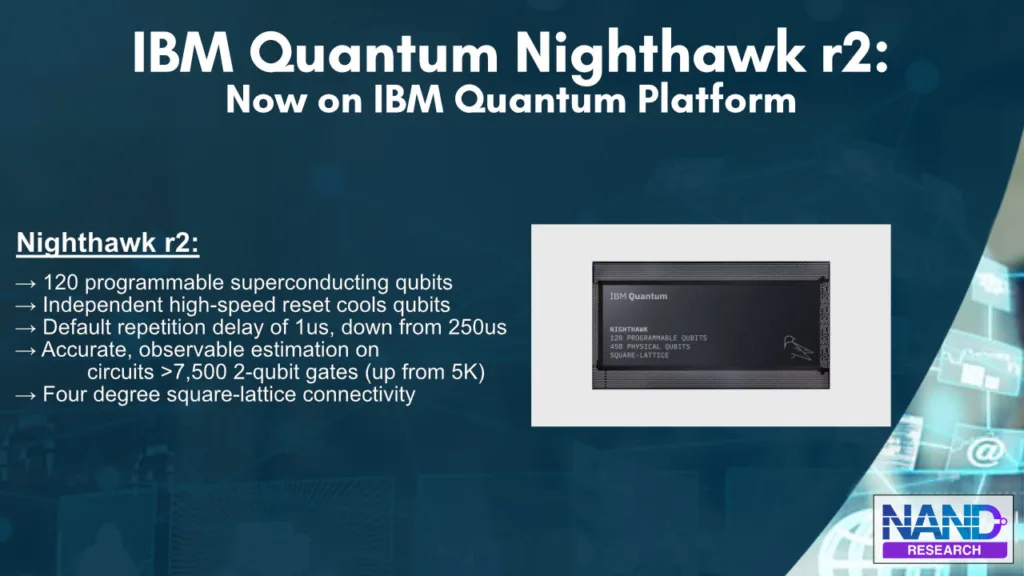
IBM announced that the second revision of its Nighthawk quantum processor is now available on the IBM Quantum Platform. The chip retains the 120-qubit square lattice introduced in the first Nighthawk revision and adds an independent, high-speed qubit reset (which reduces the default repetition delay from 250 microseconds to 1 microsecond).
IBM’s Modular Cryogenic Architecture: Scaling Toward Fault-Tolerant Quantum Computing
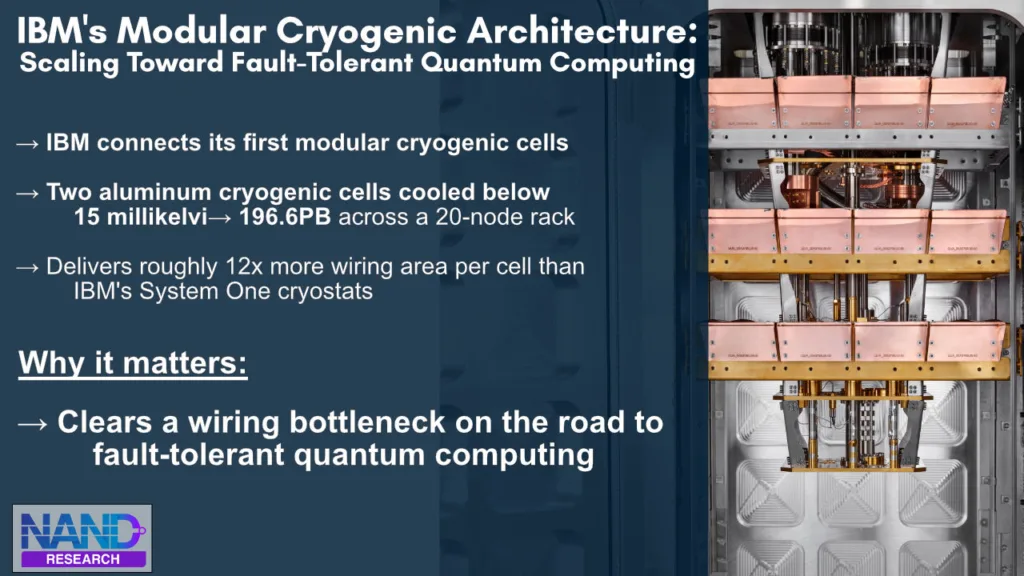
IBM has connected two modular cryogenic cells within a single cooled environment at its Poughkeepsie, New York, facility and cooled the combined system to below 15 millikelvin, more than 100 times colder than deep space. The demonstration replaces the cylindrical dilution-refrigerator enclosures used in IBM Quantum System One with box-shaped aluminum cells that sit side by side and link via short, shielded interconnect tunnels.
IBM Acquires HRL Laboratories, Adds Silicon-Spin Qubits to Its Quantum Portfolio
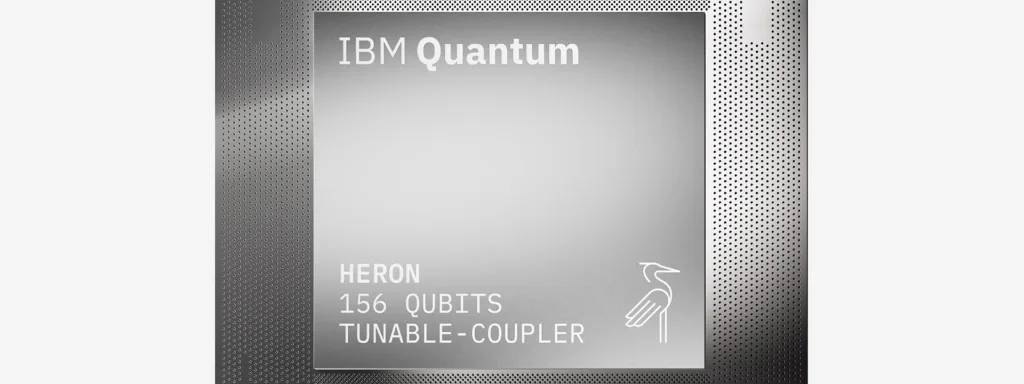
IBM announced it has signed a definitive agreement to acquire HRL Laboratories, a research and development institution jointly owned by Boeing and General Motors since 1997. The transaction brings HRL’s expertise in silicon-spin qubit engineering, quantum sensing, and quantum materials research to IBM’s quantum computing program. IBM has built its quantum computing roadmap, including the […]
Quantum Cloud Computing: An Enterprise Guide
Quantum computing is entering the enterprise through the cloud. That matters because most organizations will not buy, install, or operate quantum hardware. Quantum computers simply aren’t data-center friendly. Instead, enterprises will access quantum processing units (QPUs) alongside CPUs, GPUs, and high-performance computing resources through familiar cloud environments. Evaluating this market requires looking beyond physical qubit […]
Microsoft, Quantinuum & IBM: Closing the Gap Between Fragile Qubits and Fault-Tolerant Computing
Quantum error correction is crossing a major threshold w/ significant recent announcements from IBM, Microsoft & Quantinuum, with a direct line to the commercialization of quantum computing.
Microsoft & Quantinuum: Peer-Reviewed Quantum Error Correction Results

Microsoft and Quantinuum recently published a peer-reviewed paper in Nature 6, confirming an 800-fold reduction in logical-qubit error rates on Quantinuum’s trapped-ion hardware using Microsoft’s qubit-virtualization platform.
IBM’s LLM-Guided Evolutionary Framework for Quantum Error Correction Code Discovery
IBM Research recently published a paper on an LLM-guided evolutionary framework for discovering quantum error-correction (QEC) codes, accompanied by the open-source release of OpenEvolve on GitHub. The framework applies evolutionary artificial intelligence techniques, originally developed for general program synthesis, to the domain of quantum low-density parity-check (qLDPC) codes.
Microsoft’s Majorana 2 Topological Quantum Chip
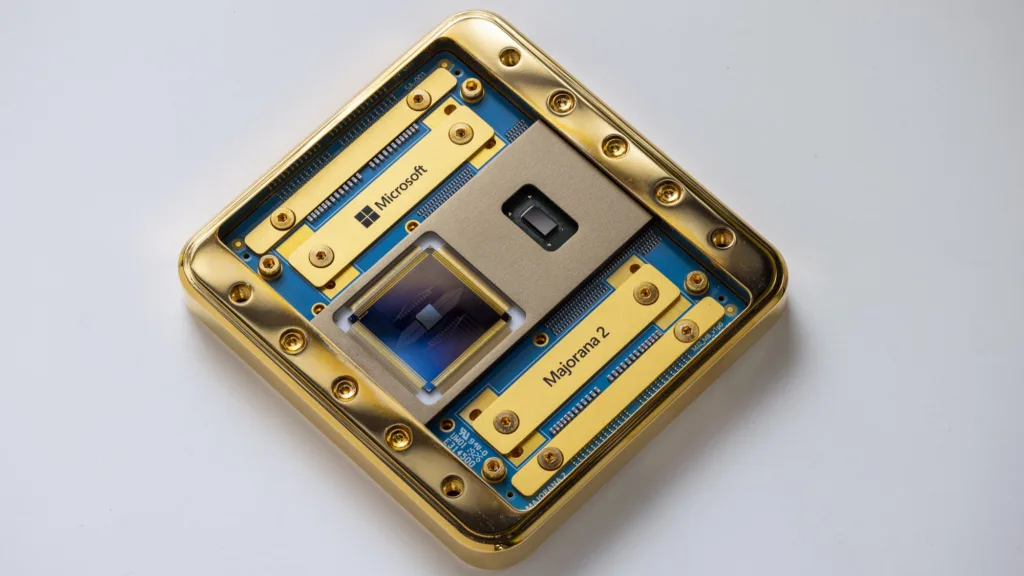
Microsoft unveiled Majorana 2 at its recent Build developer conference in San Francisco, introducing its second-generation topological quantum chip and announcing the general availability of Microsoft Discovery, an agentic AI platform for scientific research and development.
Majorana 2 delivers qubits that are 1,000 times more reliable than those in its predecessor, Majorana 1, with a mean qubit lifetime of 20 seconds and peak instances approaching 1 minute.
Quantinuum’s $1.68 Billion IPO & the Race to Quantum Commercialization

Quantinuum opened trading on the Nasdaq last week (symbol: QNT), raising $1.68 billion in the largest traditional IPO to date for a pure-play quantum computing company.
Priced at $60 per share, above the marketed range of $53 to $55, and oversubscribed by a double-digit multiple before trading began, the debut caps a multi-year run of technical milestones, high-profile partnerships, and deepening enterprise engagement.
IBM’s Big Quantum Month: A $10 Billion Bet, a National Fab, and a 2029 Deadline
A version of this post previously appeared in a LinkedIn newsletter IBM revealed that it will invest more than $10 billion in quantum computing over the next five years, with the goal of delivering the first large-scale, fault-tolerant quantum computer by 2029. The disclosure, which arrived not via a press release but through an SEC […]
IBM: Anderon Quantum Foundry and the Industrialization of Quantum Hardware
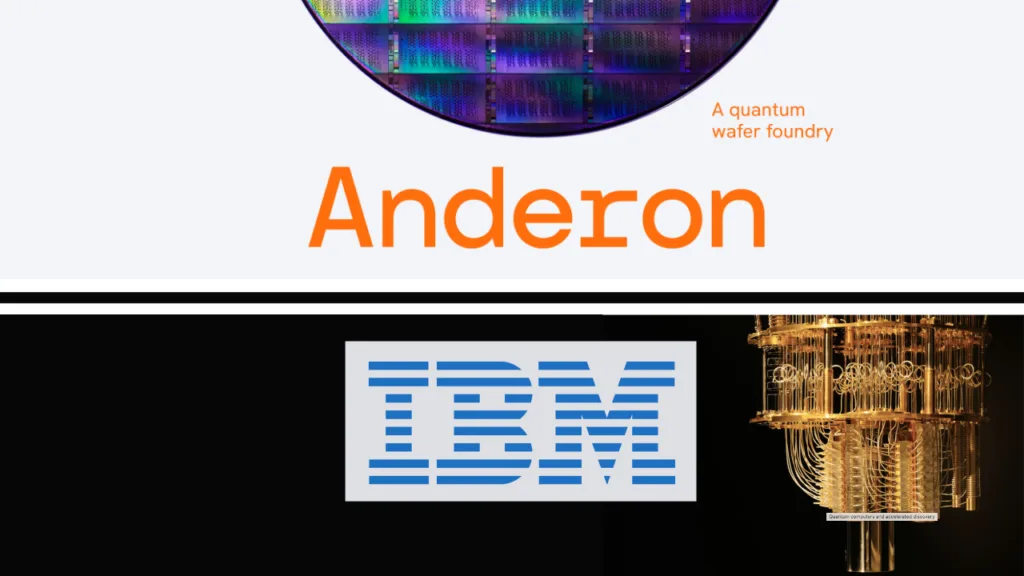
IBM and the U.S. Department of Commerce announced a Letter of Intent to establish Anderon, a standalone company that will operate the United States’ first pure-play quantum chip foundry.
The initiative has a combined commitment of $2 billion, including $1 billion in proposed CHIPS Act R&D incentives from the Department of Commerce and $1 billion in cash from IBM, supplemented by IBM’s intellectual property, fabrication assets, and an existing skilled workforce.
Research Note: IBM and AMD Collaborate on Classical-Quantum Computing
IBM and AMD recently announced a strategic collaboration to develop quantum-centric supercomputing architectures that combine quantum computers with high-performance computing infrastructure. The partnership is based on a memorandum of understanding between the companies, with no immediate financial exchange.
SC24: Shaping the Future of IT with High-Performance Computing and AI
Last week’s Supercomputing 2024 (SC24) conference in Atlanta brought together IT leaders, researchers, and industry innovators to unveil advancements in HPC and AI, with even a little quantum computing thrown in.
Quick Take: Microsoft & Quantiniuum Achieve Quantum Error Correction Breakthrough
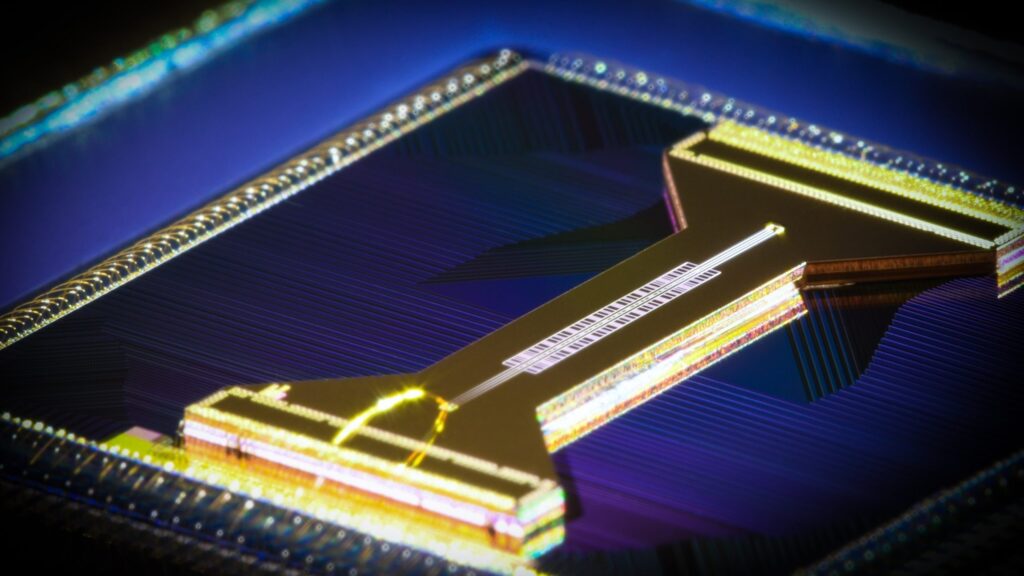
Microsoft and Quantinuum announced an advancement in quantum computing that significantly reduces quantum error correction, a significant achievement that addresses one of the major hurdles in quantum computing.
Research Note: Honeywell’s $300M Investment in Quantinuum

Honeywell continues its investments in quantum computing by announcing a $300 million equity fundraising for Quantinuum, the leading integrated quantum computing company, valuing it at $5 billion pre-money.