llm-d 1.0 Open Distributed Inference for Production AI

The llm-d project recently released version 1.0, the first stable release of an open-source, Kubernetes-native framework for distributing large language model inference across fleets of accelerators. llm-d sits above inference engines such as vLLM and SGLang, adding routing, cache management, and scheduling across model servers.
NVIDIA GTC Berlin 2026: Speed, Security and a Sovereignty Tradeoff
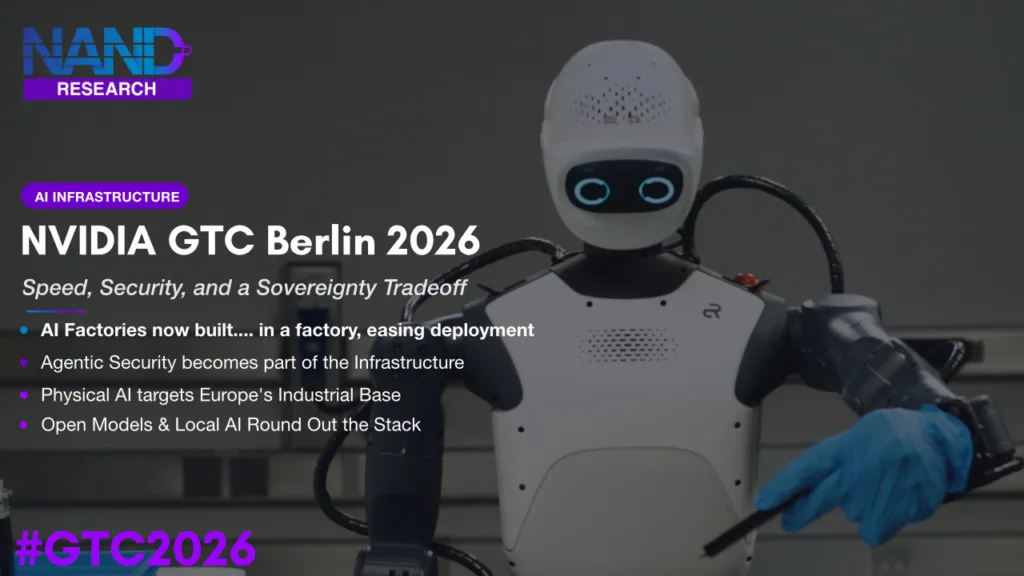
At GTC Berlin 2026, NVIDIA made an ambitious pitch to Europe to build regional AI infrastructure, develop sovereign intelligence, and accelerate industrial AI adoption on NVIDIA technology. The announcements spanned modular AI factories, agent security, robotics, autonomous vehicles, and open models.
OCP 2026: Taking Open Hardware from the Chip to the Grid
The Open Compute Project (OCP) Global Summit has long been a place where hyperscalers share rack, power, and cooling designs that influence the broader data center industry. This year’s sold-out event, attended by roughly 15,000 people and with another 3,000 on the waitlist, demonstrated how far that mission has expanded.
Veeam Intelligent ResOps for Microsoft 365
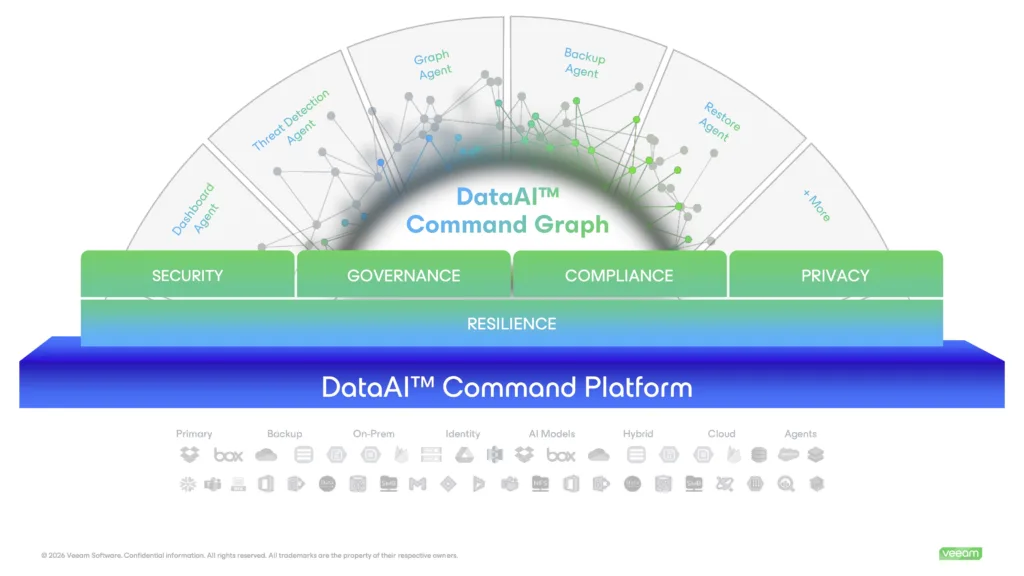
Veeam announced that its Intelligent ResOps (iResOps) for Microsoft 365 is now generally available. The product is an add-on to Veeam Data Cloud for Microsoft 365 that discovers Microsoft Copilot and other AI agents within a tenant, maps the sensitive data each agent can access, identifies redundant, obsolete, and trivial (ROT) content, and allows administrators to reverse agent-driven file changes, one file at a time.
NVIDIA at OCP 2026
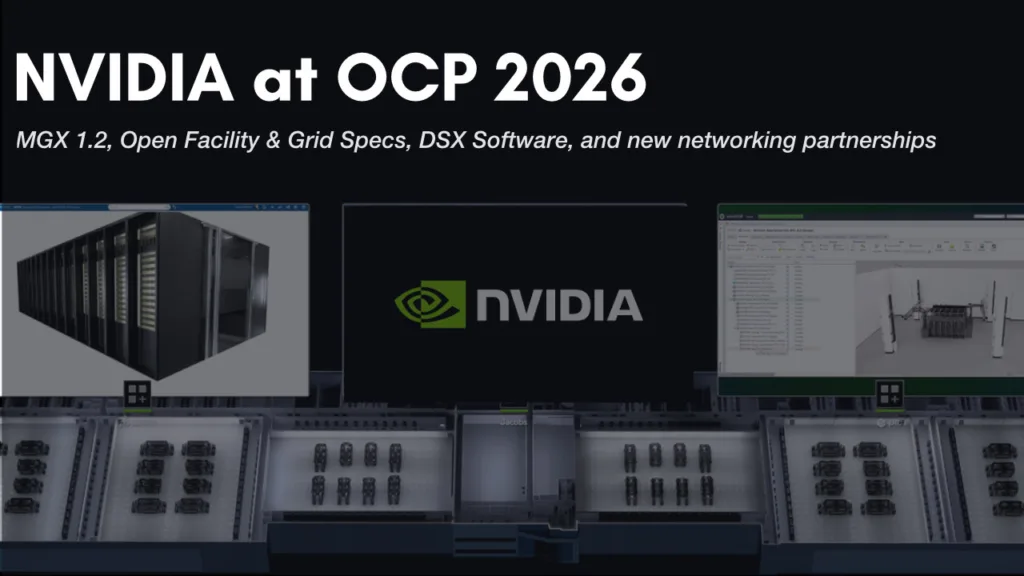
NVIDIA made a broad set of contributions and announcements at the 2026 OCP Global Summit, all designed to remove friction from large-scale deployments at hyperscalers, neoclouds, and large enterprises.
Intel GPU D270: An Inference-First GPU for the Data Center
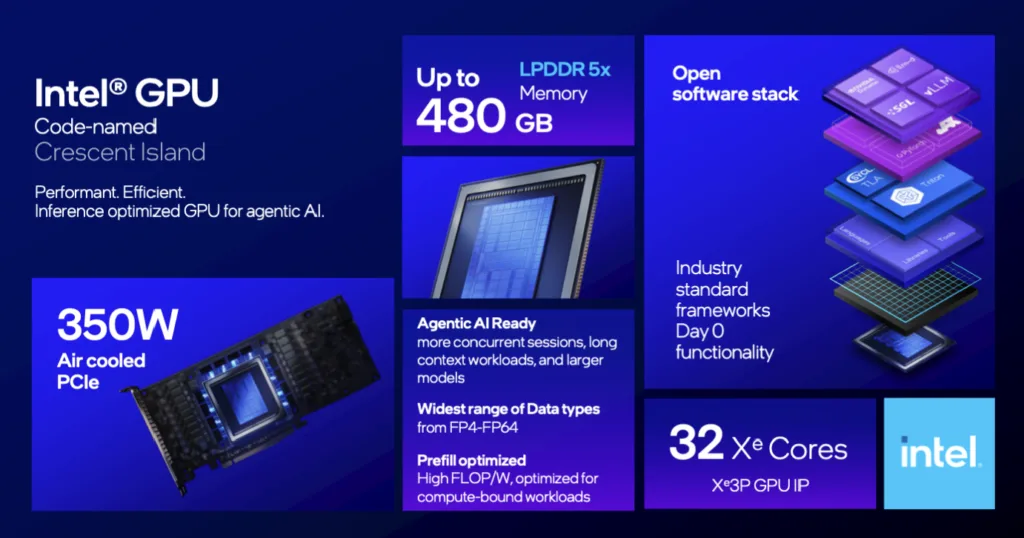
Intel introduced its new Intel GPU D-Series at this year’s 2026 Open Compute Global Summit. The Intel GPU D270 is the first inference accelerator based on its Crescent Island architecture, a 350W, air-cooled, double-wide PCIe Gen5 card built on Intel’s Xe3P architecture.
Cisco at OCP 2026
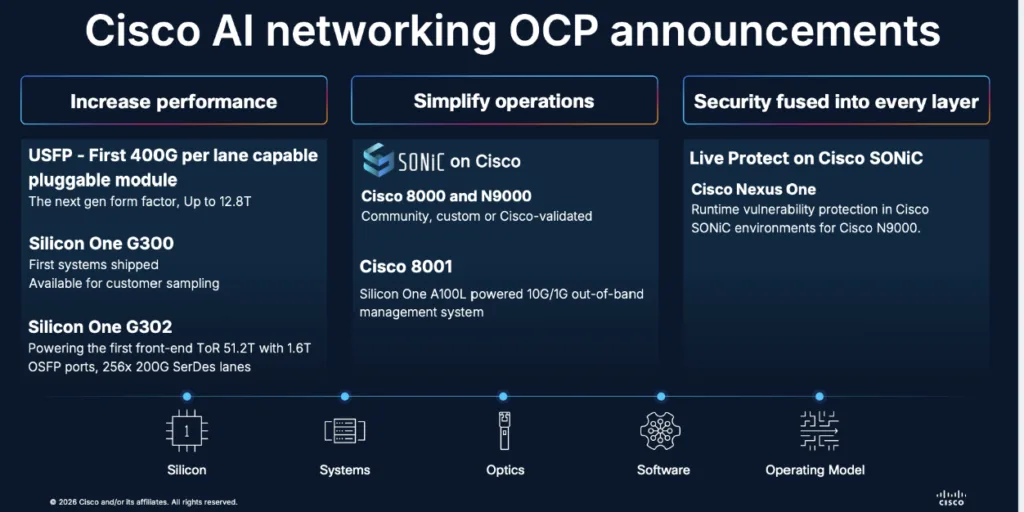
Cisco updated nearly every layer of its AI networking stack at the recent 2026 OCP Global Summit. The company announced production deployments of its Silicon One P200 routing silicon at Microsoft and Alibaba, began shipping the first systems based on its 102.4 Tbps Silicon One G300, and introduced the Silicon One G302, a 51.2 Tbps top-of-rack device with 200G SerDes.
IonQ Acquires Elisity: Quantum-Safe Security Meets Identity-Based Microsegmentation

IonQ has signed a definitive agreement to acquire Elisity, a privately held Zero Trust security company specializing in identity-based micro-segmentation.
AMD Helion Brings Rack-Scale Design to Agentic AI
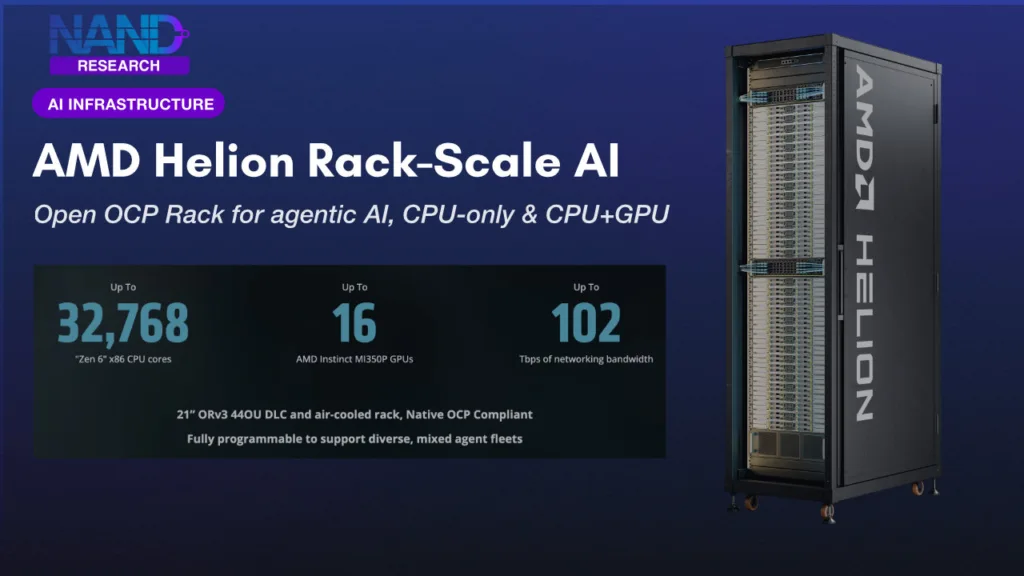
AMD Helion brings rack-scale design to agentic AI with a 32,768-core CPU rack and CPU plus GPU option. We look at the specs, partners, and NVIDIA Vera competition.
Cisco and NVIDIA: Optical Ultra-Dense Small Form Factor Pluggable (USFP) Specification
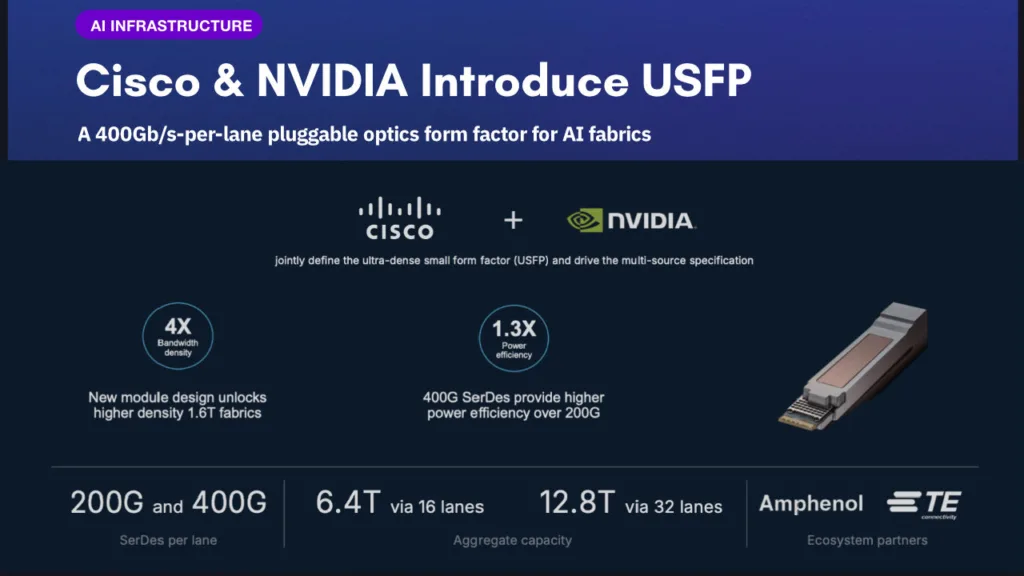
Cisco and NVIDIA introduced the Ultra-Dense Small Form Factor Pluggable (USFP) at the Open Compute Global Summit 2026. The new optical transceiver form factor supports 400Gb/s per electrical lane.
The initial design places 16 full-duplex lanes in a module roughly the size of today’s OSFP, yielding 6.4 Tb/s per module. A 32-lane variant delivers 12.8 Tb/s.
Quantum World Congress 2026: Fault Tolerance, Benchmarks & Commercialization

Fault tolerance dominated the recent Quantum World Congress 2026, and so did a sharper debate over proof. The industry has largely stopped competing on raw qubit counts. Instead, vendors now compete on whose logical qubits, decoders, and benchmarks hold up under scrutiny, and buyers benefit from it.
The Fight for TDK’s HDD Head Business
The most strategic asset in the hard drive industry this week is a component most IT buyers never consider. On October 6, Bloomberg reported that Seagate and Toshiba are competing for TDK’s HDD magnetic recording head business, in a deal that could be worth several billion dollars.
Atlassian Team ’26 Europe Announcements: Context & Governance for Enterprise Agentic AI
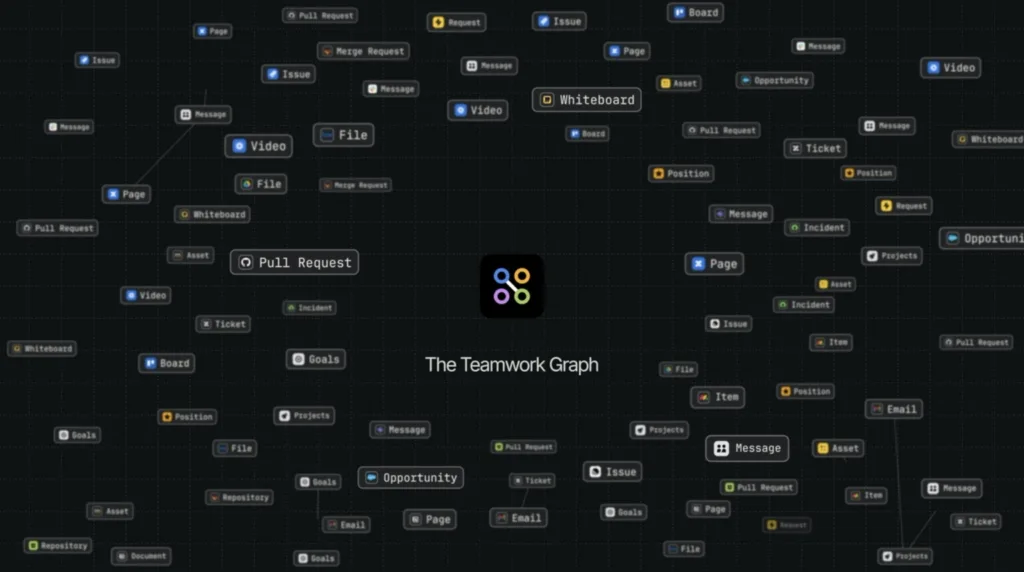
Atlassian made a broad set of announcements at its recent Team ’26 Europe conference covering nearly every product in its portfolio. The underlying theme across all the announcements is to make the Teamwork Graph the context and governance layer on which enterprise agentic AI relies.
Atlassian AMP: Making Governed AI Agents Part of the Team
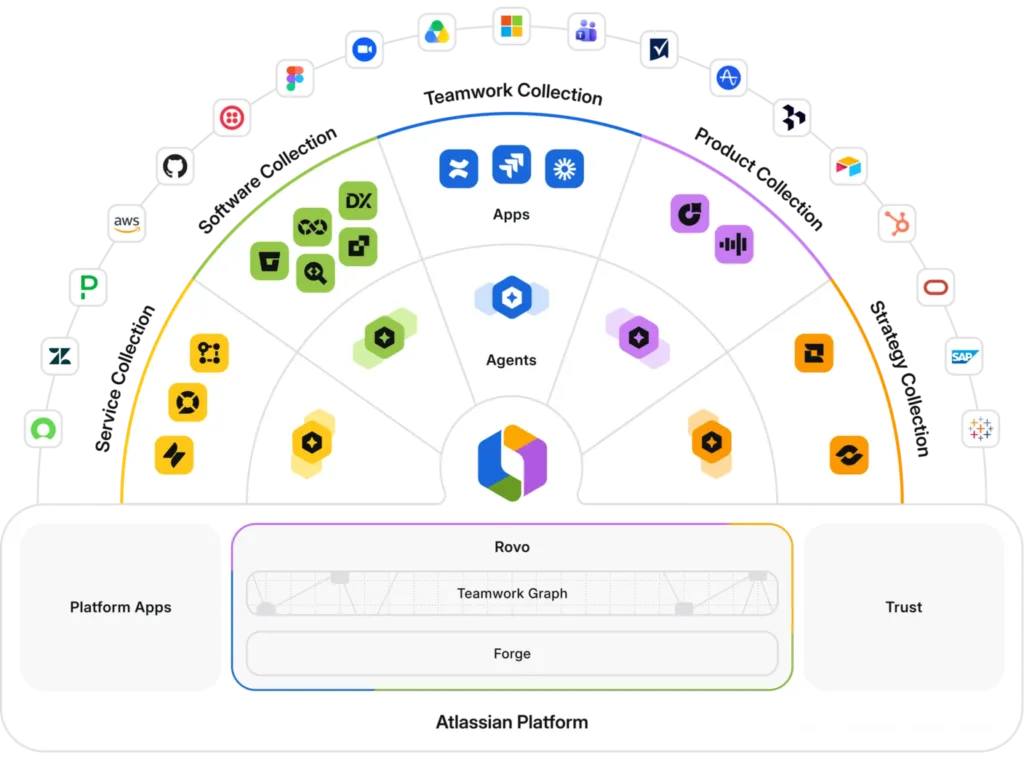
Atlassian introduced the Agentic Multiplayer Protocol (AMP) at its Team ’26 Europe conference in Amsterdam. AMP is Atlassian’s framework for AI agents to participate in shared work alongside people across Jira, Confluence, Loom, Bitbucket, and the rest of the Atlassian cloud platform.
AMD Takes on AI Storage with ROCm 10.1 AIS

AMD recently released ROCm 10.1, with data movement as the release’s organizing theme. The centerpiece is AMD Infinity Storage (AIS), AMD’s umbrella for libraries that move data directly between storage and GPU memory.
Dell AI Data Platform Gains Enterprise Context & GPU-Accelerated Data Preparation
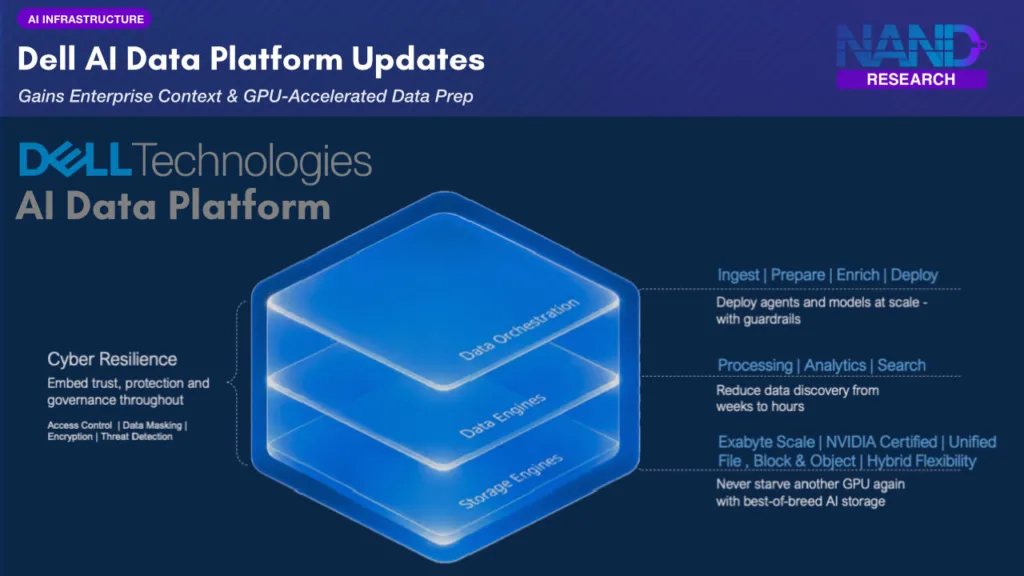
Dell has expanded its Dell AI Data Platform, the data foundation of the Dell AI Factory, with a set of updates to orchestration, processing, storage, and services. The headline additions are a Unified Semantic Layer, an Enterprise Knowledge Graph, and topic-scoped Knowledge Agents, which provide AI applications and agents with a shared, governed understanding of enterprise data.
Quantinuum Backs QUOPS, a Cross-Platform Benchmark for Quantum Compute
Quantinuum announced QUOPS (the Quantum Universal Operations Performance System) at the recent Quantum World Congress in Maryland. The benchmark was developed by Sandia National Laboratories’ Quantum Performance Laboratory, with contributions from Quantinuum and NVIDIA.
In Conversation: NetApp CEO George Kurian
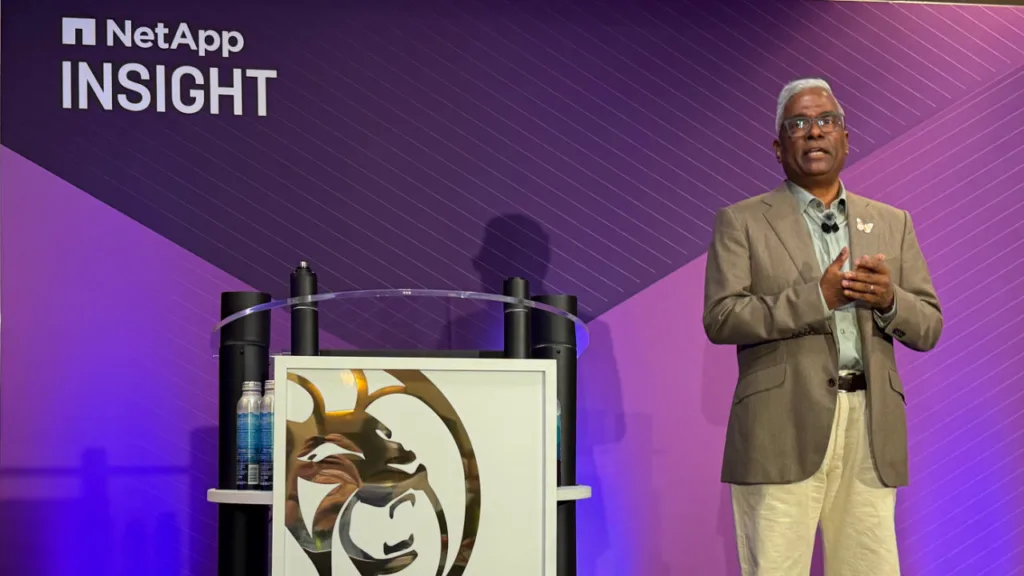
At NetApp’s recent INSIGHT 2026 event in Las Vegas, I had the chance to speak with CEO George Kurian about the state of the business. Below is an edited transcript of our conversation.
NetApp INSIGHT 2026 Recap: Clouds, Sovereignty & Autonomous Operations
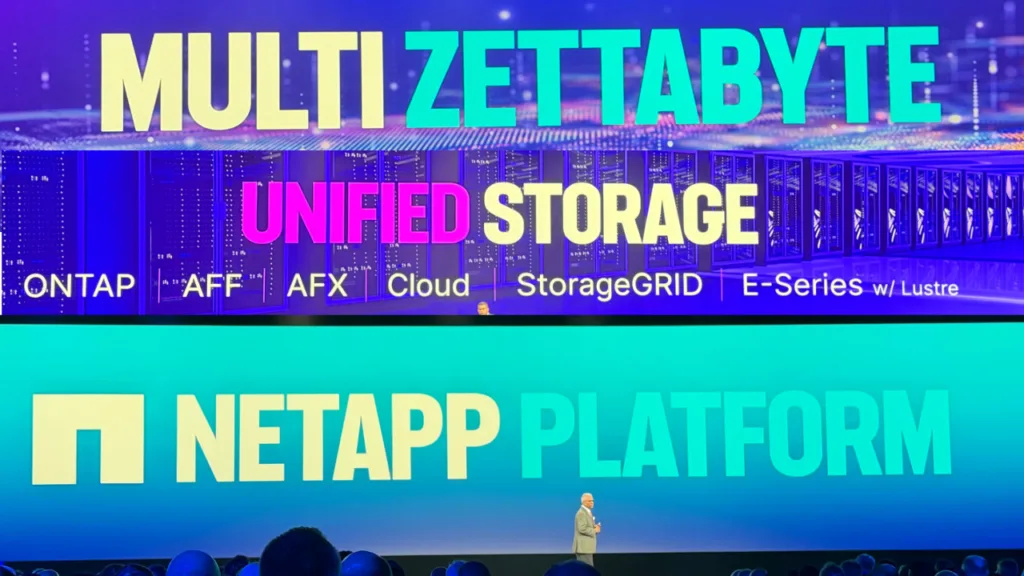
NetApp used its INSIGHT 2026 conference in Las Vegas to announce a broad set of platform, cloud, and partner updates alongside its headline Novus AI factory architecture
NetApp Novus Takes ONTAP to AI Factory Scale
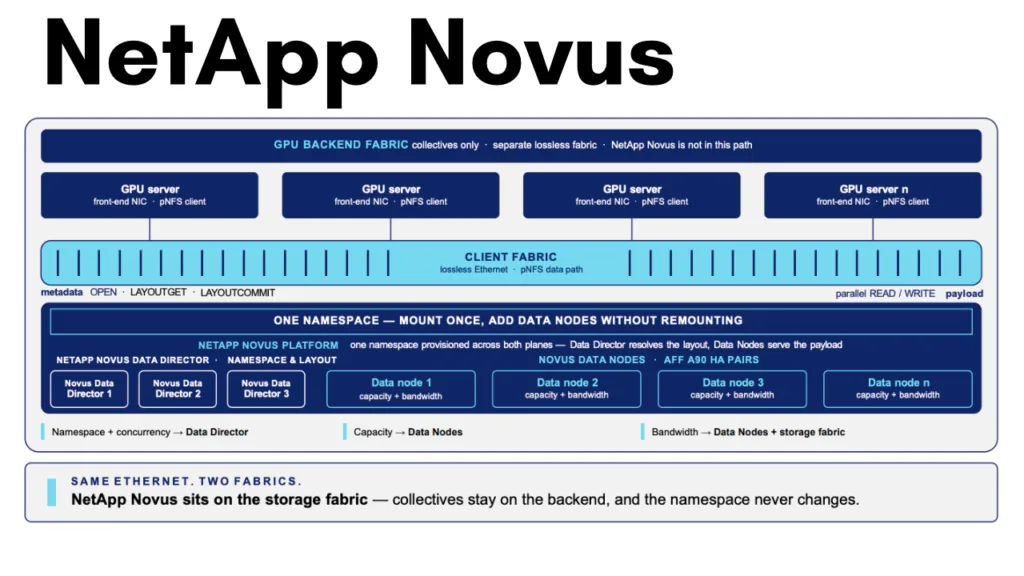
At its INSIGHT 2026 conference in Las Vegas, NetApp announced NetApp Novus, its new storage architecture for neocloud operators, hyperscalers, GPU-as-a-Service providers, and large enterprises building their own GPU clouds.
Everpure Extends Data Intelligence and Inference Acceleration for Enterprise Agentic AI
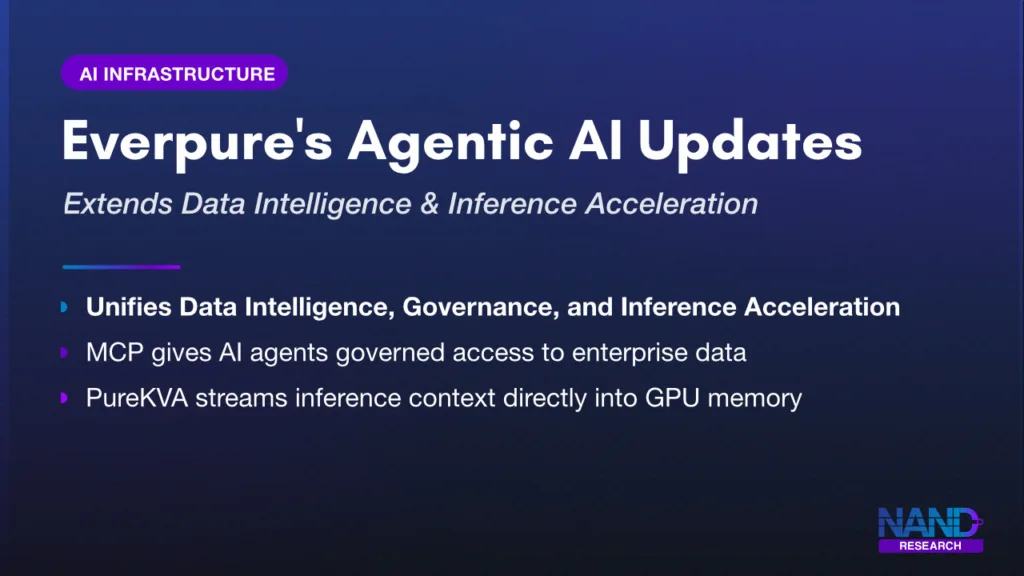
Everpure announced a set of platform capabilities at its Pure//Accelerate London, targeting enterprises moving AI agents and inference workloads from pilot to production.
Everpure Investor Day: Pure’s Four-Vector Push Beyond Enterprise Storage
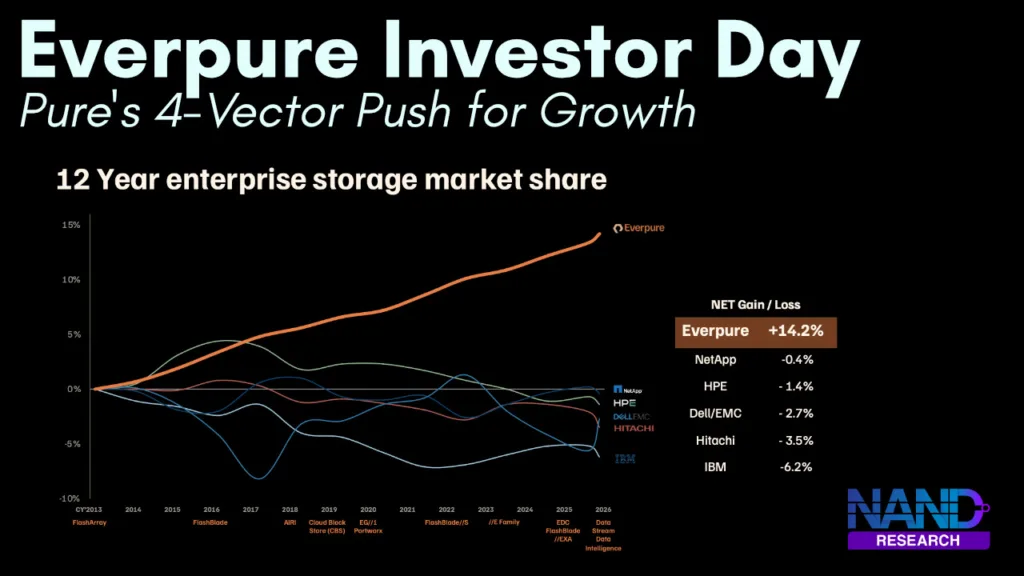
Everpure (formerly Pure Storage) used its recent financial analyst meeting to explain how it plans to grow beyond the enterprise storage array business that defined its first 17 years.
Management built its growth story around four vectors that it’s named Core and Core AI, Modern Data Software, Scale AI, Hyperscale Solutions.
NetApp To Acquire PEAK:AIO to Scale ONTAP for AI Clouds
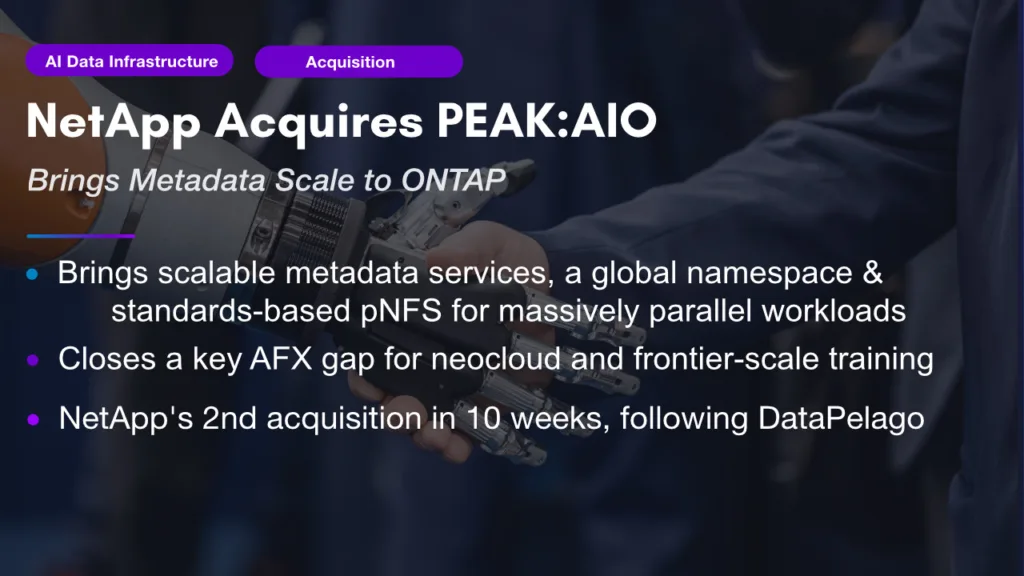
NetApp announced a definitive agreement to acquire PEAK:AIO, a Manchester, UK-based software-defined storage company whose core technology is a scale-out, disaggregated metadata service for parallel NFS (pNFS).
NetApp said it will integrate PEAK:AIO’s metadata services, global namespace, and parallel NFS access into ONTAP, extending its AI infrastructure to support AI clouds that must handle trillions of files and multi-exabyte deployments.
Qualcomm Acquires PickNik Robotics, Bolsters Its Physical AI Software Stack
Qualcomm announced at ROSCon Toronto an agreement to acquire PickNik,the Boulder, Colorado-based company that stewards MoveIt, one of the most widely adopted open-source manipulation frameworks in the Robot Operating System (ROS) ecosystem.
VAST Data Brings Confidential Compute to AI with DataEnclave
VAST Data announced its new VAST DataEnclave, a confidential compute capability for AI workloads within the VAST DataEngine, which runs AI models in hardware-isolated environments built on NVIDIA Confidential Computing. The new capability decrypts model weights and enterprise data only within protected CPU and GPU memory, and only after cryptographic attestation confirms that the environment meets policies set by each asset’s owner.
Nutanix Acquires Ryax, Brings GPU-Aware Scheduling to Its Agentic AI Stack
Nutanix announced its acquisition of Ryax Technologies, a French developer of AI-driven compute orchestration and workload-scheduling software, for an undisclosed amount. Nutanix plans to integrate Ryax’s GPU utilization and smart scheduling technologies into future releases of the Nutanix Kubernetes Platform (NKP) and Nutanix Enterprise AI (NAI).
WEKA and Backblaze Combine Performance and Capacity Storage for AI Data Pipelines
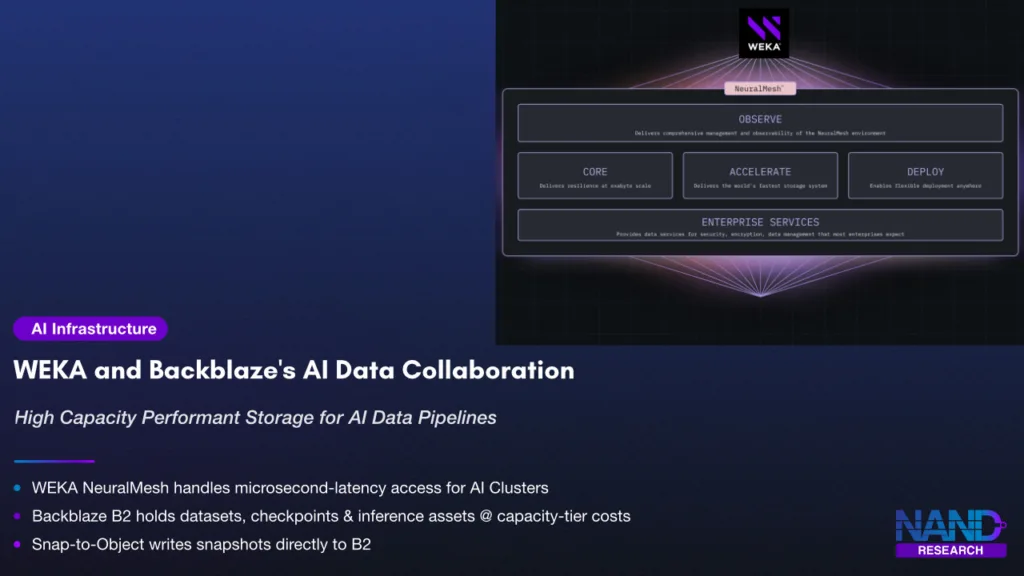
WEKA and Backblaze recently announced a validated two-tier storage architecture for AI workloads. The solution pairs WEKA NeuralMesh, a high-performance parallel file system designed for GPU-fed workloads, with Backblaze B2 Cloud Storage, an object storage service for large-scale data retention.
Splunk .conf26: Building the Trust Layer for Agentic AI
Splunk .conf26 recap: Cisco debuts agentic SOC, AI observability, and a unified data fabric to govern autonomous AI agents at scale.
Qualcomm & AWS Ink Multi-Generation Deal for Custom AI Silicon & Optical Connectivity
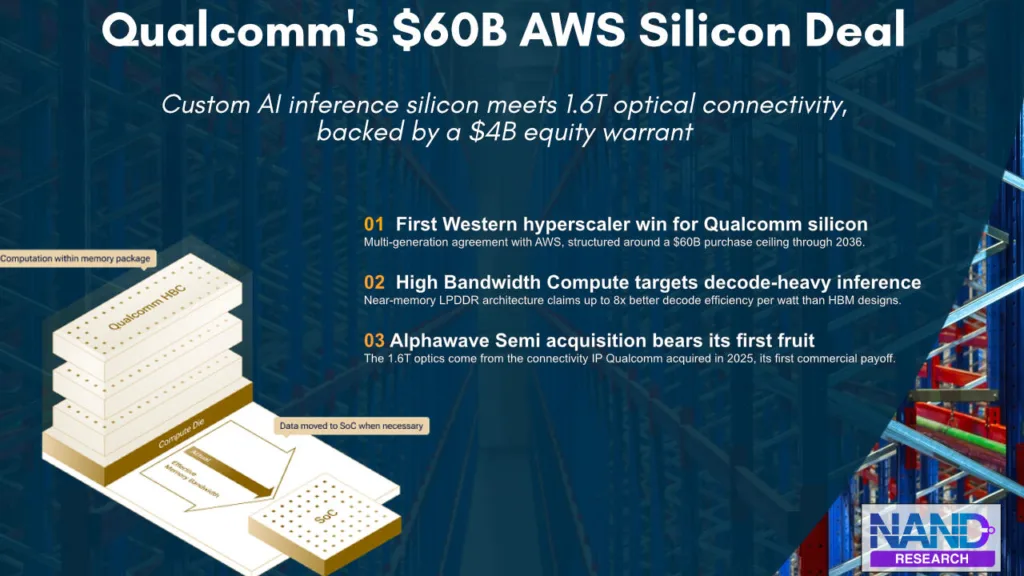
Qualcomm and Amazon Web Services announced a multi-generation agreement covering custom AI inference silicon and 1.6T optical connectivity for AWS data centers. The deal is structured around a warrant for up to 25 million Qualcomm shares at $161.26 per share, vesting as AWS meets purchase milestones, with a $60 billion ceiling on silicon and connectivity purchases through 2036.
IBM Quantum Nighthawk r2 Arrives on the IBM Quantum Platform
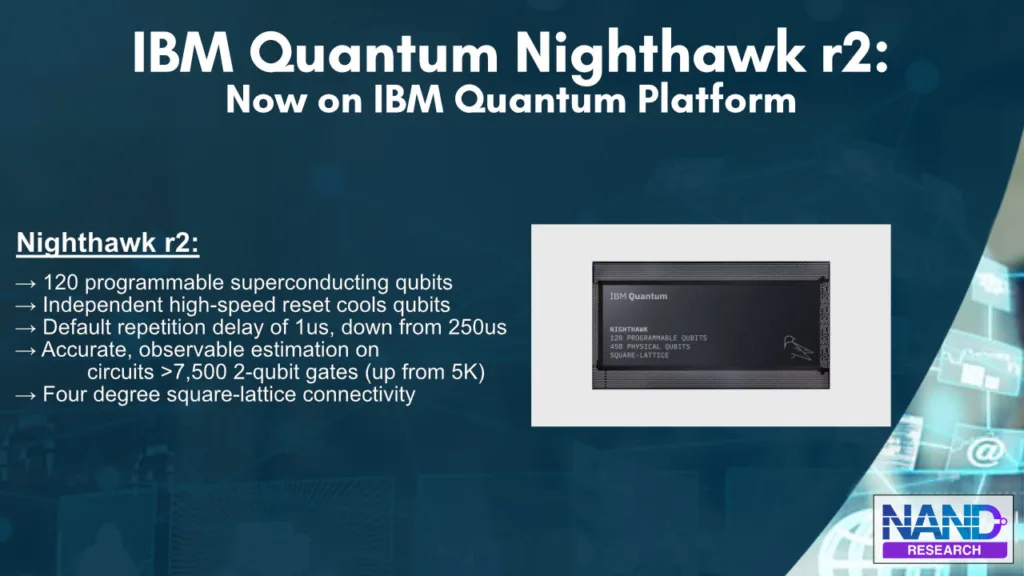
IBM announced that the second revision of its Nighthawk quantum processor is now available on the IBM Quantum Platform. The chip retains the 120-qubit square lattice introduced in the first Nighthawk revision and adds an independent, high-speed qubit reset (which reduces the default repetition delay from 250 microseconds to 1 microsecond).
VMware AI Factory: Broadcom’s Push to Operationalize Private AI
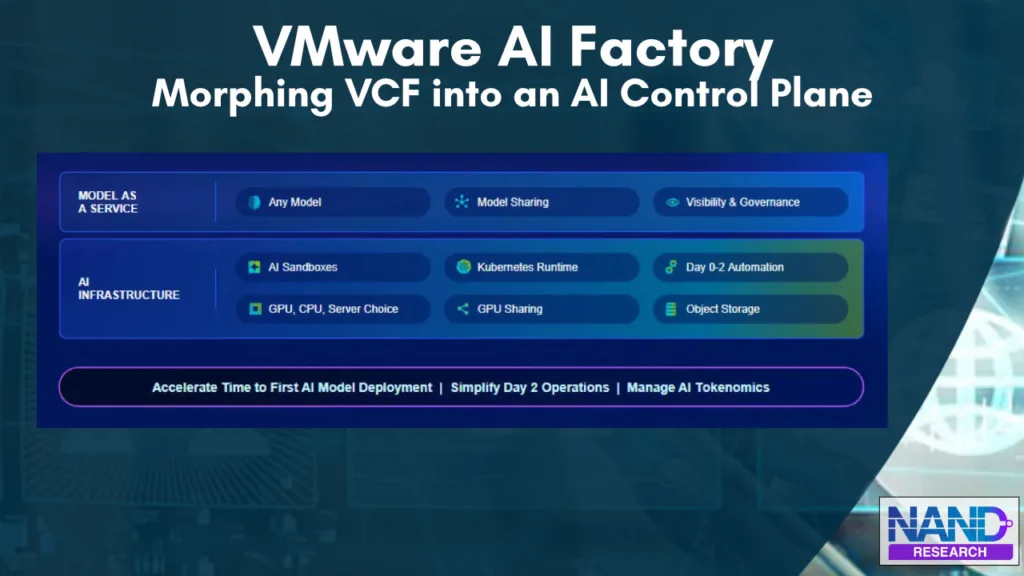
Broadcom introduced its new VMware AI Factory at VMware Explore 2026. The offering bundles software services built on VCF to take an enterprise from bare-metal infrastructure to a running production AI model. It combines infrastructure provisioning, GPU pooling, multi-tenant model sharing, and governance tooling into a single operational layer for enterprises that want to run AI workloads on infrastructure they own and control.
CrowdStrike Falcon Guardian: AI Agent Security at the Endpoint
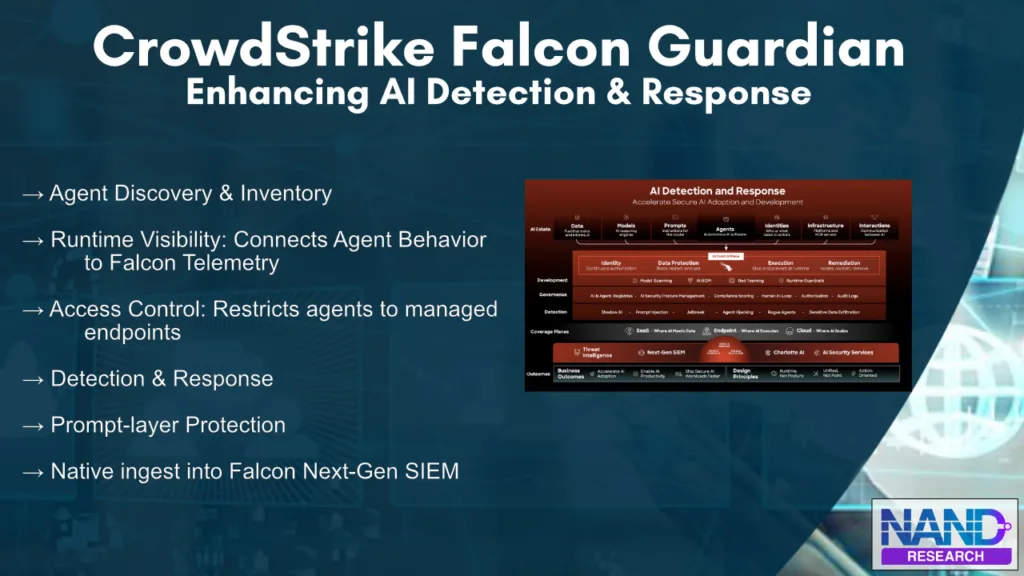
CrowdStrike announced its new Falcon Guardian at Fal.Con 2026 in Las Vegas, extending its Falcon platform to secure AI agents on managed endpoints. The offering adds AI agent discovery, runtime visibility, access controls, and detection and response to CrowdStrike’s existing AI Detection and Response (AIDR) product line.
Cisco Expands Secure AI Factory with NVIDIA, adds Supermicro as Partner
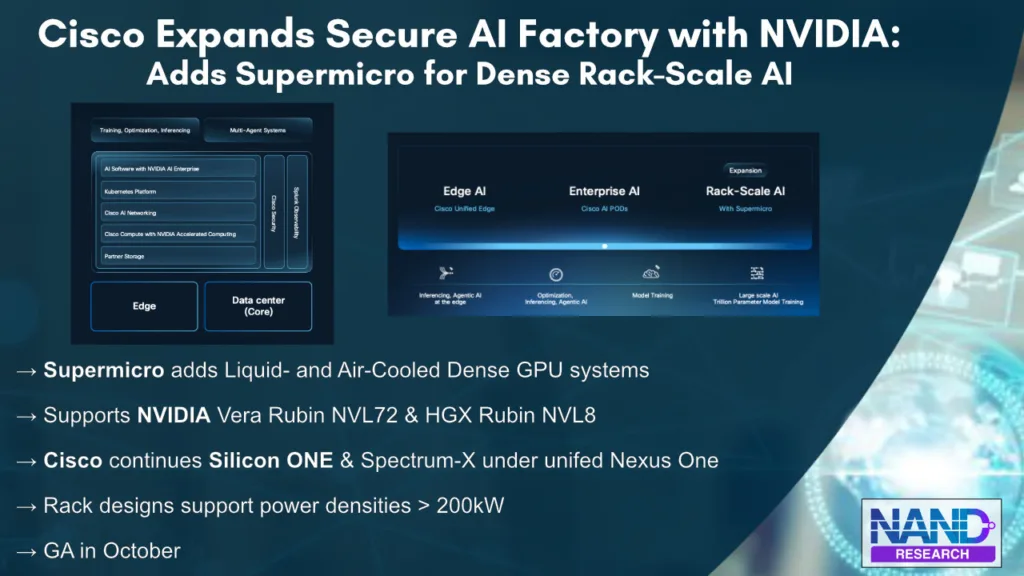
Cisco has added Supermicro as a rack-scale compute partner to Secure AI Factory with NVIDIA, the joint infrastructure framework the two companies introduced in March 2025.
The expansion brings Supermicro’s liquid- and air-cooled dense GPU systems into the program alongside Cisco’s Silicon One and NVIDIA Spectrum-X-based networking, targeting deployments on the NVIDIA Vera Rubin NVL72 and HGX Rubin NVL8 platforms.
Powering the AI Factory: How Siemens and NVIDIA Co-Design Compute at Gigawatt Scale
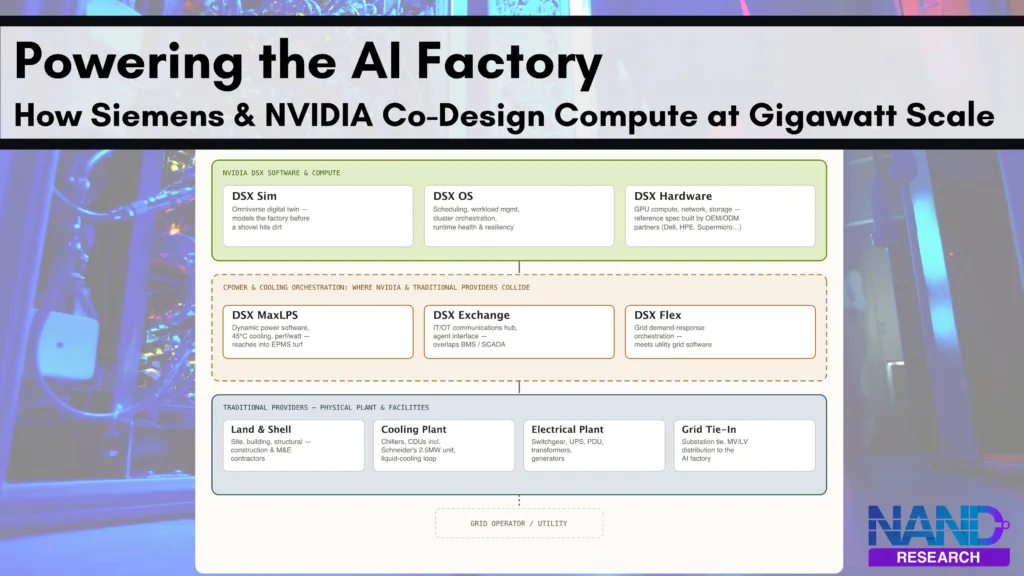
Today’s AI factories are gated by power, including how much a site can draw from the grid, how efficiently that power reaches a GPU, and how much useful compute each watt produces.
Let’s look at the problem through the lens of the long-time collaboration between Siemens and NVIDIA, which pairs their respective strengths to jointly address this problem.
Nutanix Enterprise AI 2.8: Governance and Cost Controls for Production Agentic AI
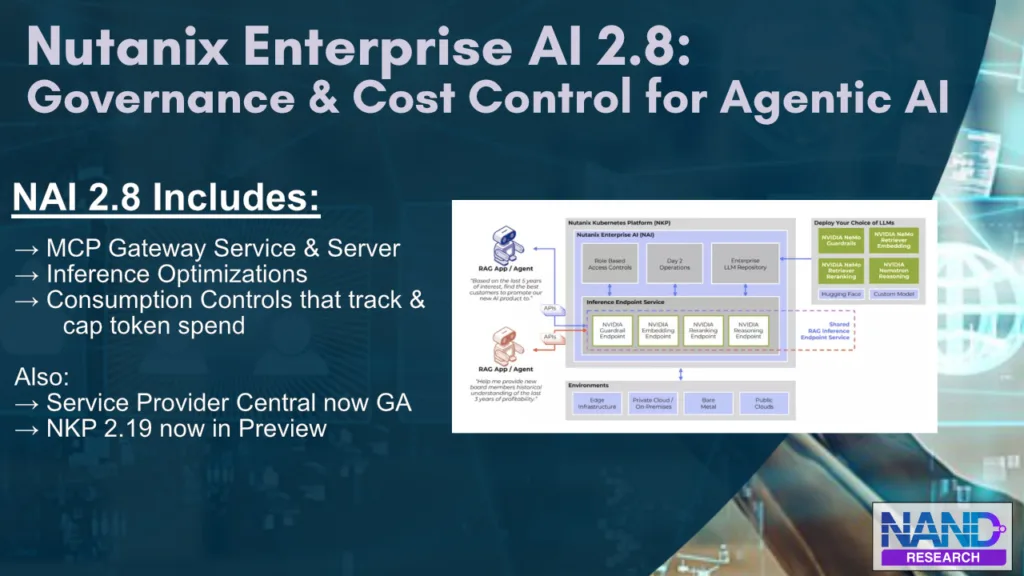
Nutanix announced the general availability of Nutanix Enterprise AI (NAI) 2.8, the latest release of its software platform for deploying and governing LLMs and AI agents across hybrid cloud environments.
OpenAI’s Jalapeño Inference Accelerator
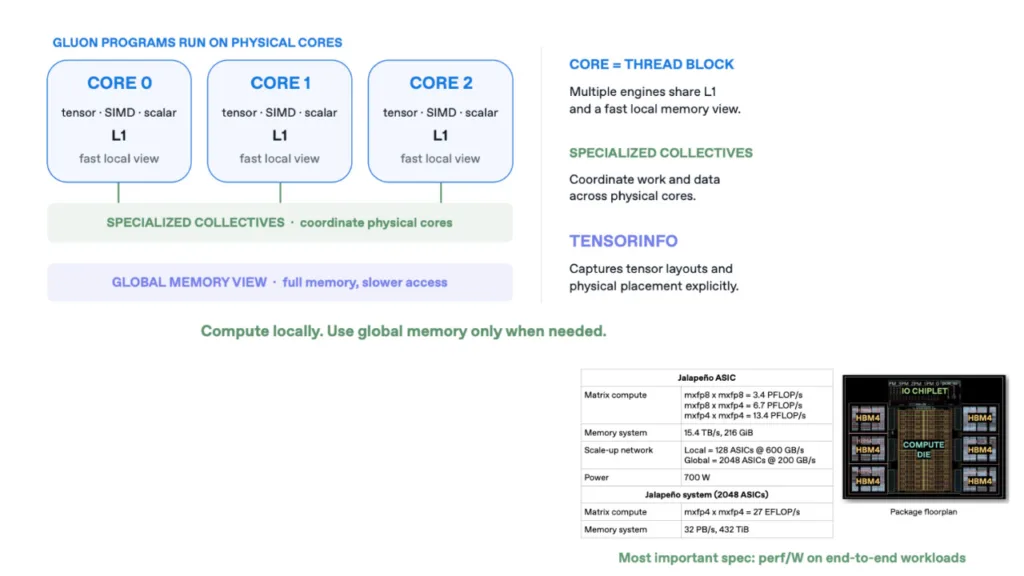
At the recent Hot Chips 2026, OpenAI presented the full architecture and the first published benchmarks for Jalapeño, its inaugural custom AI accelerator. OpenAI announced the chip’s name and confirmed Broadcom as its silicon partner in June 2026, following a strategic collaboration the two companies announced in 2025 to deploy up to 10 gigawatts of OpenAI-designed accelerators.
IBM Brings Arm to the Mainframe: Dual-Architecture Z and LinuxONE Processor with Native Arm Support
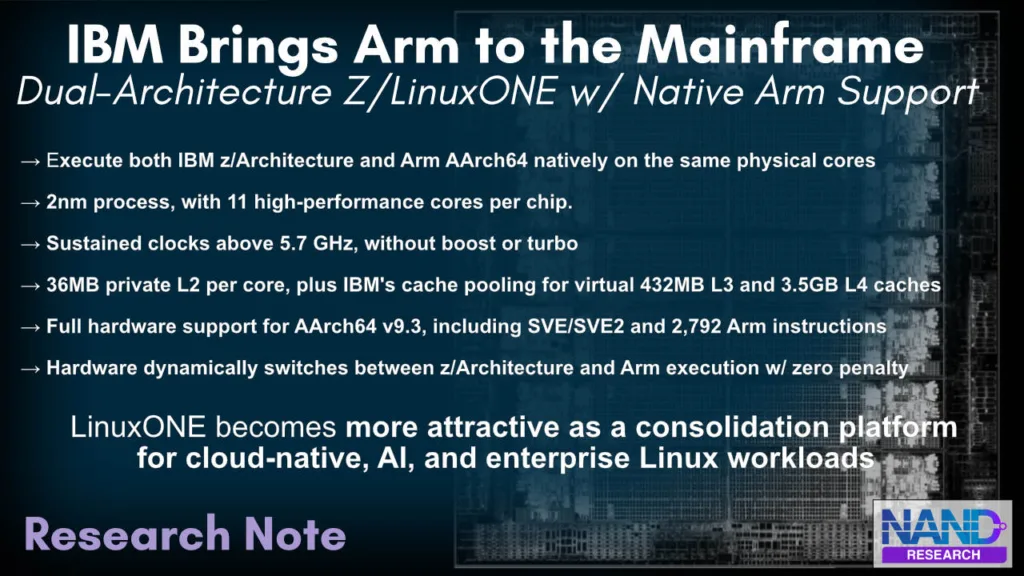
At Hot Chips 2026, IBM disclosed the next-generation processor for its Z and LinuxONE systems, the first commercial chip designed to execute both IBM’s z/Architecture and Arm instruction sets natively on the same physical cores.
NetApp Acquires JetStream, Strengthens VMware Cyber Resilience
NetApp recently announced the acquisition of JetStream Software, a San Jose-based cyber resilience vendor. JetStream builds disaster recovery and workload migration technology for VMware environments. NetApp plans to integrate that technology into its existing data protection portfolio alongside SnapMirror, its long-standing replication engine.
High Bandwidth Flash: Bridging the Gap Between Expensive HBM & Flash Memory
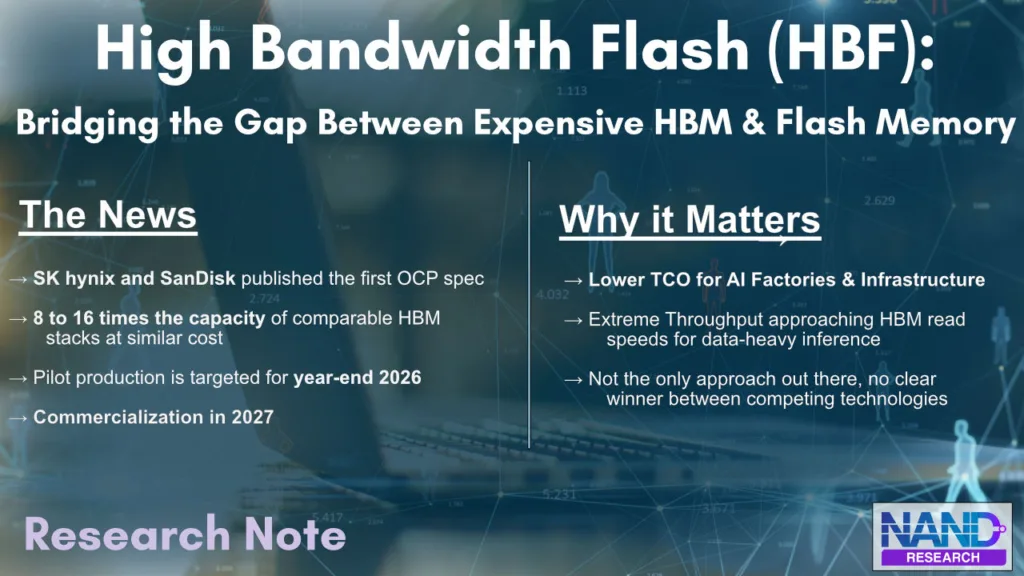
At the recent FMS 2026, SK hynix and SanDisk announced the first open technical specification for High Bandwidth Flash (HBF), formalizing a new memory category that sits between high-bandwidth memory (HBM) and solid-state drives.
Nutanix: Open-Source MCP Server Brings Governed AI Agent Automation to Cloud Platform
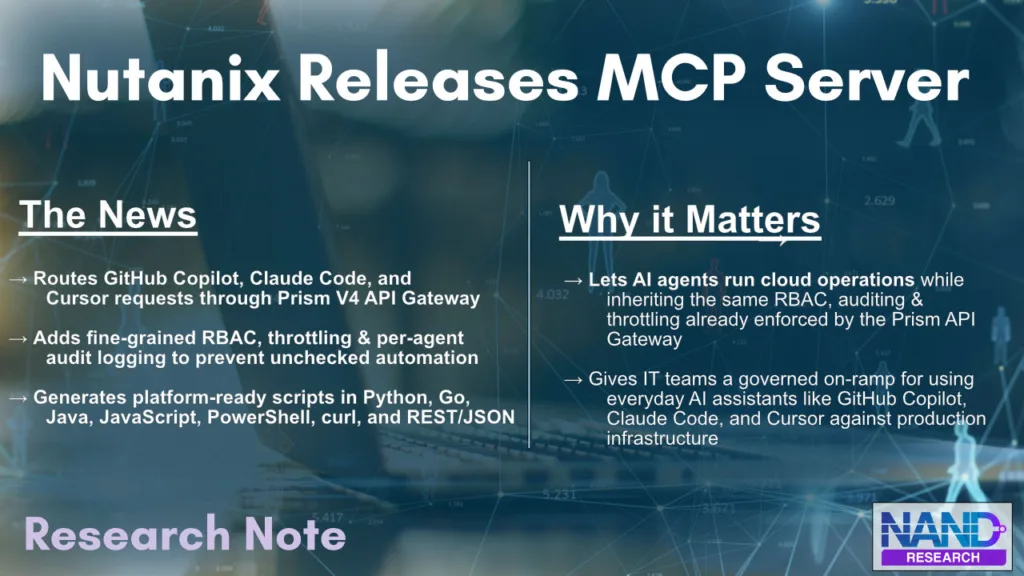
Nutanix recently released an open-source MCP server for the Nutanix Cloud Platform (NCP). The server sits between AI coding assistants and agent frameworks, including GitHub Copilot, Claude Code, Cursor, and the Nutanix Prism Central management plane, translating natural-language requests into calls to the Prism v4 REST API. It is now available as a free download.
What Quantinuum’s Earnings Tell Us About the Quantum Computing Market
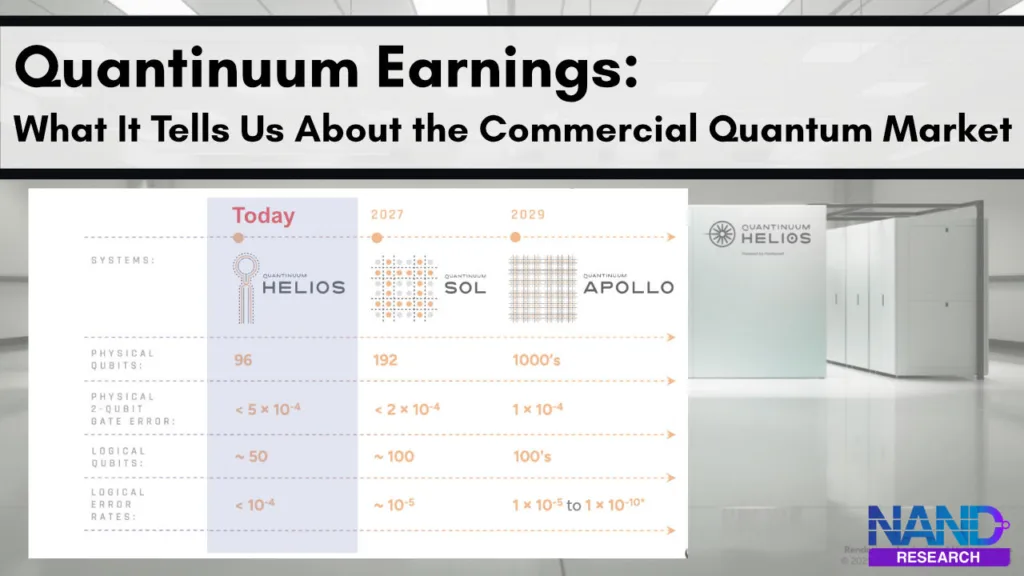
Last week, Quantinuum released its first earnings report since its IPO earlier this summer. The interesting parts of the call weren’t its financial highlights, but rather what we can infer about the state of quantum commercialization from what was said.
IBM’s Modular Cryogenic Architecture: Scaling Toward Fault-Tolerant Quantum Computing
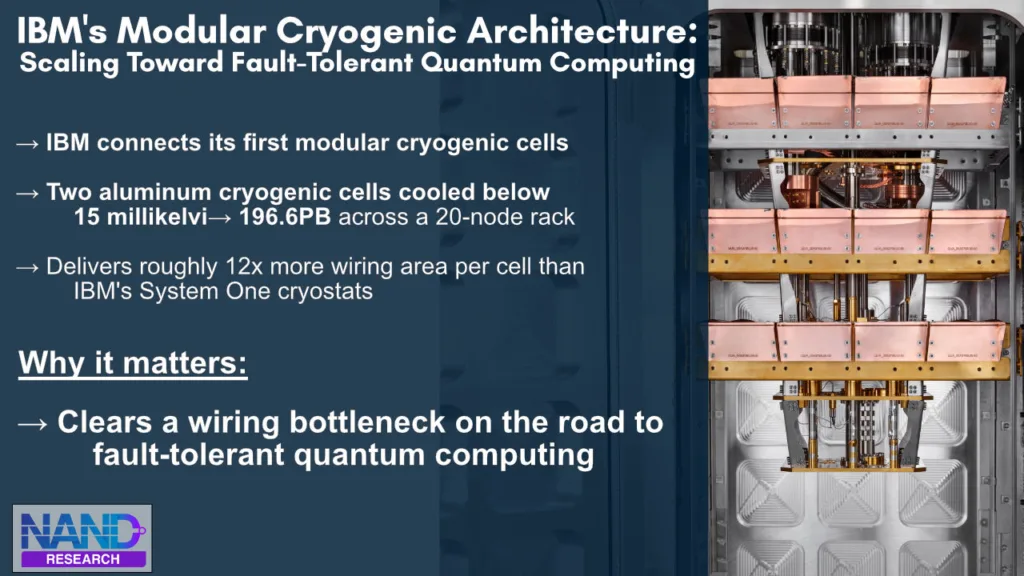
IBM has connected two modular cryogenic cells within a single cooled environment at its Poughkeepsie, New York, facility and cooled the combined system to below 15 millikelvin, more than 100 times colder than deep space. The demonstration replaces the cylindrical dilution-refrigerator enclosures used in IBM Quantum System One with box-shaped aluminum cells that sit side by side and link via short, shielded interconnect tunnels.
Modular ModCon 2026: Impact on Qualcomm and the Broader AI Accelerator Market
Modular held its ModCon 2026 developer conference in San Francisco this week, its first developer conference since Qualcomm completed its acquisition of the company earlier this summer.
The event was both a coming-out party for the newly combined organization and an early proof point for Qualcomm’s bet on buying Modular, namely that ceding control of a piece of its AI software stack to the open-source community is the fastest way to challenge NVIDIA’s CUDA ecosystem.
FMS 2026: AI Moving Boundaries Between Memory & Storage
The recent FMS 2026 conference in Santa Clara, once organized around flash storage, now functions as an AI memory-and-data-infrastructure conference, confirming a shift that has been building over several product cycles. It’s no wonder the event changed its name from “Flash Memory Summit” to “Future of Memory and Storage.”
Dell & KIOXIA Bring 9.8PB in 2U to ObjectScale
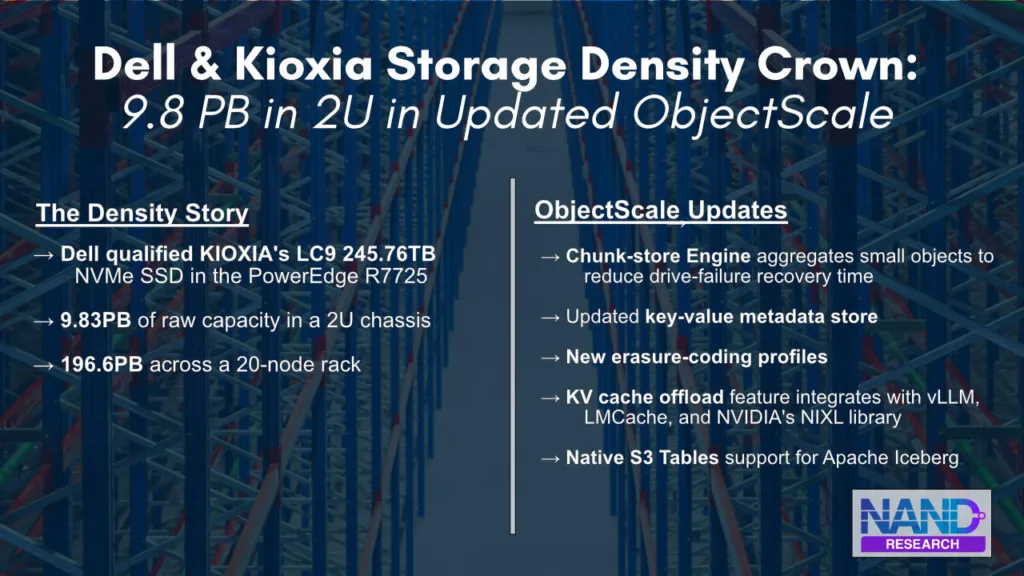
Dell Technologies and KIOXIA have paired the KIOXIA LC9 series 245.76TB NVMe SSD with the Dell PowerEdge R7725 server running Dell ObjectScale software, creating a 2U storage node with 9.83PB of raw flash capacity.
This makes ObjectScale the first object storage platform to qualify KIOXIA’s 245.76TB drive, which KIOXIA introduced in July 2025 as the industry’s highest-capacity NVMe SSD.
Dynatrace Acquires Arize: What the $915M Deal Means for AI Observability
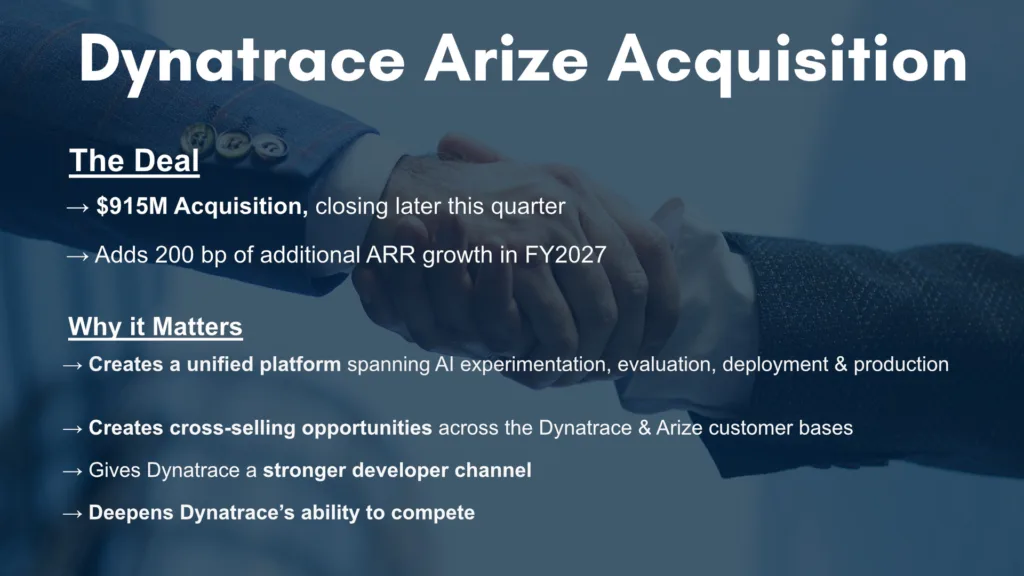
Observability leader Dynatrace announced its intent to acquire Arize, a venture-backed company specializing in AI observability and large language model evaluation, for $915 million.
Arize provides a platform for evaluating and monitoring the behavior of large language models, AI agents, and machine learning systems in production, addressing issues such as hallucination detection, output quality measurement, and behavioral drift that fall outside the scope of conventional application performance monitoring.
Oracle APEX AI Application Generator: Enterprise Governance for AI Code
Oracle released the APEX AI Application Generator as the centerpiece of Oracle APEX 26.1, a GA release of its low-code development platform for Oracle Database. The release pairs generative AI with APEXlang, a structured, human-readable specification for an APEX application.
Oracle Base Database Cloud@Customer Extends Cloud Economics to Mid-Sized and Distributed Workloads

Oracle recently announced Oracle Base Database Cloud@Customer, a hybrid cloud database service that extends the company’s Cloud@Customer portfolio to include mid-sized and departmental workloads. The offering runs on Oracle Data Infrastructure Cloud@Customer X11, a compact engineered system that Oracle installs and manages within a customer’s data center, branch office, or other facility of the customer’s […]
IBM Acquires HRL Laboratories, Adds Silicon-Spin Qubits to Its Quantum Portfolio

IBM announced it has signed a definitive agreement to acquire HRL Laboratories, a research and development institution jointly owned by Boeing and General Motors since 1997. The transaction brings HRL’s expertise in silicon-spin qubit engineering, quantum sensing, and quantum materials research to IBM’s quantum computing program. IBM has built its quantum computing roadmap, including the […]
AMD Launches Helios Rack-Scale Platform, MI400 Series and Strong Partnerships
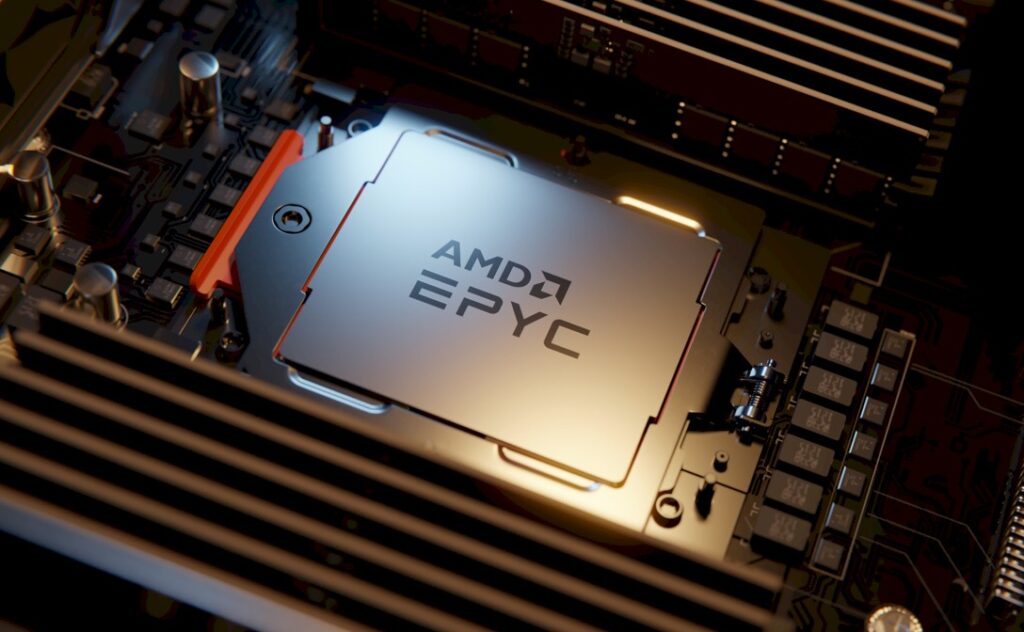
AMD used its Advancing AI 2026 conference in San Francisco on July 22-23 to launch a full-stack of AI infrastructure products spanning silicon, rack-scale systems, and developer software. The centerpiece is AMD Helios, the company’s first fully integrated rack-scale AI system, which combines 72 Instinct MI455X GPUs, 18 sixth-generation EPYC “Venice” CPUs, Pensando networking, and ROCm software into a single liquid-cooled rack rated at up to 2.9 exaflops of FP4 inference performance.
WEKA NeuralMesh 6 & WEKApod 3: Density, KV Cache, and AI Economics
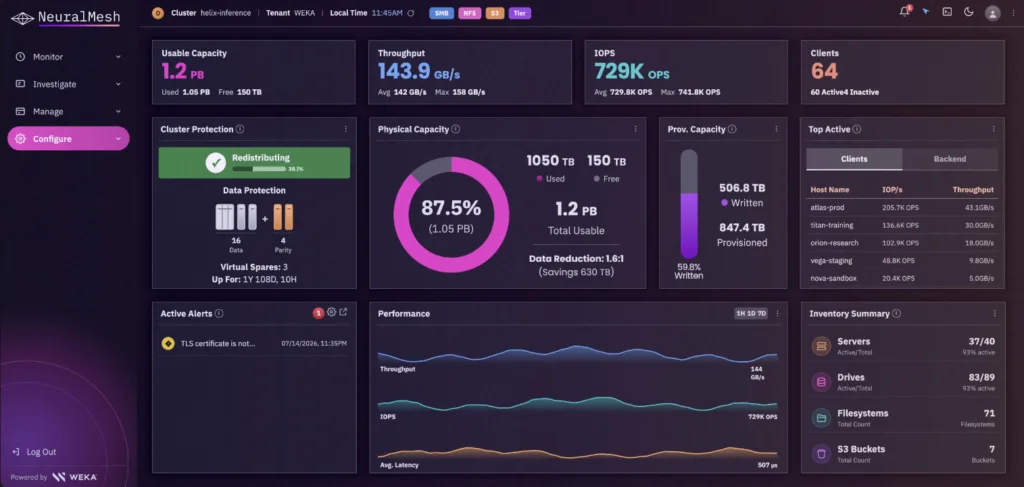
WEKA has announced two related products: NeuralMesh 6, the sixth generation of its core software platform, and WEKApod 3, a third-generation family of storage appliances built on WEKA-designed hardware.
The two announcements arrive together and are intended to be evaluated as a single system. NeuralMesh 6 remains deployable on customer-selected hardware, while WEKApod 3 is WEKA’s turnkey platform, shipping with the software preinstalled.
Why NetApp Acquired DataPelago: Nucleus and Its Enterprise AI Strategy
NetApp announced the acquisition of DataPelago, a Sunnyvale, California-based startup that builds a data processing engine called Nucleus (formerly marketed as the Universal Data Processing Engine). DataPelago will operate as a wholly owned subsidiary of NetApp. NetApp did not disclose the financial terms.
Cloudera and VAST Data Partner to Build an NVIDIA-Powered Enterprise AI Factory
Cloudera and VAST Data have announced a strategic partnership to deliver a unified “AI factory” architecture that combines Cloudera’s containerized data services with the VAST AI Operating System.
The partnership pairs Cloudera’s lakehouse-based data engineering, governance, and AI services with VAST’s Disaggregated Shared Everything storage architecture, built on the NVIDIA AI Data Platform reference design. The joint offering addresses GPU starvation, in which expensive accelerator clusters sit idle because data pipelines cannot feed them fast enough to sustain training and inference workloads.
Quantum Cloud Computing: An Enterprise Guide
Quantum computing is entering the enterprise through the cloud. That matters because most organizations will not buy, install, or operate quantum hardware. Quantum computers simply aren’t data-center friendly. Instead, enterprises will access quantum processing units (QPUs) alongside CPUs, GPUs, and high-performance computing resources through familiar cloud environments. Evaluating this market requires looking beyond physical qubit […]
Microsoft, Quantinuum & IBM: Closing the Gap Between Fragile Qubits and Fault-Tolerant Computing
Quantum error correction is crossing a major threshold w/ significant recent announcements from IBM, Microsoft & Quantinuum, with a direct line to the commercialization of quantum computing.
Microsoft & Quantinuum: Peer-Reviewed Quantum Error Correction Results

Microsoft and Quantinuum recently published a peer-reviewed paper in Nature 6, confirming an 800-fold reduction in logical-qubit error rates on Quantinuum’s trapped-ion hardware using Microsoft’s qubit-virtualization platform.
Qualcomm’s Dragonfly Data Center Portfolio
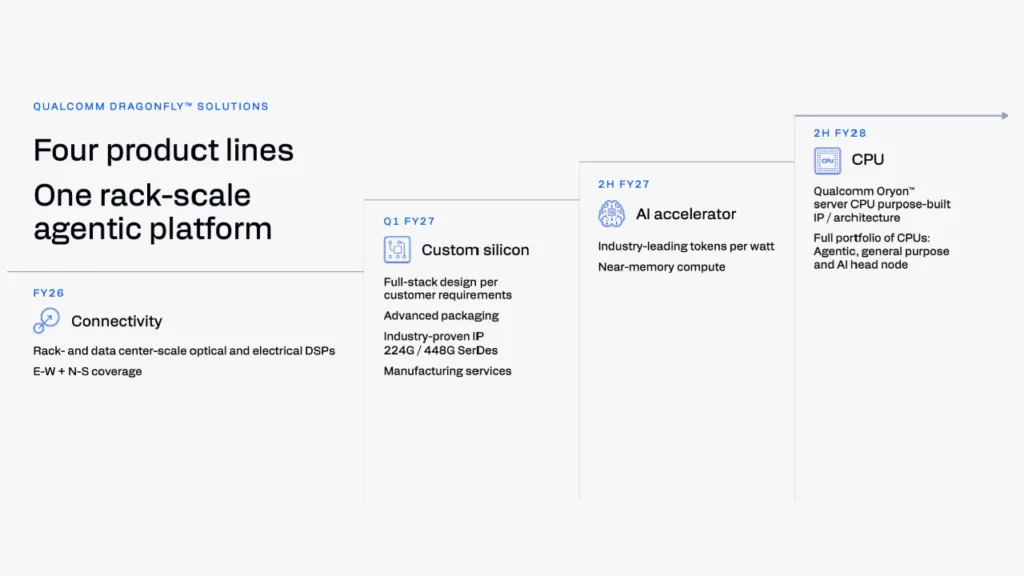
Qualcomm unveiled Dragonfly, its full-stack data center portfolio focused on AI inference, at its recent 2026 Investor Day. The portfolio brings together the Dragonfly C1000 data center CPU, the Dragonfly AI300 inference accelerator, the company’s new High Bandwidth Compute (HBC) near-memory architecture, a broad connectivity lineup, and a custom silicon practice.
Everpure: Data Intelligence and Data Stream Advance AI-Ready Data-Primacy
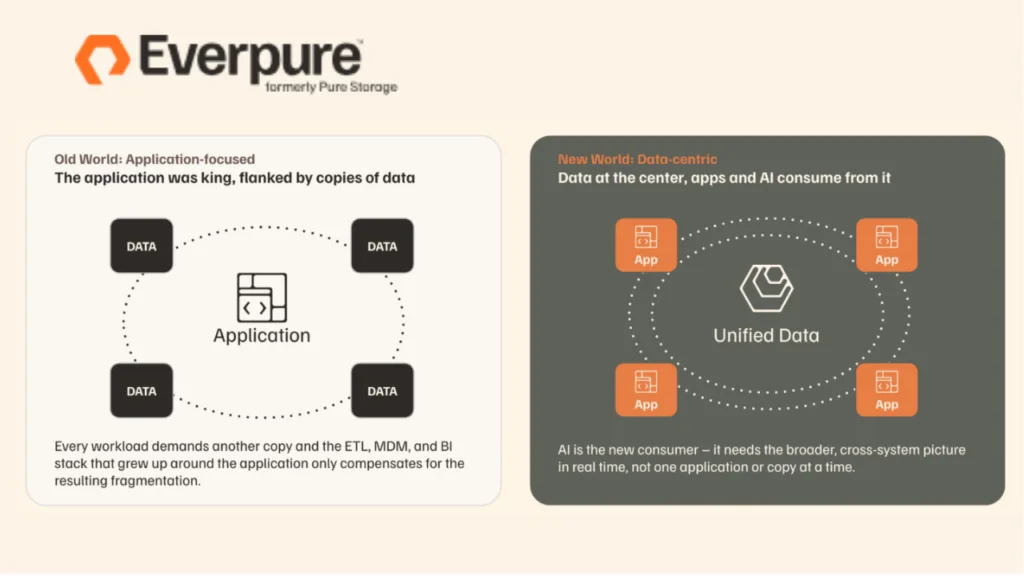
Everpure’s Data Stream and Data Intelligence automate AI data pipelines and governance. See how they compare to Dell, HPE, VAST Data, and NetApp.
Qualcomm Acquires Modular for its Hardware-Agnostic AI Software Layer
Qualcomm announced its intent to acquire Modular, an AI infrastructure software company, in a stock transaction valued at approximately $3.9 billion. The deal pairs Qualcomm’s silicon roadmap with Modular’s Mojo programming language and MAX inference engine, a software stack that runs AI models across CPU, GPU, NPU, and custom ASIC architectures without requiring per-accelerator rewrites.
HPE Discover: Agentic Governance, Vera CPU, and Confidential Computing added to AI Factory w/ NVIDIA
Hewlett Packard Enterprise extended its HPE AI Factory with NVIDIA to support production-ready agentic AI deployments at its just-wrapped HPE Discover 2026. The announcements add governance, security, and compute capabilities for organizations moving AI agents into operational production environments.
HPE Discover: Self-Driving Networks and AI Data Center Switching for the Agentic Enterprise
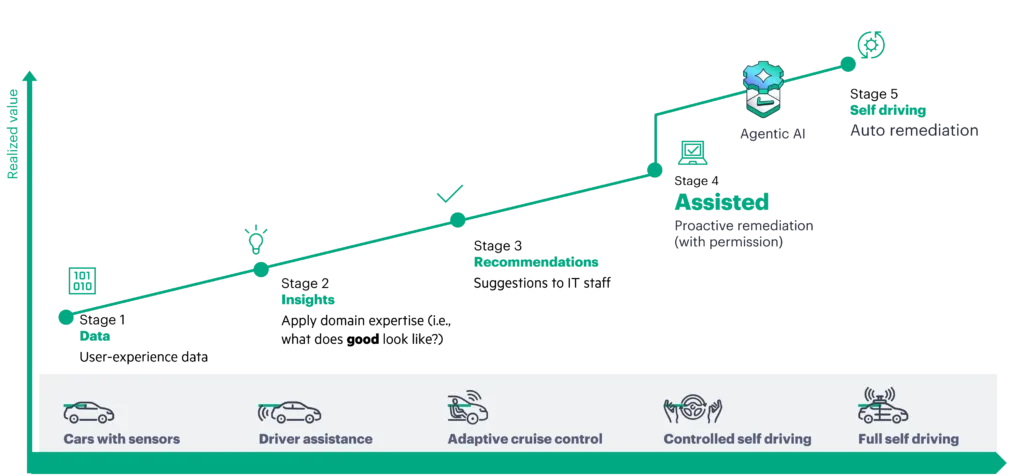
At its recent HPE Discover event in Las Vegas, Hewlett Packard Enterprise announced a broad set of networking updates spanning AI data center switching, autonomous network operations, and unified secure access, extending its “self-driving” networking strategy into general availability across AI factories, data centers, campus, and edge environments.
Arista Networks’ Next-Generation 1.6 Terabit Portfolio for AI Fabrics

Arista Networks recently announced its new 7060XE7 Series, a portfolio of 1.6 Terabit (1.6T) Ethernet switching platforms designed for rack-scale AI infrastructure. The announcement extends Arista’s Etherlink architecture from 800G to 1.6T and introduces three hardware configurations for air-cooled, liquid-cooled, and high-density 128-port deployments.
IBM’s LLM-Guided Evolutionary Framework for Quantum Error Correction Code Discovery
IBM Research recently published a paper on an LLM-guided evolutionary framework for discovering quantum error-correction (QEC) codes, accompanied by the open-source release of OpenEvolve on GitHub. The framework applies evolutionary artificial intelligence techniques, originally developed for general program synthesis, to the domain of quantum low-density parity-check (qLDPC) codes.
Microsoft’s Majorana 2 Topological Quantum Chip
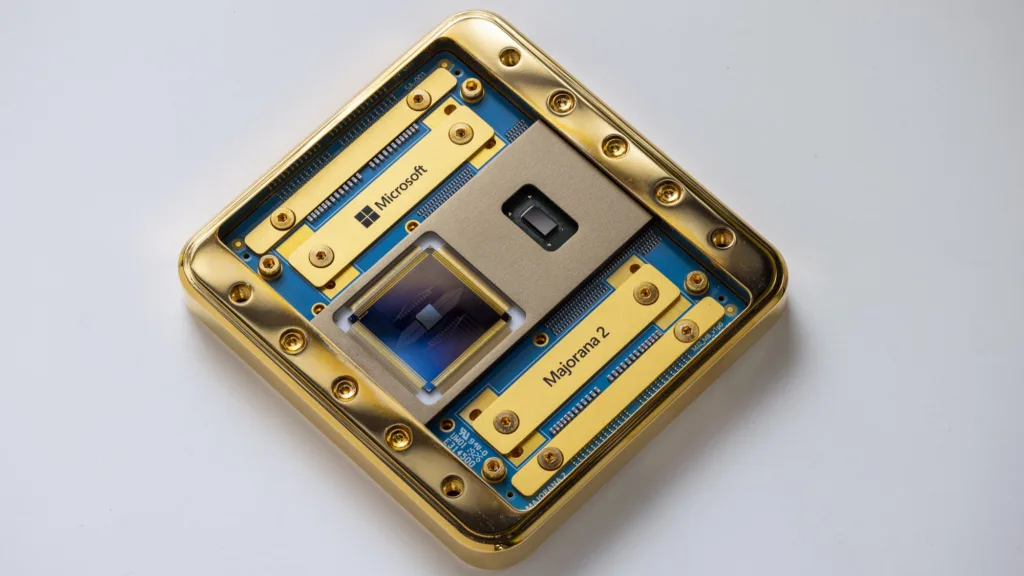
Microsoft unveiled Majorana 2 at its recent Build developer conference in San Francisco, introducing its second-generation topological quantum chip and announcing the general availability of Microsoft Discovery, an agentic AI platform for scientific research and development.
Majorana 2 delivers qubits that are 1,000 times more reliable than those in its predecessor, Majorana 1, with a mean qubit lifetime of 20 seconds and peak instances approaching 1 minute.
Quantinuum’s $1.68 Billion IPO & the Race to Quantum Commercialization

Quantinuum opened trading on the Nasdaq last week (symbol: QNT), raising $1.68 billion in the largest traditional IPO to date for a pure-play quantum computing company.
Priced at $60 per share, above the marketed range of $53 to $55, and oversubscribed by a double-digit multiple before trading began, the debut caps a multi-year run of technical milestones, high-profile partnerships, and deepening enterprise engagement.
Qualcomm’s Dragonwing IQ10 Robotics Reference Design
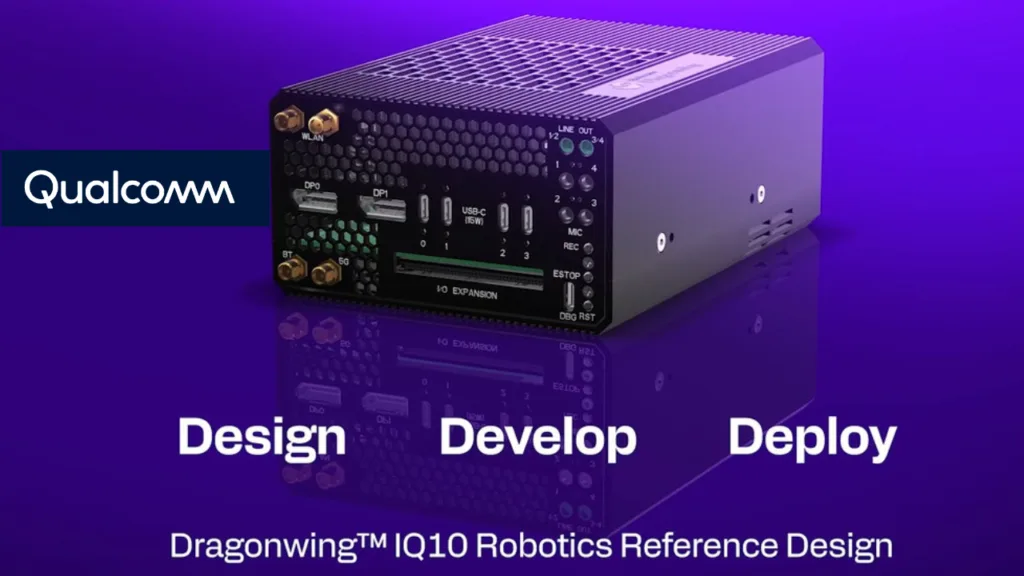
At the recent Computex 2026, Qualcomm introduced the Dragonwing IQ10 Robotics Reference Design (RRD), the company’s most concrete commitment to the physical AI market to date. The new platform consolidates compute, sensor interfaces, deterministic I/O, networking, and a layered software stack into a single enclosed reference design for autonomous mobile robots (AMRs), industrial robotics, and humanoid platforms.
Microsoft: Project Solara & the Agentic Operating Plane for the Non-NVIDIA World
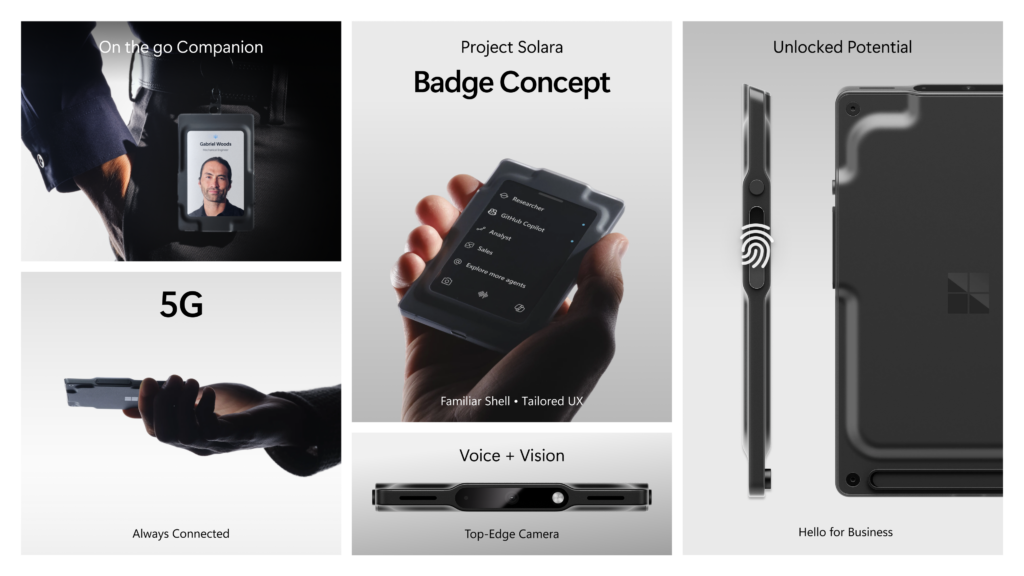
At its recent Build 2026 event, Microsoft introduced Project Solara, a chip-to-cloud platform built specifically for devices whose primary interface is an AI agent. Solara runs on the Microsoft Device Ecosystem Platform (MDEP), a lightweight operating system built on AOSP that hosts an Agent Shell capable of dynamically loading and tailoring cloud-based agents, paired with […]
Cisco’s Full-Stack Play for Agentic Enterprise AI
At Cisco Live 2026 in Las Vegas, Cisco unveiled Cisco Cloud Control, a unified management plane designed for human operators and AI agents to jointly run and defend enterprise infrastructure. The platform anchors Cisco’s AgenticOps operating model, unifying networking, security, compute, observability, and collaboration under a single login and a shared data layer.
Computex 2026: AI Infrastructure, the PC Wars, and the New Connectivity Arms Race
Computex has historically been a client- and consumer-focused event, but those markets now take a back seat to enterprise infrastructure and the components that define an AI factory. The key messages were all AI, all the time.
The keynotes were entirely semiconductor-first, with talks by three chip CEOs: Jensen Huang of NVIDIA, Cristiano Amon of Qualcomm, Lip-Bu Tan of Intel, and Matt Murphy of Marvell. Each painted a slightly different picture about where the AI buildout is headed.
NVIDIA Is Rewiring the Data Center with Light
NVIDIA is actively working to replace electrons with photons across the entire connectivity stack, from co-packaged optics at the switch level to optical fiber cabling throughout the rack and facility.
IBM’s Big Quantum Month: A $10 Billion Bet, a National Fab, and a 2029 Deadline
A version of this post previously appeared in a LinkedIn newsletter IBM revealed that it will invest more than $10 billion in quantum computing over the next five years, with the goal of delivering the first large-scale, fault-tolerant quantum computer by 2029. The disclosure, which arrived not via a press release but through an SEC […]
IBM & Red Hat: Project Lightwell, Protecting Open Source Software

IBM and Red Hat announced Project Lightwell, a $5 billion initiative to establish a trusted enterprise clearinghouse for open-source software security. The project deploys more than 20,000 engineers, augmented by AI, to identify, triage, validate, and remediate vulnerabilities across open-source supply chains at a scale that exceeds what most enterprises can achieve independently.
IBM: Anderon Quantum Foundry and the Industrialization of Quantum Hardware
IBM and the U.S. Department of Commerce announced a Letter of Intent to establish Anderon, a standalone company that will operate the United States’ first pure-play quantum chip foundry.
The initiative has a combined commitment of $2 billion, including $1 billion in proposed CHIPS Act R&D incentives from the Department of Commerce and $1 billion in cash from IBM, supplemented by IBM’s intellectual property, fabrication assets, and an existing skilled workforce.
Dell Technologies: AI Data Platform and Storage Portfolio for the Agentic Enterprise
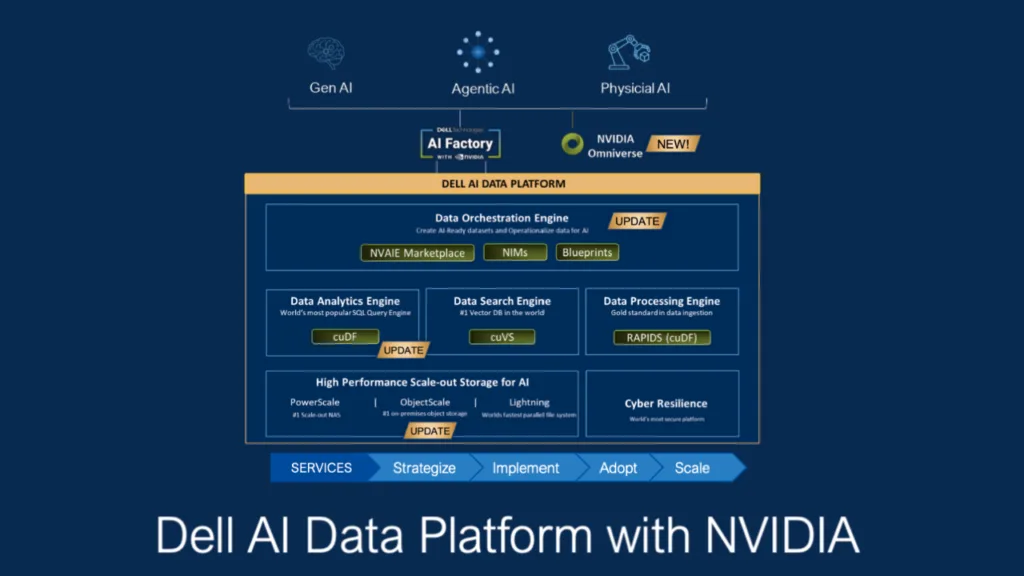
At the recent Dell Technologies World in Las Vegas, Dell announced a broad expansion of its AI Data Platform and storage portfolio, centered on the general availability of the Lightning File System (formerly Project Lightning), the introduction of Exascale Storage as a unified 4-in-1 rack architecture, the refreshed ObjectScale X7700 appliance, and enhancements to the Dell AI Data Platform’s orchestration, analytics, and search layers.
Memory & NAND Flash Crisis: May 2026 Update
What began as an AI-driven reallocation of manufacturing capacity toward HBM has compounded through consecutive quarters of record-breaking price increases, affecting enterprise IT budgets, consumer device pricing, and cloud infrastructure spending in equal measure.
SailPoint Agentic Fabric Extends Identity Governance to AI Agents & Non-Human Identities

SailPoint recently announced SailPoint Agentic Fabric, a new product layer that extends the identity governance and administration (IGA) model the company has built for human users to AI agents, machine identities, and other non-human identities (NHIs).
Atlassian Team ’26: Context as Infrastructure

At Atlassian’s recent Team’26 conference, the company released a broad set of announcements organized around the thesis that organizational context is the primary source of AI differentiation. The announcements clearly show that Atlassian intends to serve as the infrastructure layer that makes that context actionable
Two Conferences, One Consensus on Enterprise AI
IBM Think 2026 and Atlassian Team ’26 both took place last week in different cities, for different audiences, and with different product portfolios on stage. IBM gathered infrastructure architects and enterprise IT executives in Boston, while Atlassian convened developer teams, platform practitioners, and collaboration leaders in Anaheim.
ServiceNow Knowledge 2026: The Agentic Enterprise Takes Shape
ServiceNow used its recent Knowledge 2026 conference to advance the platform-level argument that enterprise AI will be decided not by model capability alone, but by the infrastructure that governs, orchestrates, and executes AI across the business.
Think 2026: IBM’s AI Operating Model Takes Shape

At its annual Think conference in Boston earlier this month, IBM delivered the most comprehensive expansion to date of its enterprise AI and hybrid cloud portfolio. The announcements center on what IBM calls an AI Operating Model, a four-pillar architecture built around agents, data, automation, and hybrid infrastructure.
NVIDIA MRC Enables Spectrum-X Ethernet for AI-At-Scale, Now at OCP
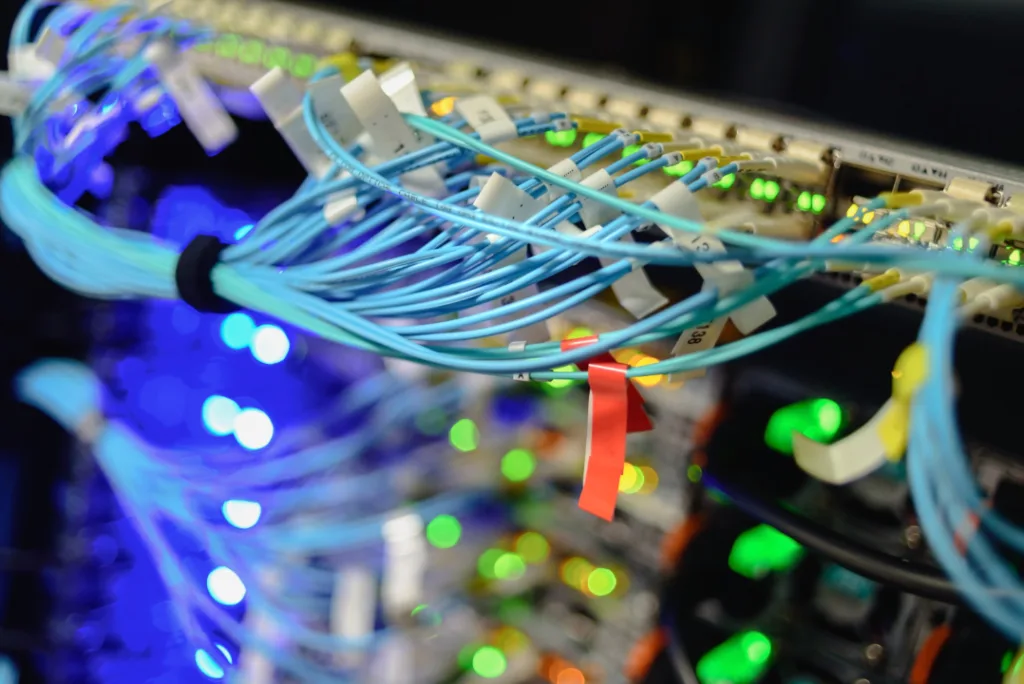
NVIDIA recently announced that Multipath Reliable Connection (MRC), an RDMA transport protocol developed for and in production on Spectrum-X Ethernet hardware, is now available to the broader industry via the OCP.
Cisco Acquiring Astrix Security to Extend Zero Trust to the Agentic Workforce
Cisco announced its intent to acquire Astrix Security, a Tel Aviv-based company specializing in Non-Human Identity (NHI) security. The acquisition targets the growing, largely underserved segment of enterprise security focused on governance, visibility, and threat detection for non-human identities, including API keys, service accounts, OAuth tokens, and AI agents.
Data Center Power: The Transition to 800 VDC

For the past two decades, power architecture has evolved incrementally around a familiar model: utility AC enters the facility, passes through switchgear, transformers, UPS systems, power distribution units, and rack power shelves, and is ultimately converted to low-voltage DC for CPUs, GPUs, memory, networking, and storage.
That model worked for conventional enterprise and cloud computing. It was good enough when racks consumed 10kW, 20kW, or even 50kW, but it becomes far more difficult as AI infrastructure pushes rack densities toward hundreds of kilowatts and, in some designs, beyond 1MW.
Palo Alto Networks: Portkey Acquisition Anchors its Agentic Security Stack
Palo Alto Networks recently announced its intent to acquire Portkey, a San Francisco-based AI gateway and control plane company. The deal, expected to close in Palo Alto Networks’ fiscal fourth quarter of 2026, will integrate Portkey’s technology into Prisma AIRS, the company’s agentic AI security platform.
HPE ProLiant: Edge Compute for AI and Mission-Critical Workloads

HPE recently expanded its HPE ProLiant edge portfolio with three new platforms: the HPE ProLiant Compute EL2000 chassis, two new Gen12 servers built for the EL2000 (the EL220 and EL240), and an enhanced version of the HPE ProLiant DL145 Gen11 server, now powered by AMD EPYC 8005 series processors. The announcement also introduced an Environmental Ruggedization Option Kit applicable across the portfolio.
Google Cloud: 8th-Generation TPU Family Splits Training and Inference
At Google Cloud Next 2026, Google unveiled its 8th-generation Tensor Processing Unit (TPU) family, splitting its custom silicon lineup into two purpose-built architectures for the first time.
The TPU 8t targets large-scale model training, emphasizing compute throughput and scale-up bandwidth, while the TPU 8i addresses inference and reasoning workloads, emphasizing memory bandwidth and low-latency communication.
Google Cloud Next ‘26: Storage Infrastructure Advances + the NetApp Partnership

At its recent Next ’26 conference, Google Cloud advanced its storage portfolio across three fronts: high-performance infrastructure for AI training and inference, intelligent metadata capabilities built directly into the storage layer, and expanded ecosystem integrations.
The announcements span Cloud Storage Rapid, Google Cloud Managed Lustre with 10 TB/s throughput, Hyperdisk Exapools, Smart Storage automation, and material expansions to the Google Cloud NetApp Volumes service, including a deeper partnership with NetApp.
IBM’s AI Strategy: Play the Long Game, Not the Headlines
IBM reported 6% revenue growth, expanding margins, strong free cash flow, and software acceleration in its Q1’2026 earnings.
The more consequential signals, however, came from the strategic narrative beneath those figures. IBM is not competing for the most visible positions in AI, but rather building the infrastructure layer that enterprises will ultimately depend on, regardless of their more tactical AI choices.
ServiceNow Earnings: The Real AI Story Isn’t What You Think
ServiceNow delivered a strong fiscal Q1 2026, exceeding guidance across revenue, margins, and bookings. This earnings call offers a clearer view of how AI is reshaping enterprise software and of ServiceNow’s role in that shift. The implications span pricing architecture, competitive positioning, labor economics, and how enterprises actually spend.
Google Cloud Next 2026: Enterprise AI Enters Production

Google Cloud Next 2026, held last week in Las Vegas, delivered a clear, consistent message: the experimental phase of enterprise AI is over, and the production phase of autonomous agent deployment has begun. Google made an incredible 260 announcements at the event, with most aligned with the idea that enterprises will increasingly operate through fleets […]
SUSECON 2026: SUSE Shows Off Platform Strategy and Agentic Infrastructure
SUSECON 2026, recently held in Prague, saw SUSE lay out a coherent platform direction, shifting from being primarily a Linux and Kubernetes distribution vendor to a provider of an integrated open infrastructure stack spanning virtualization, edge, and AI-augmented operations.
CrowdStrike RSA 2026 Announcements: Securing Agentic Workflows
CrowdStrike used the RSA Conference 2026 to announce a set of capabilities that directly address the problem of securing agentic workflows, based on the premise that the enterprise endpoint is the correct control plane for AI security governance.
Nutanix .NEXT 2026: Beyond the Hypervisor
Nutanix held its annual .NEXT user conference earlier this month in Chicago drew more than 5,000 attendees and over 100 sponsors. The event came at an inflection point for enterprise infrastructure, as the post-VMware market continues to consolidate, AI workloads move from pilot to production, and hardware supply constraints continue to complicate infrastructure planning.
MEXT: Predictive Memory Software to Control DRAM Costs
MEXT, a Santa Clara-based startup founded just three years ago, recently launched Predictive Memory, a software-only solution that uses AI-driven prediction to extend effective server memory capacity by treating flash storage as a transparent extension of DRAM.
The company claims its product reduces infrastructure costs by 50% and increases usable memory capacity by 2x to 4x without requiring changes to hardware, operating systems, or applications.
Dynatrace Extends Observability Platform with Bindplane Acquisition
Dynatrace has announced a definitive agreement to acquire Bindplane, an OpenTelemetry-native telemetry pipeline vendor formerly known as observIQ. Bindplane closes a gap in the Dynatrace platform at the data ingestion layer, extending its capabilities to edge-level telemetry collection, processing, and routing across hybrid and multi-cloud environments.
IBM & Arm: Together Extending Arm Architecture into Enterprise Computing
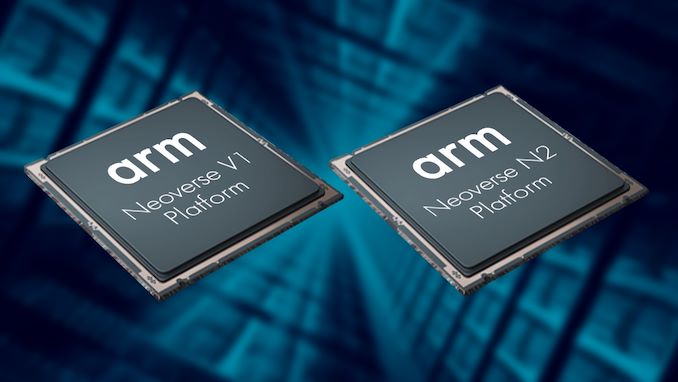
IBM and Arm announced a strategic partnership to support the Arm architecture on IBM’s enterprise computing platforms, IBM Z and LinuxONE. The collaboration aims to address two key enterprise needs: greater workload flexibility and infrastructure capable of handling AI- and data-heavy applications at a mission-critical level.
MLPerf Inference 6.0: Software Gains & Broadening Competition Shake Things Up
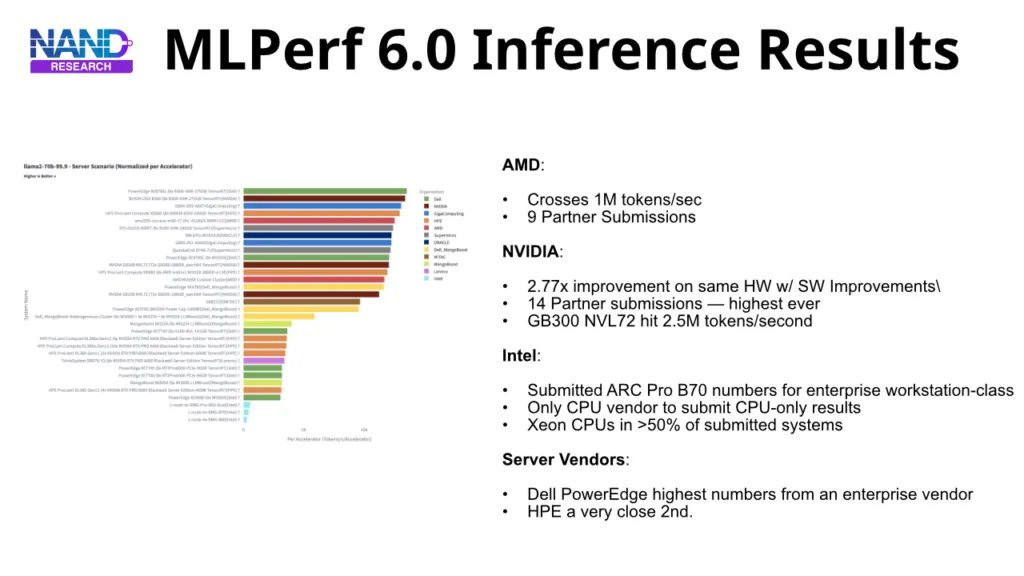
MLCommons released MLPerf Inference v6.0 results, marking what the consortium describes as the most significant update to the benchmark suite to date.
The round introduced five new workloads, including a multimodal vision-language model, a text-to-video generation benchmark, and a new interactive scenario for the DeepSeek-R1 reasoning model.
RSAC 2026: Agentic AI Security Takes Center Stage at Industry’s Marquee Event
If RSAC 2025 was the year the industry debated AI’s role in security, RSAC 2026 was the year the debate ended. Agentic AI, with its autonomous systems that perceive, decide, and act without human intervention, dominated every keynote, expo-floor conversation, and press release at this year’s conference.
Everpure: Evergreen//One + Everpure Data Stream for AI Infrastructure (GTC 2026)
Everpure announced two updates to its AI infrastructure platform at GTC 2026: the expansion of Evergreen//One storage-as-a-service to FlashBlade//EXA, and the beta release of Everpure Data Stream, a co-engineered data pipeline solution built on the NVIDIA AI Data Platform reference design.
WEKA: NeuralMesh AIDP & STX Integration (GTC 2026)
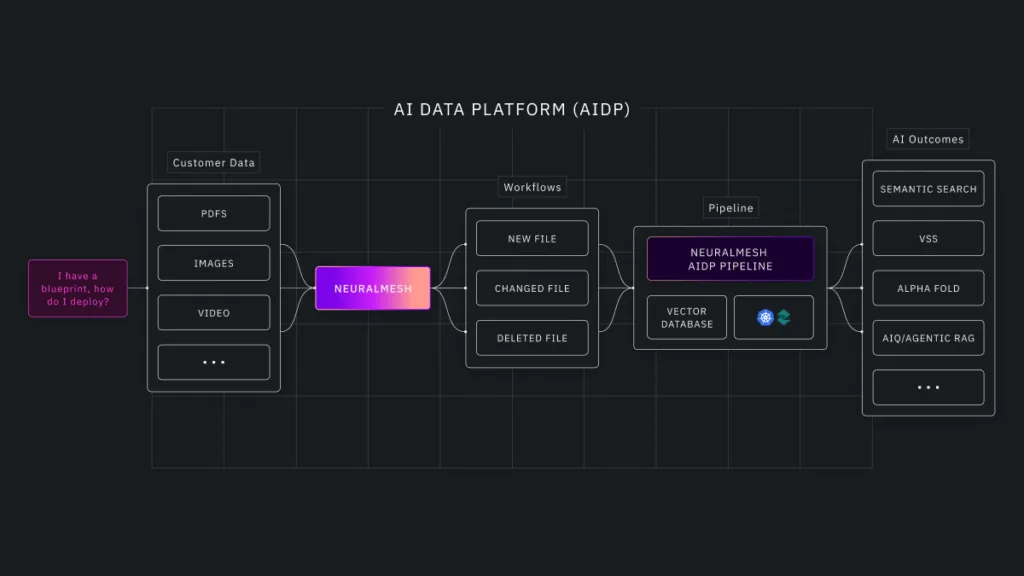
At the recent GTC 2026, WEKA announced two major updates that enhance its position at the crossroads of AI storage and inference infrastructure. The company revealed the general availability of NeuralMesh AI Data Platform (AIDP), a ready-to-use appliance-style system based on the NVIDIA AI Data Platform reference design